
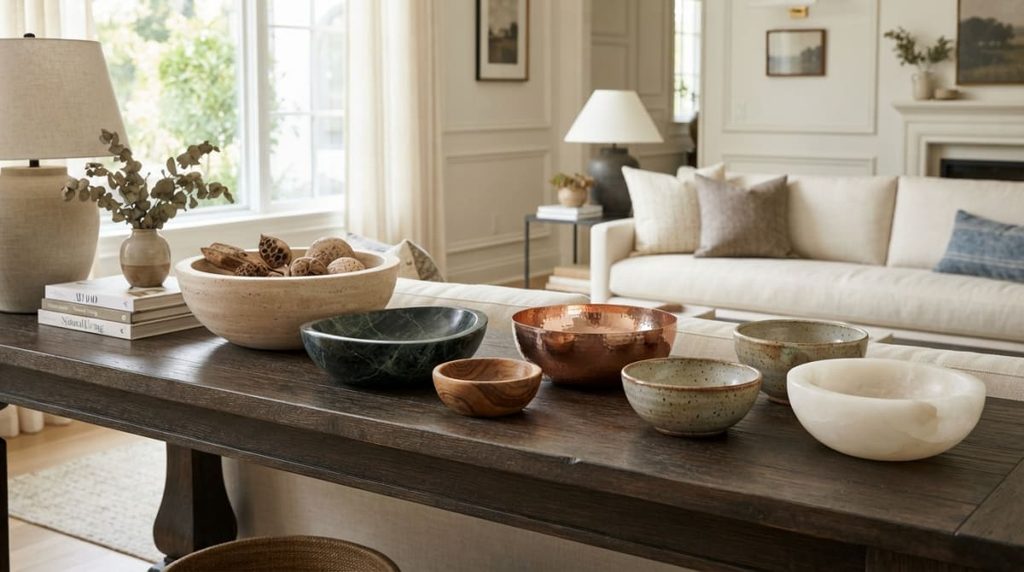
When I curate living spaces, I often rely on decorative bowls as versatile anchor pieces across various surfaces. These tactile accents instantly bring balance, texture, and structural interest to plain tables, shelves, and countertops. By selecting the right organic materials and deliberate fillers, you can elevate a room from static to deeply inviting. In this styling guide, I will share my favorite techniques for integrating sculpted bowls into everyday living areas.
Styling a vessel requires a thoughtful balance between function and form, ensuring that every element feels deliberate rather than cluttered. Placing a well-chosen bowl in a room creates an immediate focal point that grounds nearby decor items. We will explore how different materials like marble, terracotta, and hammered copper can transform your home’s aesthetic.
Let us look at 20 distinct ways to bring architectural depth and warmth to your tabletops.
Hand-Carved Olive Wood Bowl on Kitchen Islands
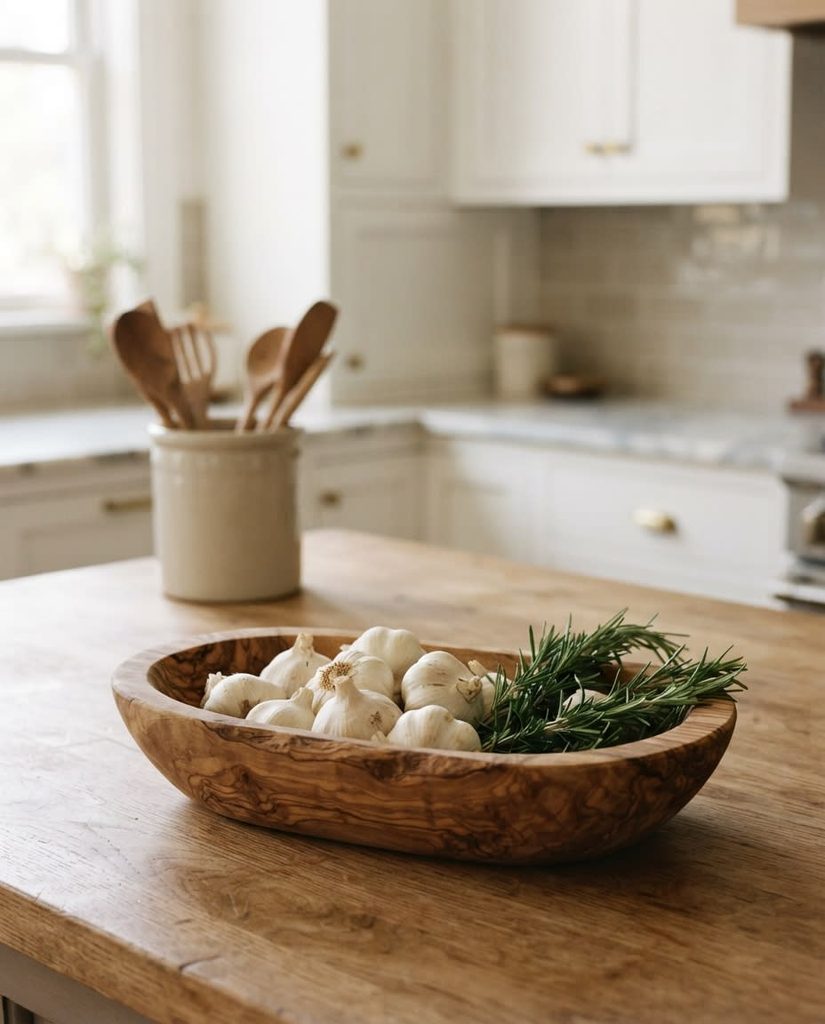
Kitchen islands tend to collect daily clutter, so I like using a sturdy wooden vessel to group functional kitchen ingredients together. A hand-carved olive wood oval bowl brings natural graining and warmth to sleek cabinetry or quartz countertops.
I love filling mine with fresh garlic bulbs and sprigs of rosemary to keep cooking essentials within arm reach. Integrating organic food elements into your kitchen decor makes the space feel vibrant and lived in.
Black Marble Pedestal Bowl for Dining Tables
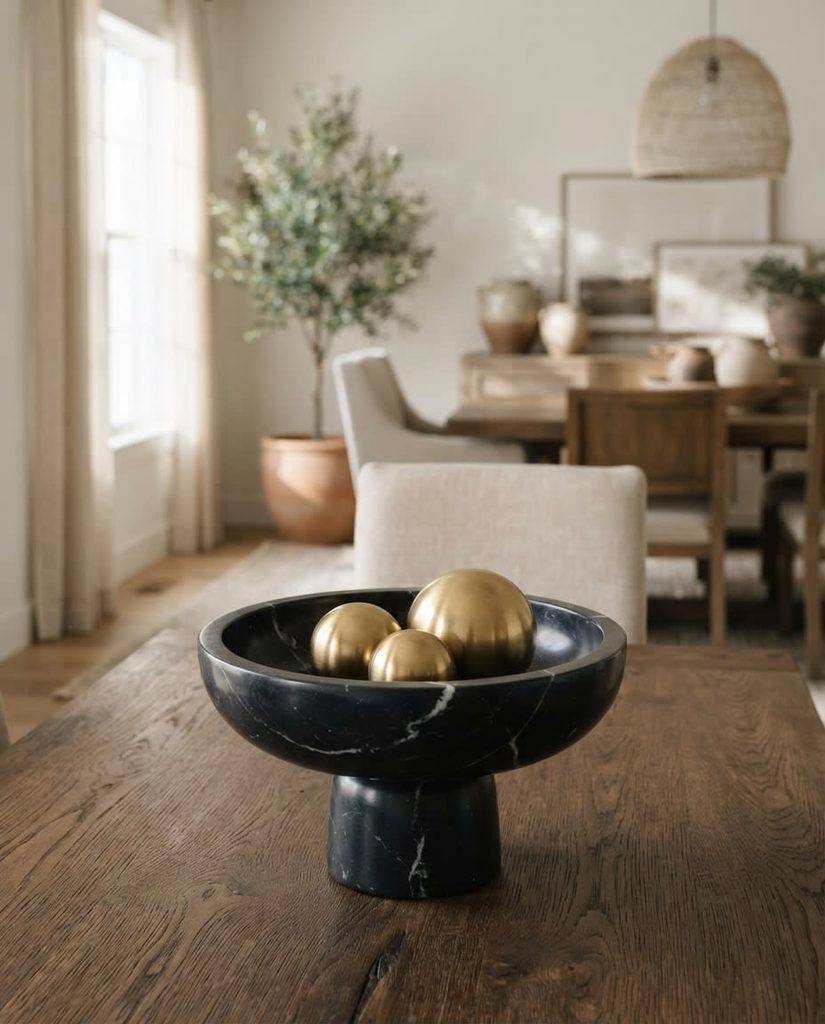
Dining tables often look unfinished when left entirely bare between formal dinner parties. I suggest anchoring a large dining table with a heavy black Nero Marquina marble pedestal bowl to establish weight.
The dark stone paired with polished solid brass spheres creates a striking contrast that catches light during the daytime. Choosing materials with strong visual weight helps balance expansive dining surfaces without cluttering the room.
Warm Ceramic Accent Bowl for Entryway Consoles
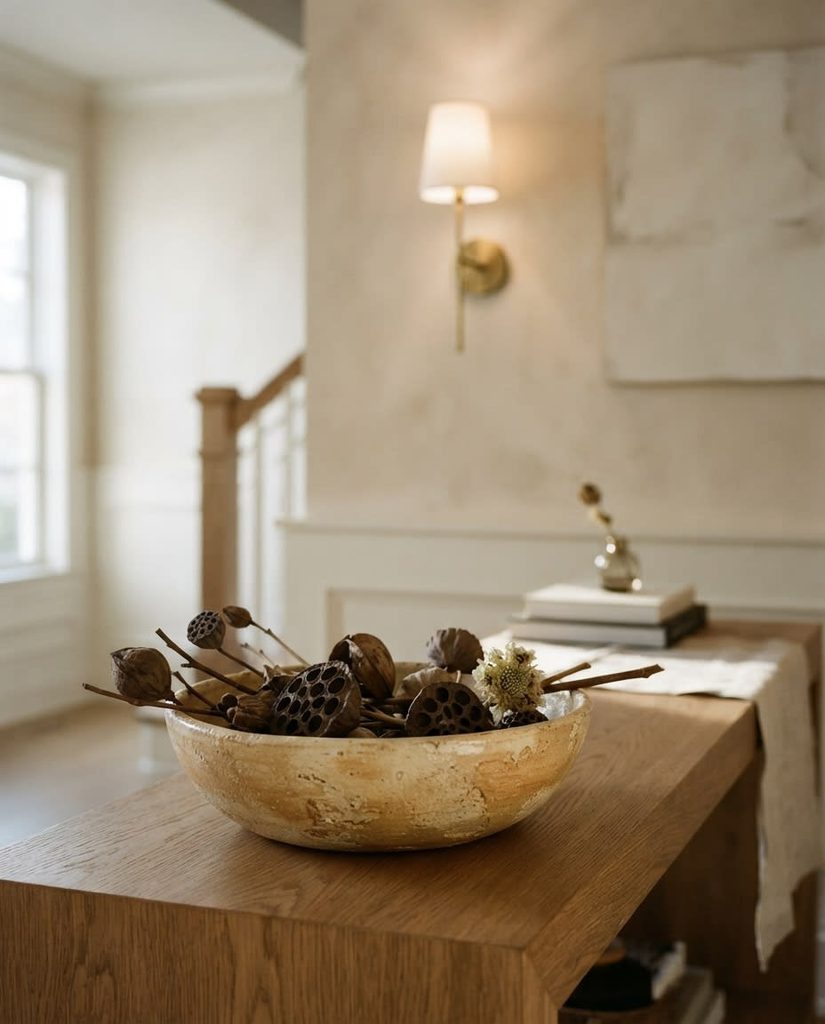
The entry console sets the design tone for your entire home the moment guests walk through the front door. I prefer using a shallow textured ceramic bowl with a warm sand finish to capture a soft ambient mood.
Placing dried botanical pods inside adds gentle sculptural interest under the warm glow of an entryway sconce. Opting for earthy textures at the entry creates an immediate sense of warmth and quiet hospitality.
Carved Balsa Wood Bowl on Ottoman Coffee Tables
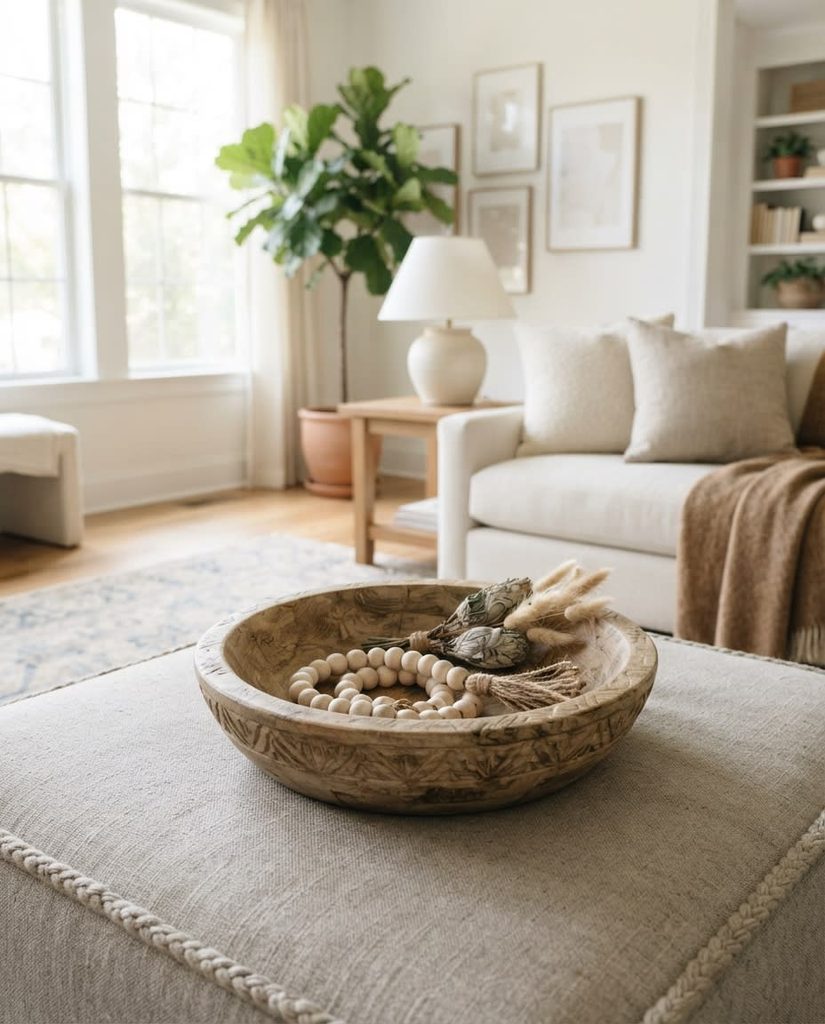
Upholstered coffee tables and ottomans need broad solid shapes to balance their soft fabric tops. I frequently reach for a round carved balsa wood low bowl styled with natural bone beads to add tactile interest.
The pale wood grain softens the living room while keeping the surface functional for tray placement or books. Draping organic beads over the edge of a low bowl adds relaxed movement to tailored furniture.
Antique Pewter Compote Bowl on Fireplace Mantels
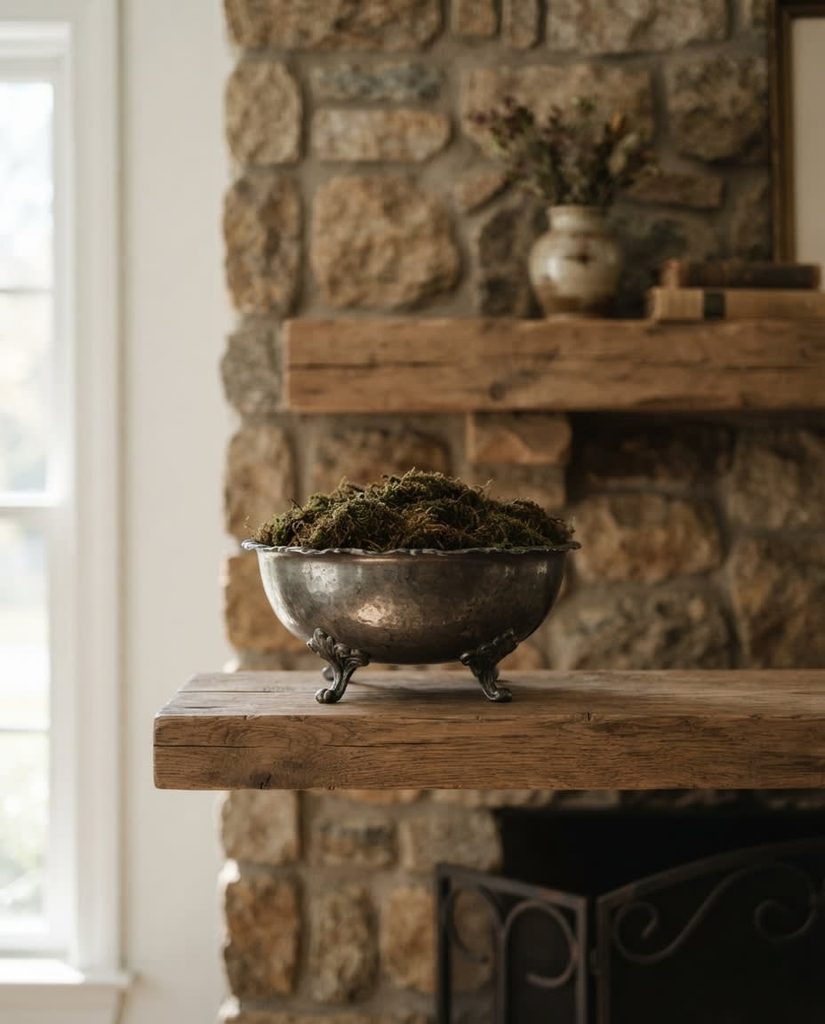
Mantels require careful proportioning so that decorative objects do not overpower the fireplace masonry below. An antique pewter footed compote bowl introduces timeless charm and a lovely matte metallic finish to stone shelves.
I like filling pewter vessels with preserved dark green moss to bring a touch of nature indoors year round. Combining vintage metals with organic greens adds depth and age to a modern fireplace surround.
Hand-Formed Porcelain Bowl on Bedside Nightstands
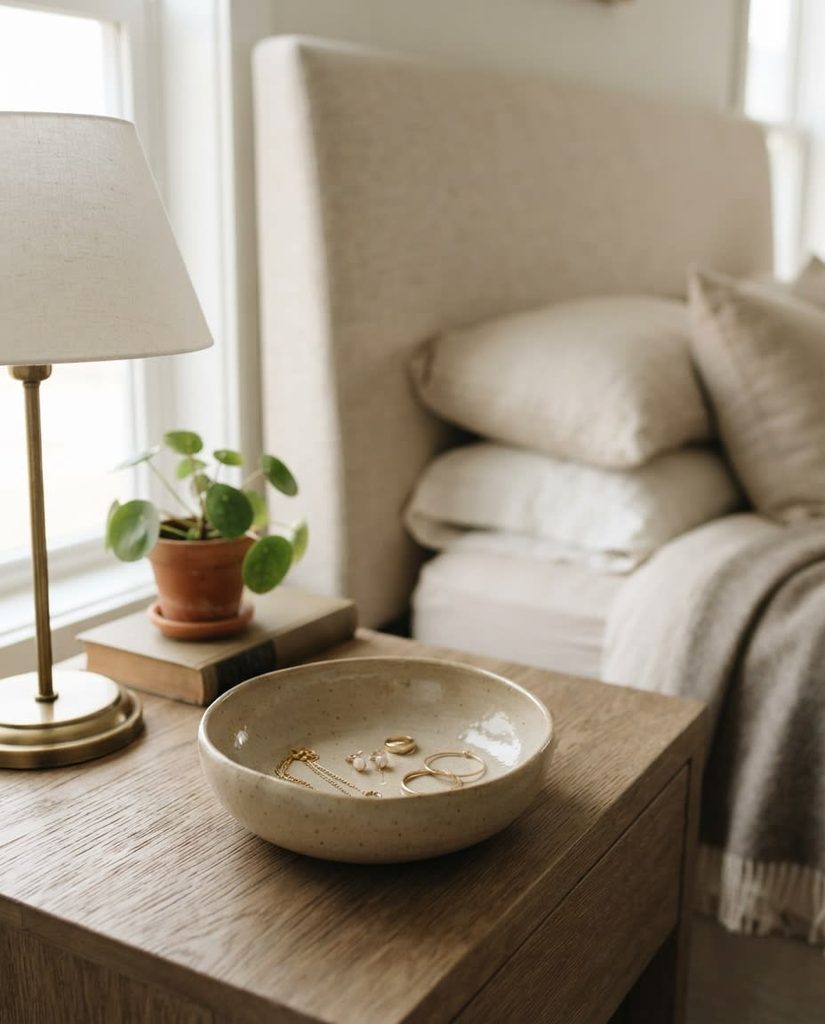
Nightstands are intimate surfaces where form must meet personal function without causing bedtime visual clutter. I recommend a small hand-formed porcelain bowl with a matte beige finish to sit beside your lamp and linen headboard.
This delicate piece offers a serene spot to rest your daily rings and small personal jewelry overnight. Selecting small scale ceramic pieces for the bedroom preserves peace and keeps nightstand essentials organized.
Woven Bamboo Bowl on Low Credenzas
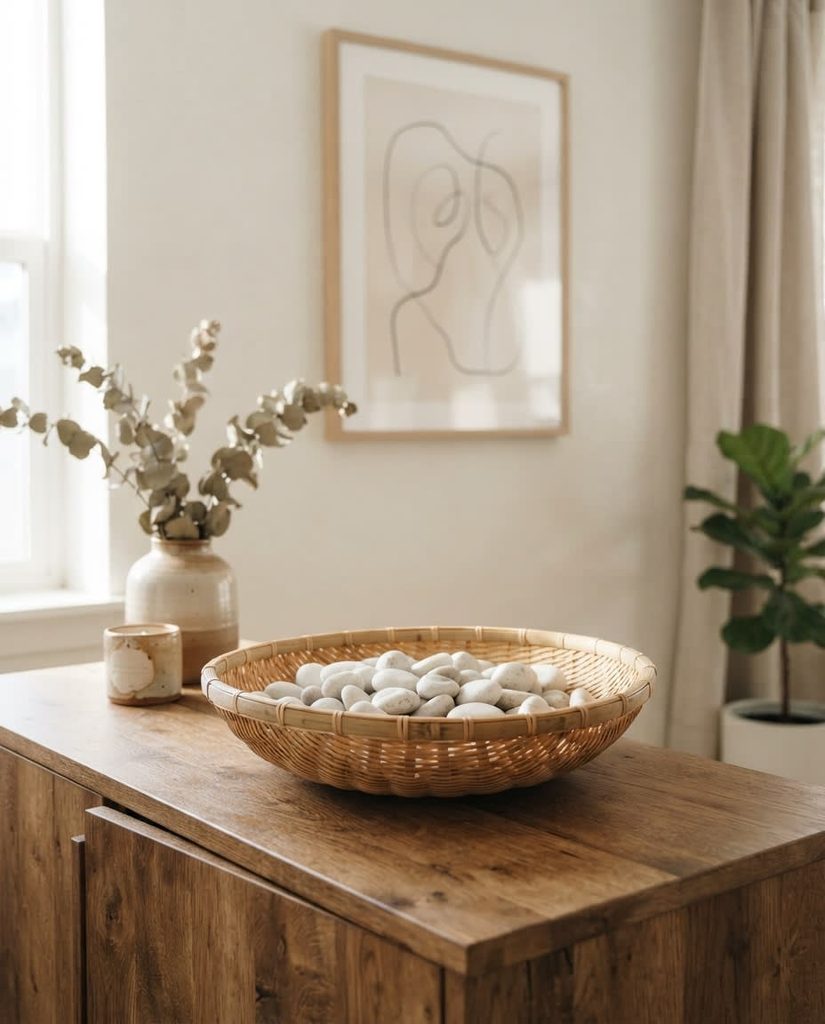
Credenzas and sideboards benefit greatly from varied heights and textures placed along their top surfaces. A shallow woven split-bamboo bowl brings an artisanal touch that softens long straight furniture lines.
I enjoy layering smooth white river pebbles inside to contrast the dark woven bamboo pattern underneath. Mixing smooth stone elements inside woven vessels creates a grounding balance of hard and soft textures.
Here are key filler objects I recommend for flat wooden surfaces:
- Smooth river stones for contrast
- Dried botanicals for organic texture
- Bone beads for elegant draping
- Whole spices for subtle scent
Honed Grey Limestone Bowl on Entryway Benches
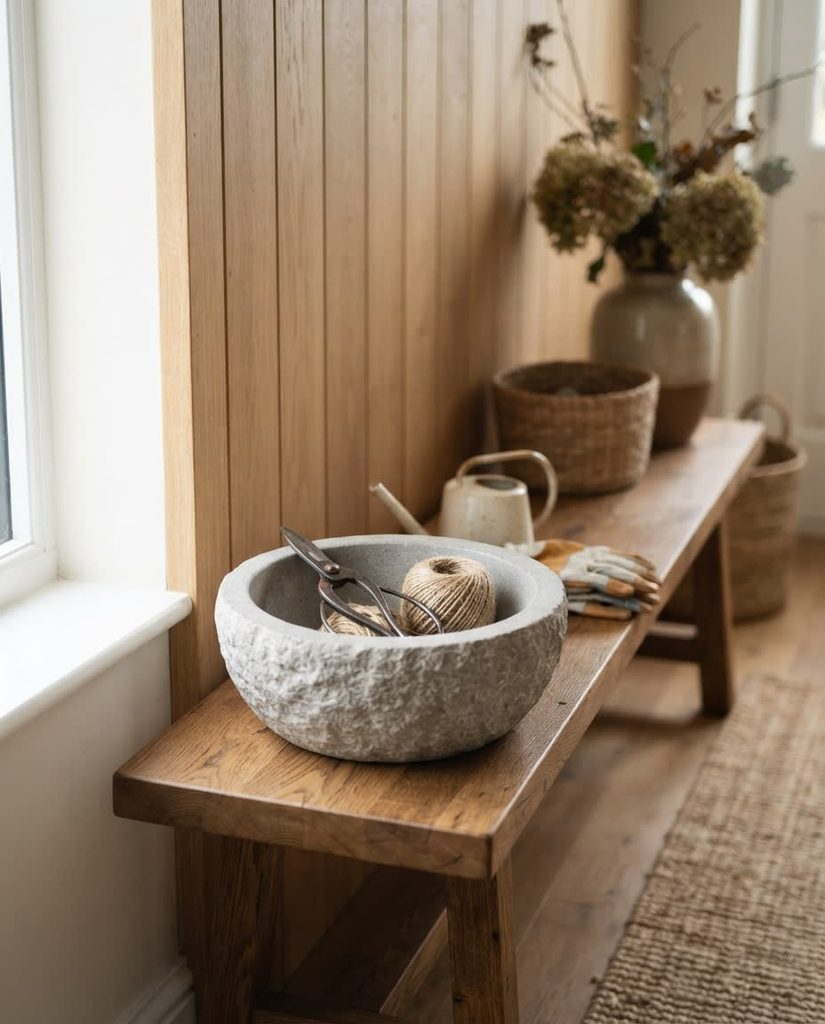
Mudroom and entryway benches require functional arrangements that feel authentic to daily utility. A round honed grey limestone bowl offers a durable resting place for outdoor prep items near paneling.
I use mine to hold garden snips and natural jute twine for quick trips out to the yard. Using sturdy stone containers in entryway utility spots seamlessly blends everyday function with practical design.
Blackened-Iron Bowl on Reclaimed Sofa Tables
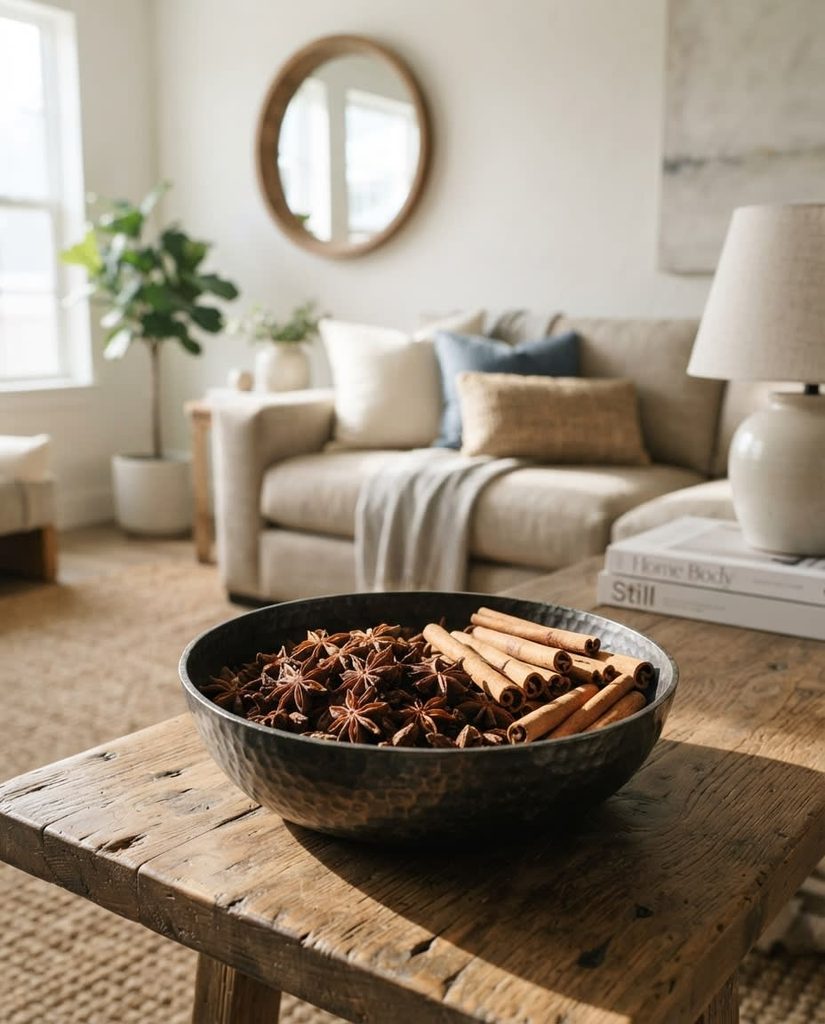
Long tables situated behind living room sofas provide a prime opportunity to experiment with rich aromatic styling choices. A low-profile hammered blackened-iron bowl looks exceptional against warm reclaimed wood surfaces.
I fill this iron piece with whole star anise and cinnamon quills to infuse the room naturally. Displaying fragrant whole spices in dark metal vessels creates a rich sensory detail for seating areas.
Speckled Stoneware Bowl for Bathroom Vanity Counters
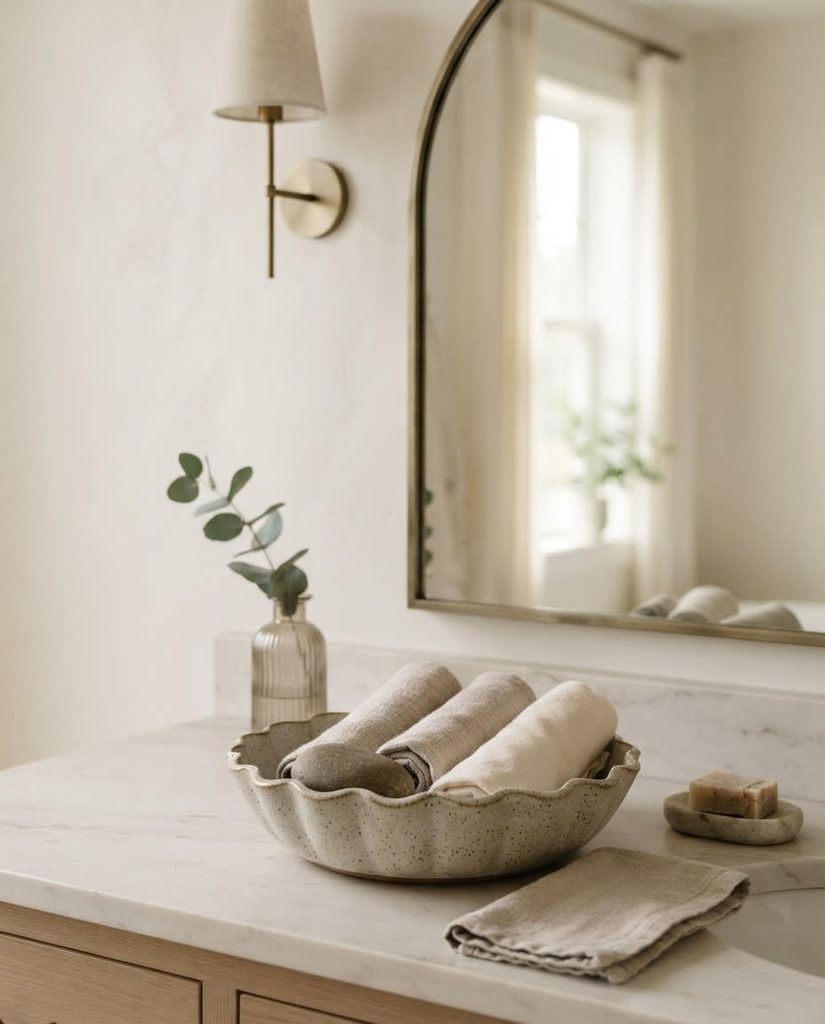
Bathroom counters often lack natural warmth because of hard tiles, glass, and polished plumbing fixtures. A scalloped-rim speckled stoneware bowl introduces handcrafted charm and softer lines beside vanity mirrors.
I like storing tightly rolled neutral linen washcloths and a smooth river stone inside for a spa feel. Styling spa essentials inside stoneware bowls transforms routine vanity surfaces into luxurious personal retreats.
Keep these simple styling principles in mind across every room:
- Keep bowl fills simple and organic
- Match scale to the underlying surface
- Balance dark materials with lighter backgrounds
Dark Green Serpentine Marble Footed Bowl
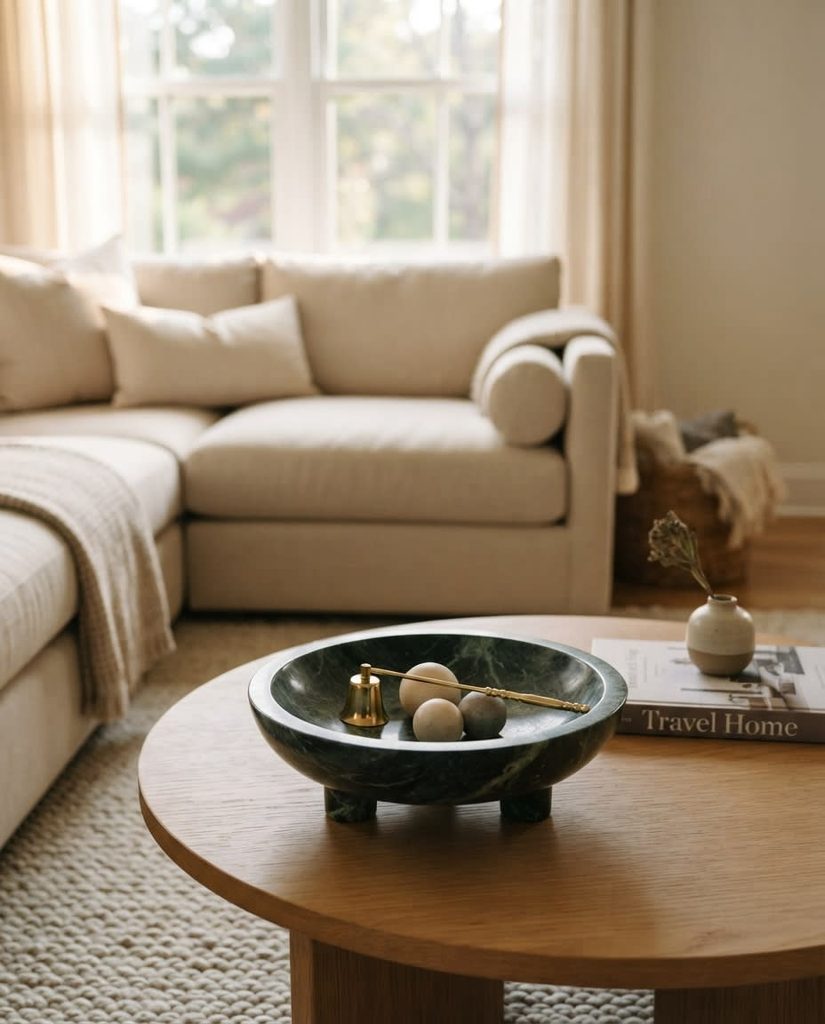
On a low cocktail table, a footed bowl carved from dark green serpentine marble provides a grounded, luxurious foundation. I like to fill this sturdy stone vessel with a brass candle snuffer and two small decorative stone spheres to create visual contrast.
The rich green tones of the marble balance brilliantly against lighter linen upholstered furniture in the background. Selecting heavy stone materials introduces an architectural presence that anchors open living rooms effortlessly.
Elongated Acacia Wood Boat Bowl
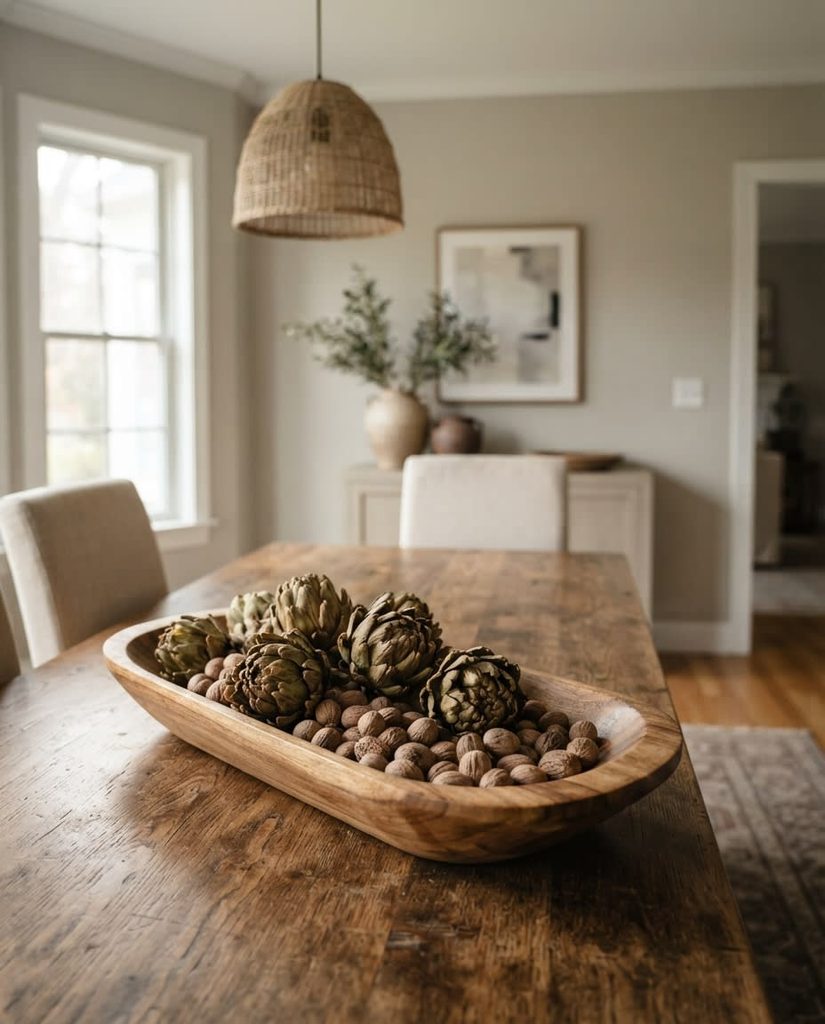
An elongated shallow acacia wood boat bowl makes an exceptional centerpiece across a long wooden dining table. I arrange a neat cluster of dried artichokes and whole nutmegs inside to accentuate the natural grain of the timber.
Using organic dried elements inside a warm wood vessel adds incredible visual depth without blocking sightlines across the room. This simple dining arrangement feels grounded, earthy, and perfectly suited for relaxed family gatherings.
Polished Unlacquered Brass Pedestal Bowl
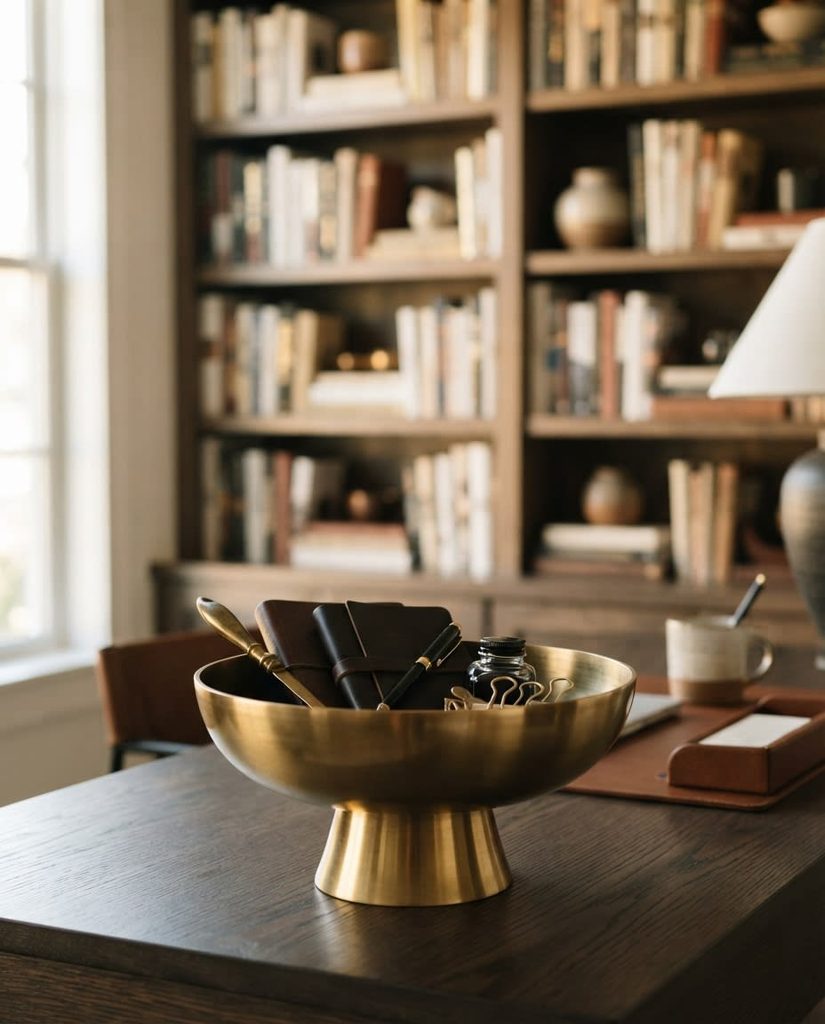
Setting a polished unlacquered brass pedestal bowl on a dark oak desk brings an refined metallic warmth to a home office workspace. I use this elevated vessel to keep small desktop accessories neatly contained while maintaining a tidy, sophisticated work surface.
Unlacquered brass develops a handsome natural patina over time that pairs beautifully with quiet surrounding bookshelves. The soft reflections on the metallic curve instantly brighten up deeper wood furniture finishes.
Round Matte White Ceramic Pinch Bowl
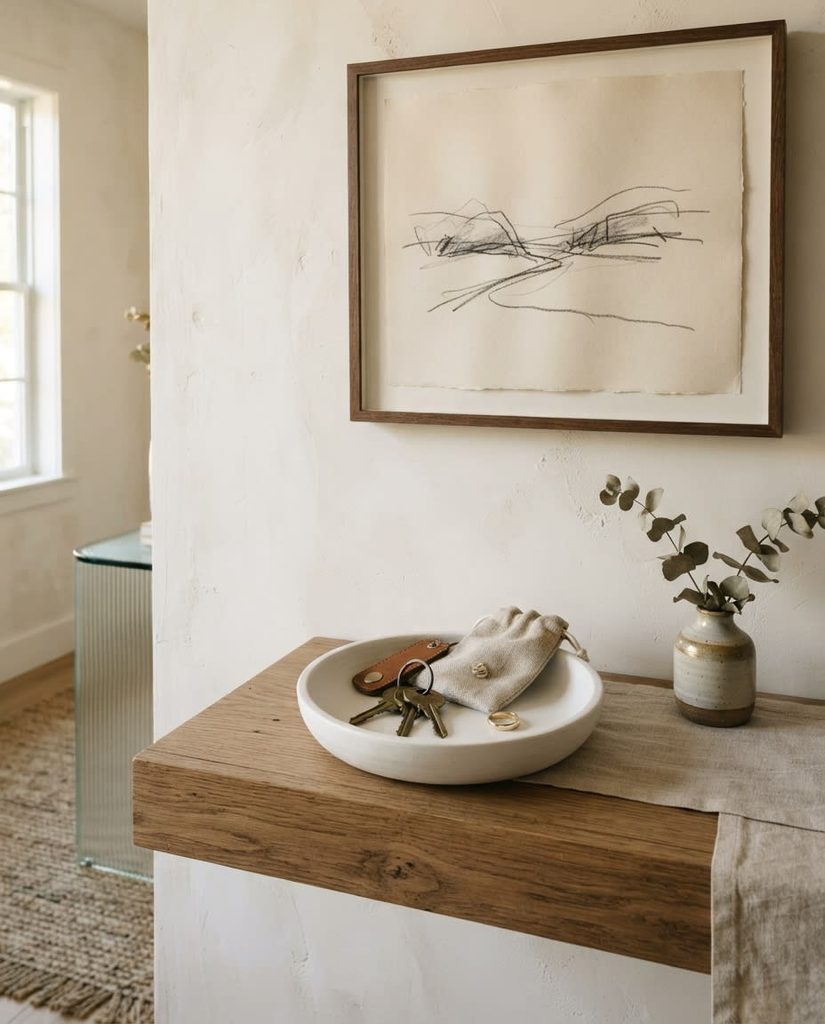
A small round matte white ceramic pinch bowl resting on a floating entryway shelf serves as a practical drop spot for daily essentials. I place this minimalistic ceramic piece right beneath a framed charcoal sketch to establish a clean entryway scene.
Choosing a smooth matte white finish keeps small utilitarian items organized while maintaining a serene architectural aesthetic. It provides a welcoming drop zone for keys and coins without visual clutter.
Hand-Hammered Copper Centerpiece Bowl
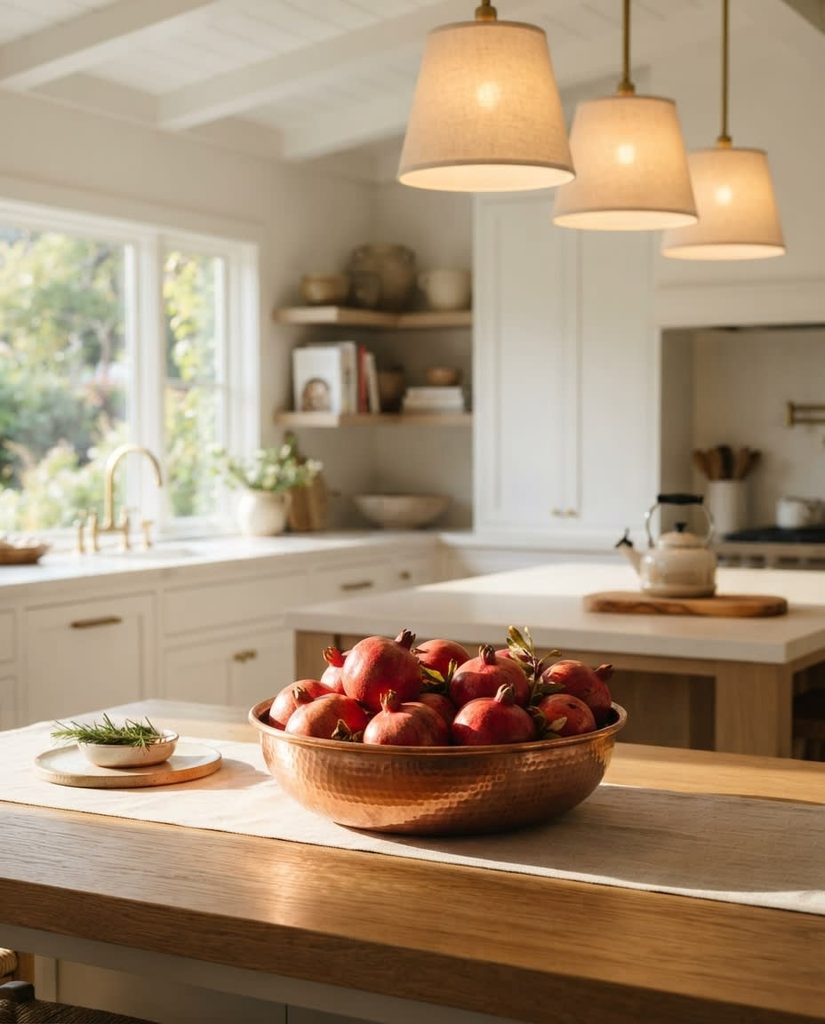
Positioning a shallow hand-hammered copper centerpiece bowl on a kitchen breakfast bar creates a warm focal point in the heart of the home. I fill this textured metallic bowl with dark red pomegranates to create a stunning contrast of rich colors and surface textures.
The glowing reflection of copper catching soft kitchen light introduces a cozy feel to hard stone counters. This effortless fruit arrangement brings fresh energy and sculptural form to modern kitchen islands.
Charcoal Soapstone Low Bowl
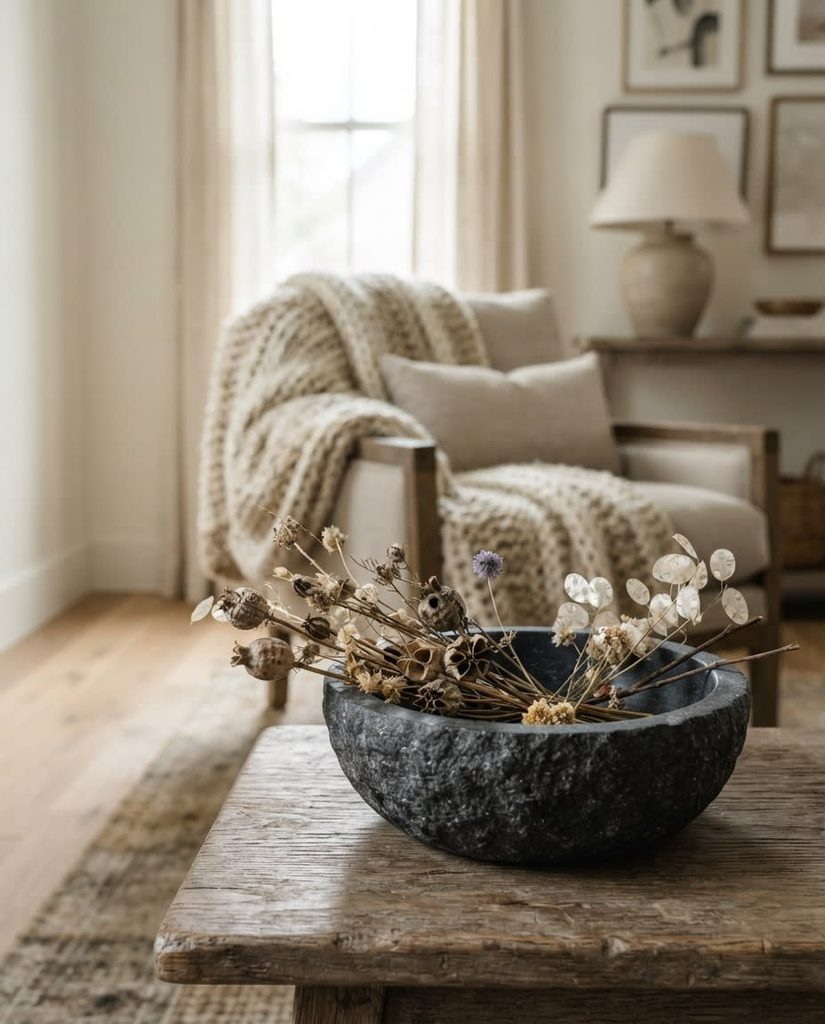
A rough-hewn charcoal soapstone low bowl resting on a weathered wood side table adds a dark matte anchor beside a comfortable reading chair. I display a collection of dried botanical seed pods within its shallow basin to introduce fine organic details.
Combining rough dark stone with soft woven textiles creates an engaging play of contrasting physical textures. This subtle styling approach brings a quiet, tactile quality to quiet corners of your living room.
Distressed White Glazed Stoneware Bowl
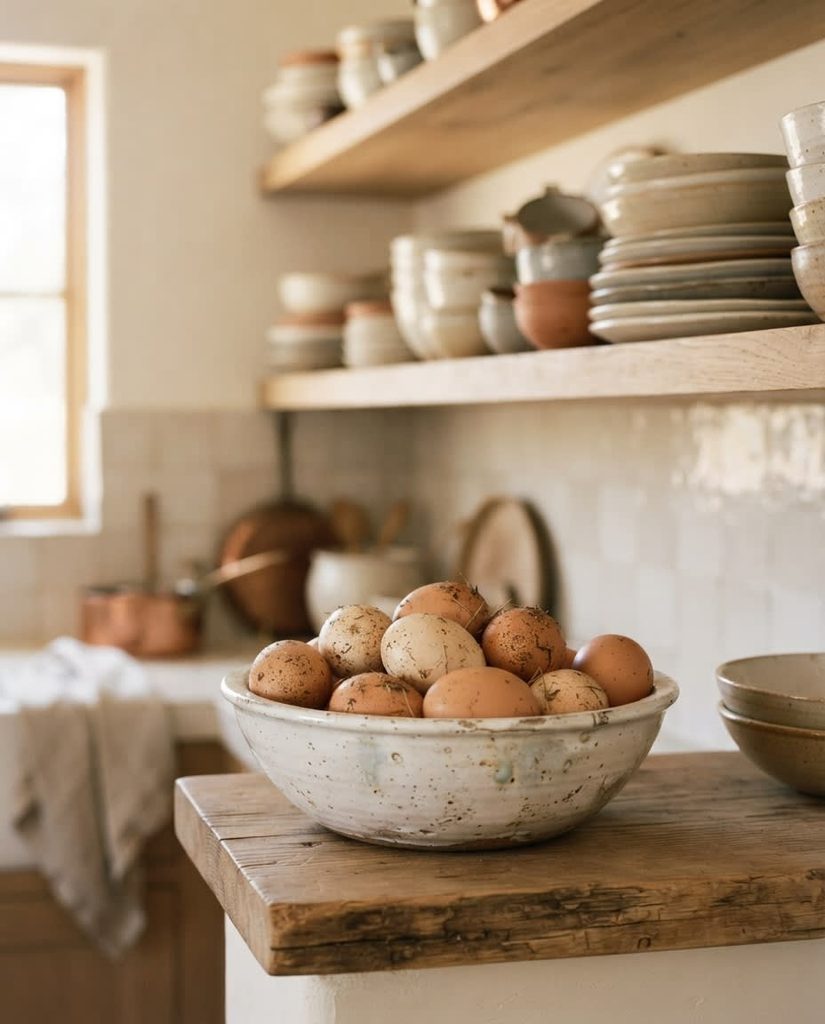
An open kitchen shelf gains rustic charm when anchored by a distressed white glazed stoneware bowl filled with unwashed farm eggs. I place this piece alongside stacked ceramic plates to build a cozy, functional display that feels effortlessly lived-in.
Displaying fresh farm eggs in a handcrafted stoneware vessel brings authentic farmhouse character to open kitchen storage. The crackled glaze texture adds a subtle touch of handcrafted history to bright cooking spaces.
Woven Sweetgrass Basket Bowl
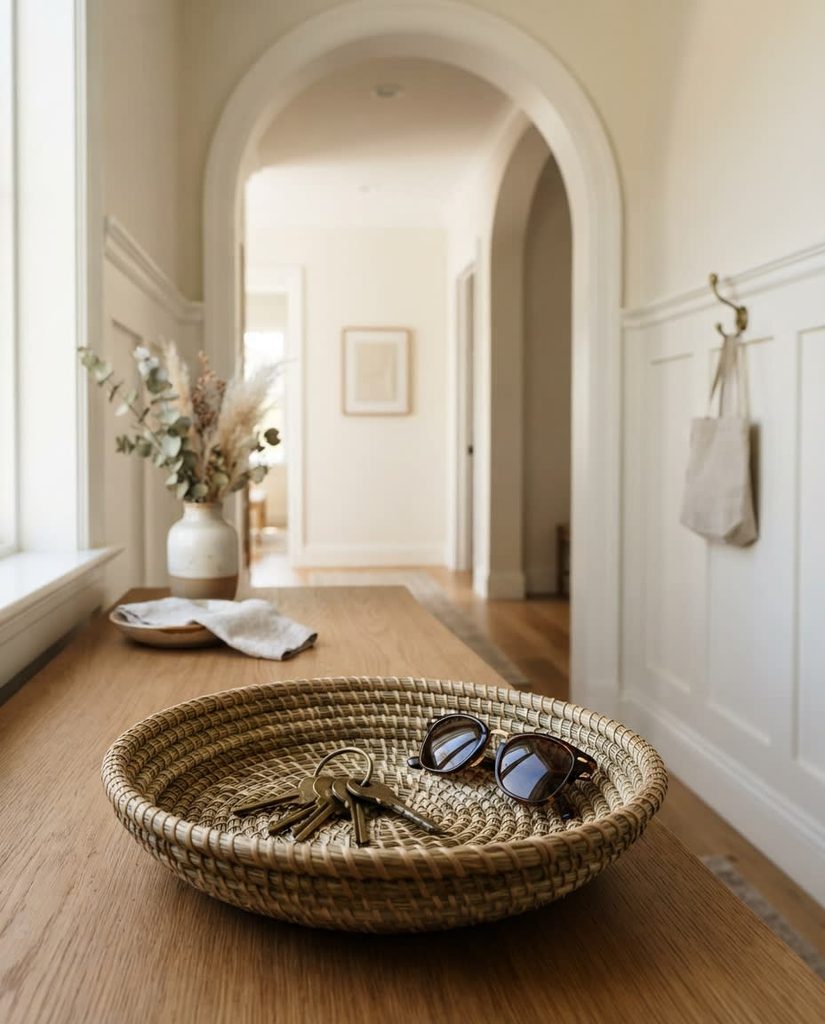
A woven coil sweetgrass basket bowl placed on an entryway dresser offers a soft, tactile surface for catching everyday items. I use this lightweight natural vessel to store brass keys and sunglasses as soon as I walk through the door.
Incorporating woven natural fibers into an entryway softened harsh hard architectural lines with welcoming organic warmth.This functional storage choice keeps daily items accessible while enhancing entry hall decor.
Scalloped Unglazed Terracotta Bowl
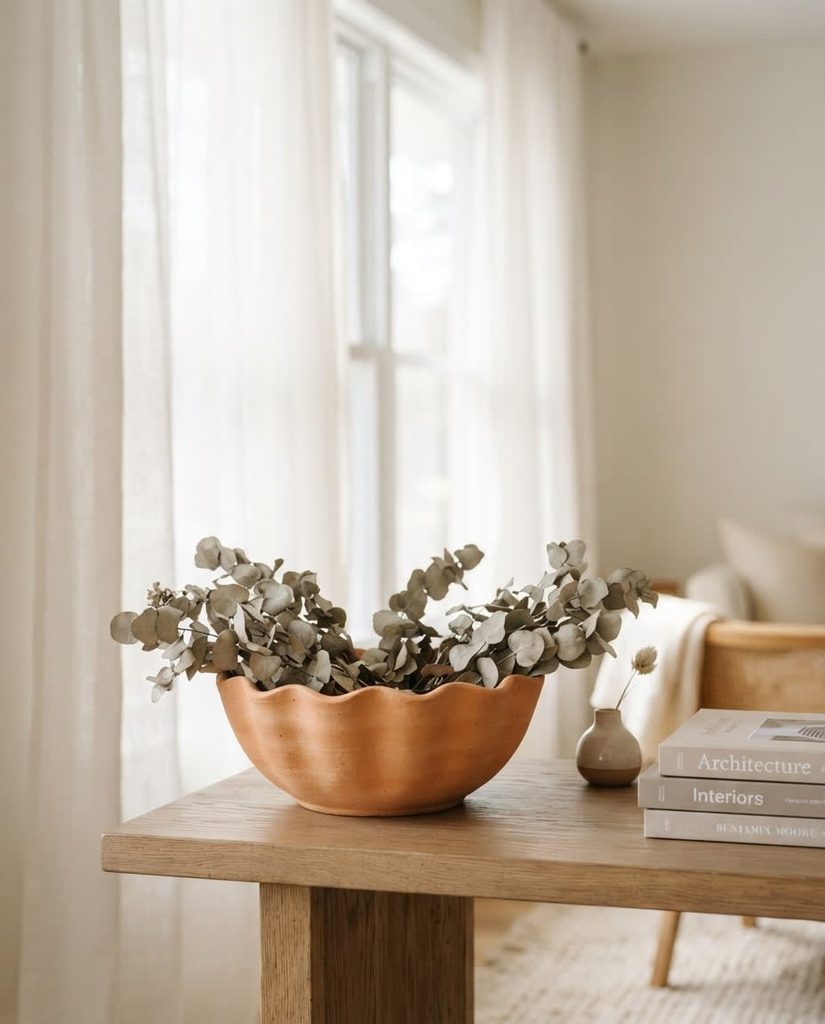
On a console table bathed in natural window light, a scalloped unglazed terracotta bowl adds delightful architectural shaping and earthy color. I fill the scalloped edges with dried eucalyptus leaves that spill over gently to catch the morning sunlight.
The warm clay surface of unglazed terracotta provides a grounded Mediterranean texture that pairs effortlessly with soft linen drapes. This sculptural bowl creates an inviting vignette near airy windows.
Minimalist Cast-Concrete Low Bowl
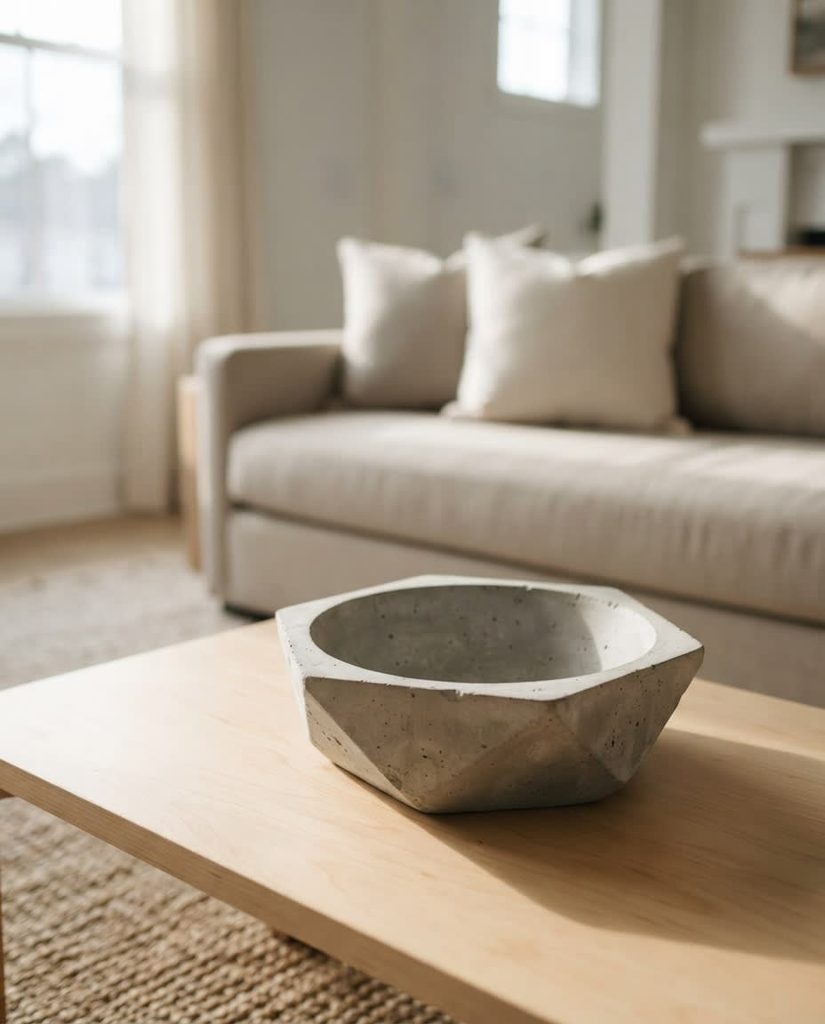
A minimalist cast-concrete low bowl sitting on a light birch coffee table proves that empty decorative vessels can make a powerful architectural statement. Its clean geometric shape and cool matte tone bring modern industrial poise to a light-toned living area.
Leaving a heavy concrete bowl unadorned allows its raw material texture and subtle form to shine as pure sculpture.
When selecting empty bowls as standalone art, focus on materials with distinct surface visual weight. Concrete, honed travertine, and thick cast iron work best for this clean styling approach. Here are three key considerations when styling empty vessels:
- Choose shapes with strong geometric silhouettes
- Pair heavy matte materials with soft surrounding furniture
- Keep surrounding tabletop accessories to a minimum
Conclusion
Styling decorative bowls across your home is an intuitive way to introduce texture, balance, and purposeful organization. By pairing thoughtful materials like dark marble, warm copper, and raw terracotta with complementary fillers, you turn simple surfaces into curated visual moments.
Remember to let your choice of bowl reflect the mood of the room while keeping functional needs in mind. With these simple styling principles, every tabletop in your home can feel elevated, cozy, and intentionally designed.