
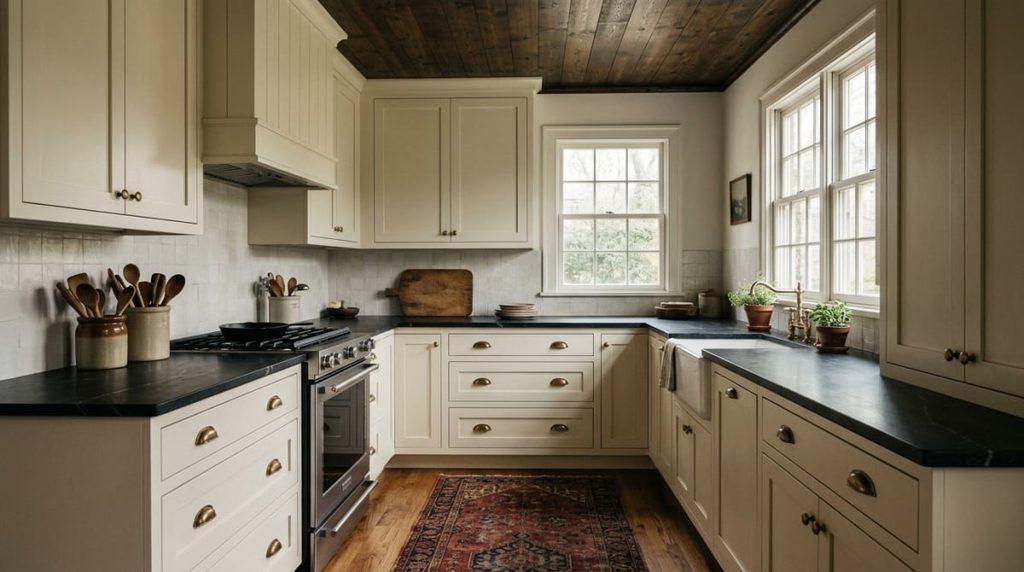
For years, the design world favored sterile, all-white farmhouses that felt more like clinical showrooms than heart-of-the-home gathering places. I always felt that true farmhouse living should embrace rich history, earthy depth, and cozy shadows. Moody farmhouse kitchens capture that welcoming spirit by grounding rustic textures with saturated, heritage-inspired paint colors. When you layer darker tones onto functional cabinetry and natural materials, the whole room feels rooted and timeless.
Designing with dark tones requires a deliberate balance so your kitchen feels intimate rather than gloomy. I love introducing deep charcoals, olive greens, and rich wood stains alongside soft natural textiles and organic stone. By paying close attention to natural lighting and reflective finishes, you can build a space that feels deeply personal and hardworking.
In this guide, I want to walk you through practical ways to bring this atmospheric look into your own home.
Honed Black Soapstone Countertops with Cream Cabinets
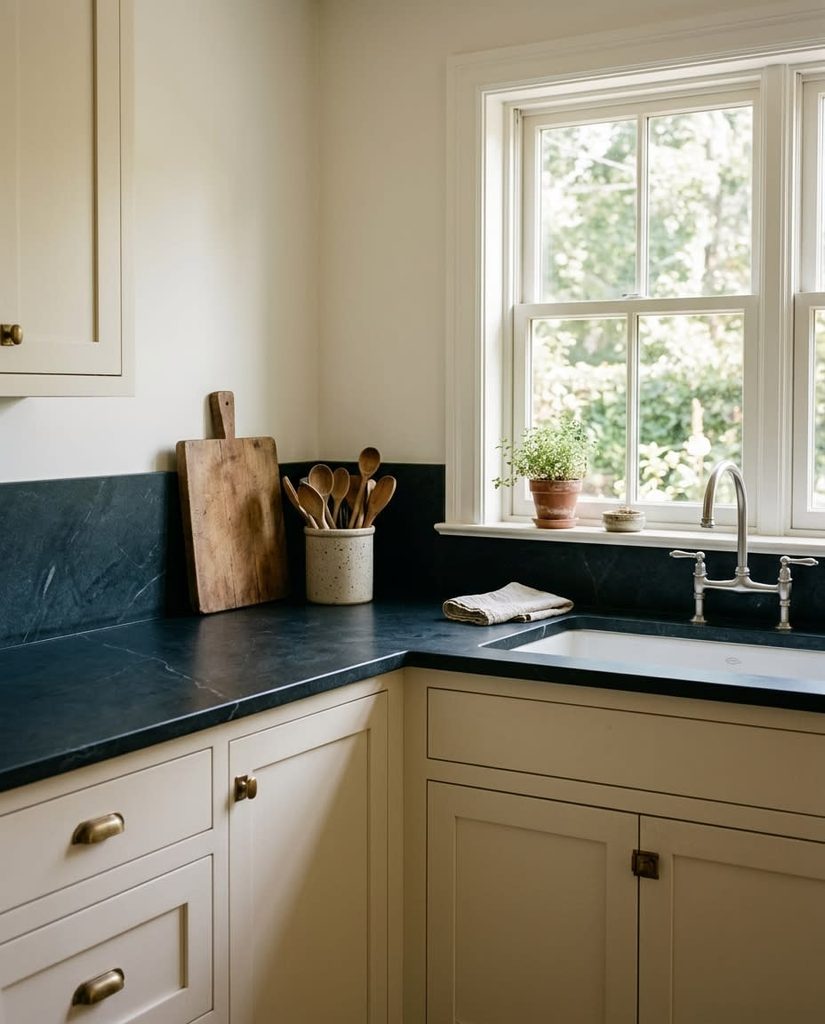
When clients ask me for a timeless work surface, I often steer them toward deep charcoal soapstone. Pairing velvety honed soapstone with warm ivory cabinets creates a classic contrast that softens the entire kitchen.
The low matching soapstone backsplash provides clean continuity along an L-shaped layout without dominating the room. Daily chores feel grounded when you work over a natural stone surface that gently patinas with age and oil.
Dark Stained Wood Ceiling with Soft White Cabinetry
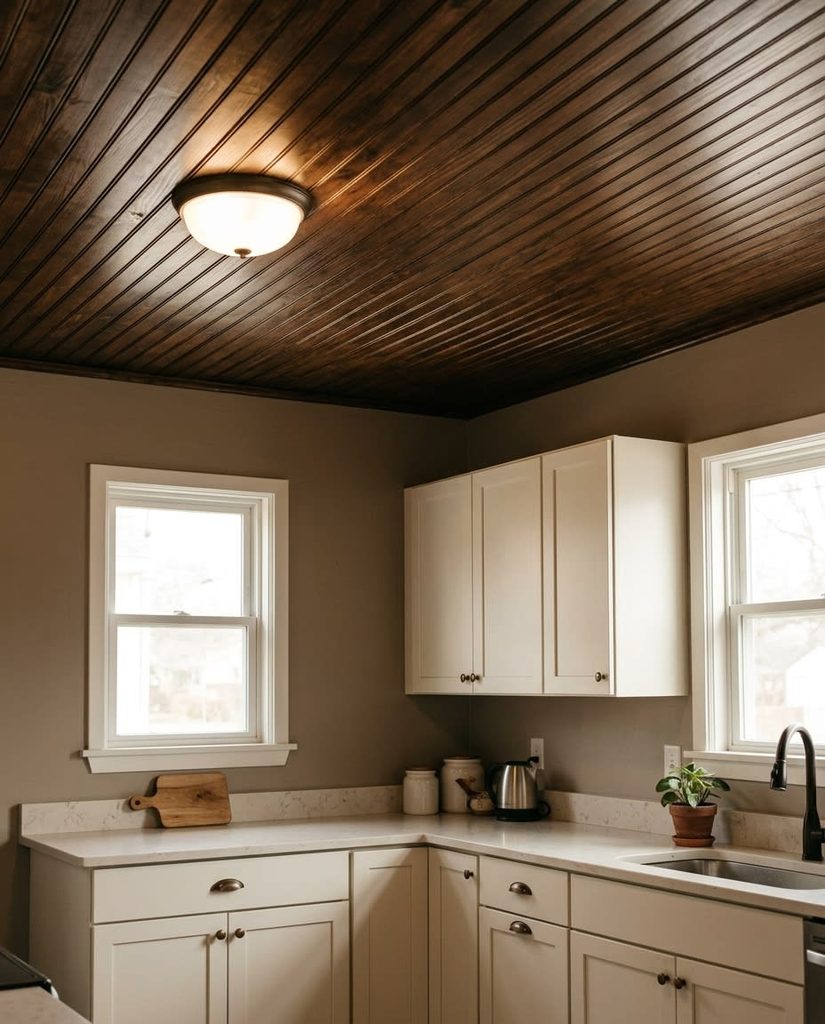
Standard eight-foot ceilings often feel flat, but adding dark tongue-and-groove boards instantly creates an intimate canopy. I love balancing dark chestnut planking with soft white cabinetry and pale quartz counters to reflect light upward.
Muted clay walls tie the upper ceiling tone to the floor, preventing the dark overhead surface from feeling top-heavy. A dark stained wood ceiling draws the eye upward and turns an ordinary suburban kitchen into a cozy haven.
Dark Truffle Cabinets with Weathered Terracotta Flooring
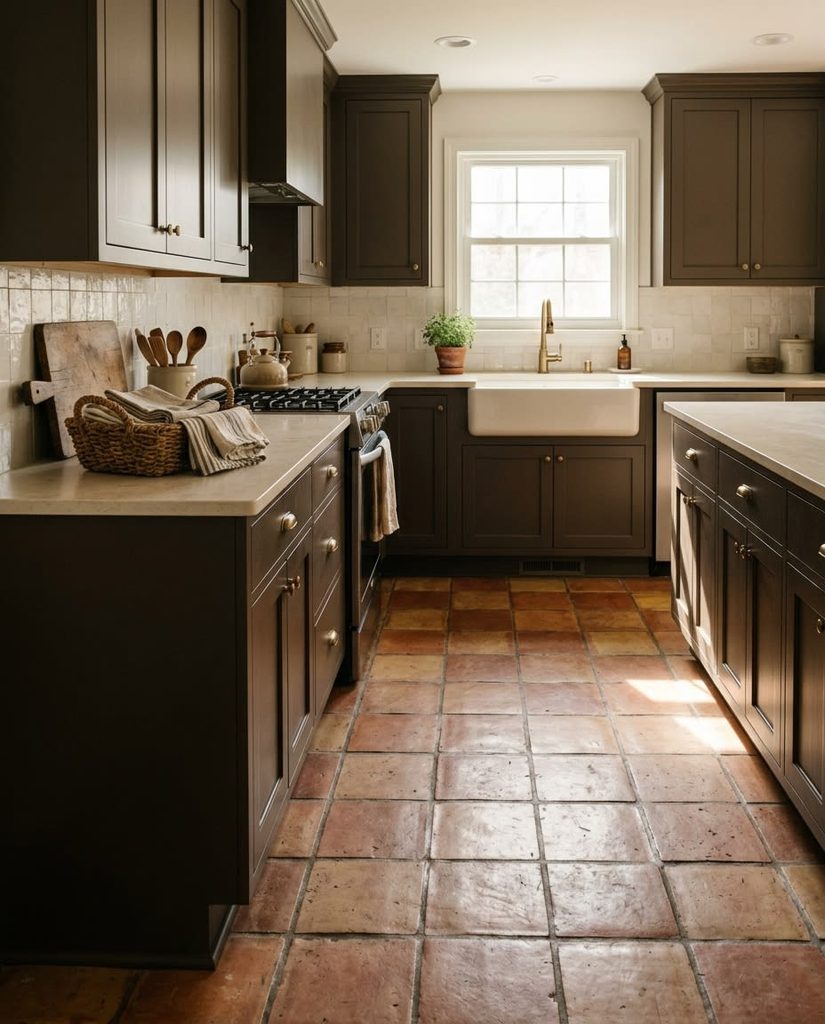
Painting your lower and upper cabinetry in a deep truffle brown establishes a deeply comforting, grounded aesthetic. To keep the space feeling organic rather than modern, I pair this rich paint color with matte terracotta floor tiles.
The dusty orange and burnt brown variations in the clay tiles bounce warm light across the room during late afternoon. Weathered terracotta tile floors bring an irreplaceable rustic texture that balances deep chocolate cabinetry.
Built-In Wooden Plate Rack with Dark Farmhouse Cabinetry
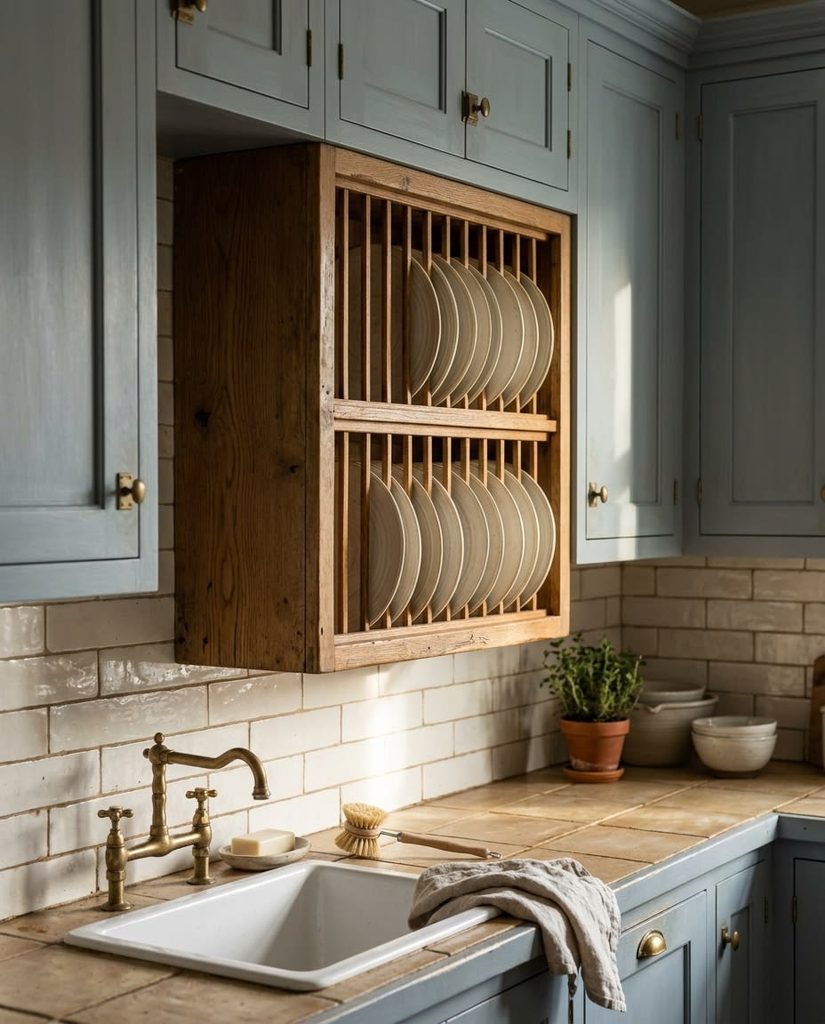
A built-in vertical plate rack adds functional cottage charm right where you need it most. I like to frame the rack in natural medium oak and install it directly beside the prep sink for easy unloading.
Placing this natural wood feature against desaturated blue-gray cabinetry breaks up solid cabinet doors and displays your everyday stoneware. Displaying everyday cream dishware in an integrated plate rack brings authentic vintage utility to your kitchen walls.
Deep Aubergine Walls with Warm Oatmeal Cabinets
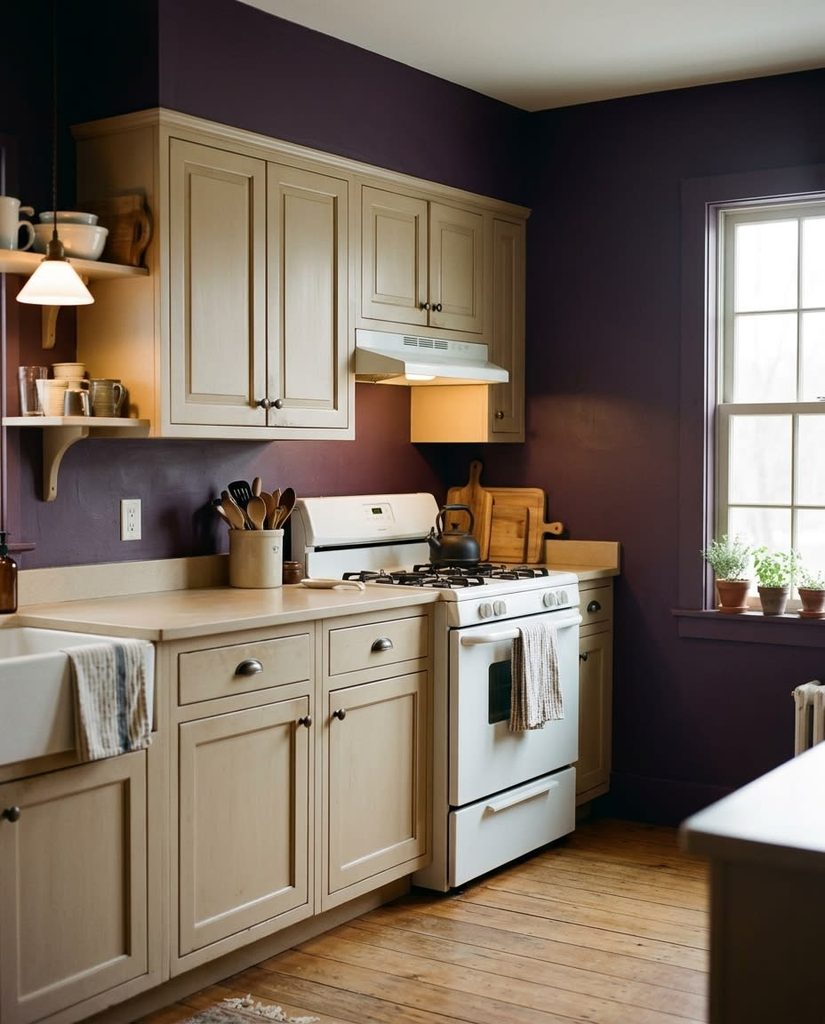
Deep aubergine is one of my favorite secret colors for creating a moody, enveloping backdrop. In low light, this shade reads as a smoky charcoal, while natural sunlight reveals warm plum undertones.
Oatmeal-colored Shaker cabinets and pale beige counters keep the kitchen bright enough for cooking and prep work. Deep purple walls create a dramatic shadow play that makes simple oatmeal cabinetry feel exceptionally welcoming.
Dark Botanical Wallpaper in a Farmhouse Breakfast Corner
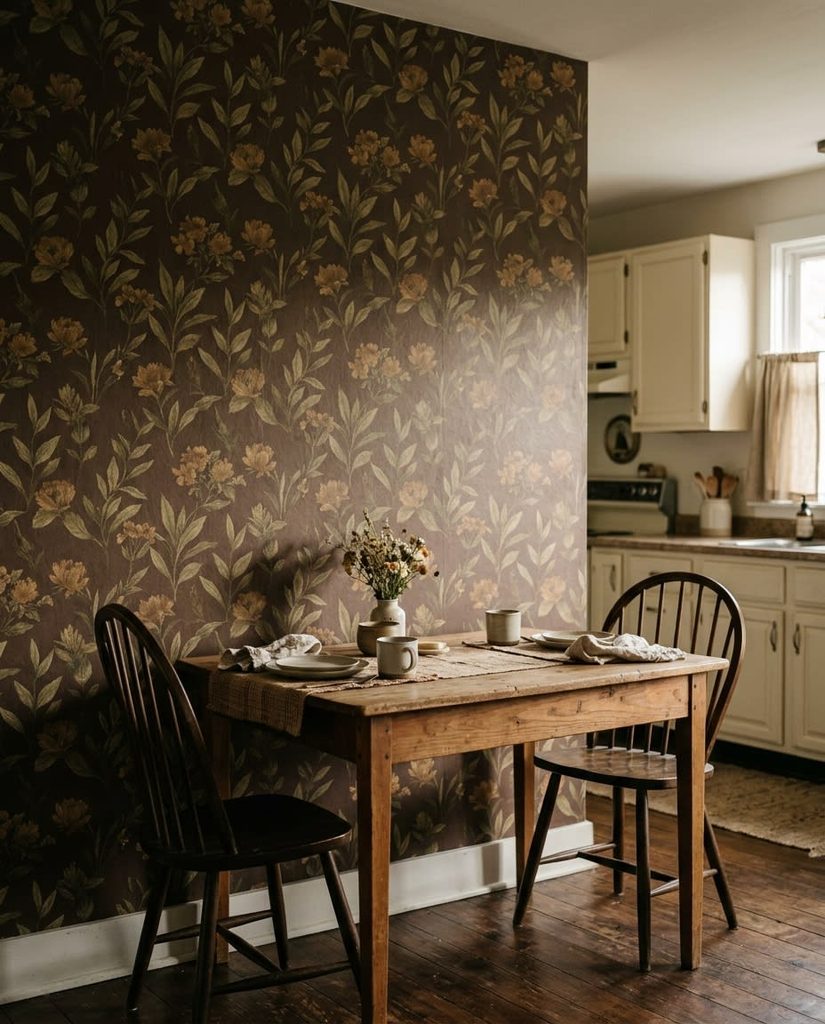
An eat-in breakfast nook provides the perfect canvas for rich botanical prints without overwhelming the main cooking zone. I prefer historic patterns featuring olive foliage, muted ochre petals, and dark chocolate backgrounds.
A simple wooden table and two Windsor chairs keep the floor area open and functional for morning coffee. A moody botanical accent wall establishes an inviting cottage corner inside an otherwise practical kitchen.
Aged Brass Bridge Faucet with Natural Travertine Backsplash
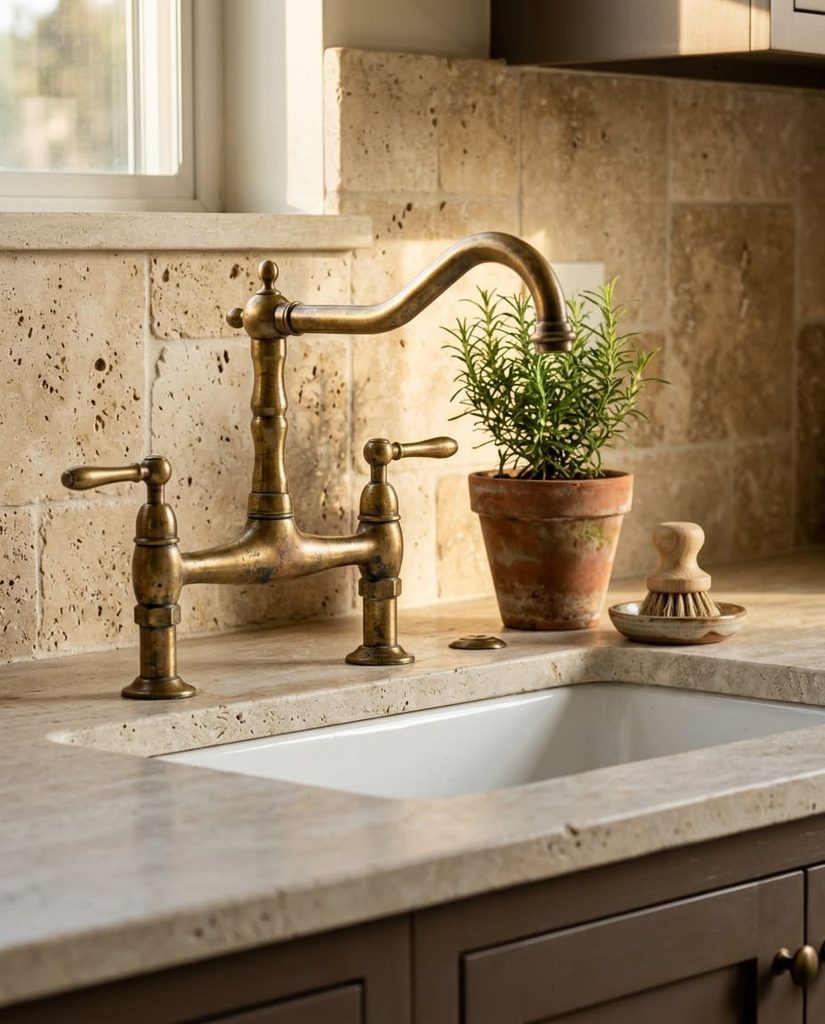
The sink area is the hardest-working zone in any home, so its materials should age gracefully. I always favor an unlacquered brass bridge faucet that develops subtle oxidation and fingerprint character over time.
Backing this vintage fixture with tumbled travertine tile adds organic pits and earthy variation that subway tile cannot match. An unlacquered brass bridge faucet pairs effortlessly with tumbled travertine to establish authentic period charm.
Keep these essential care pointers in mind for your sink station:
- Clean travertine with pH-neutral stone soap to avoid etching the surface.
- Wipe brass fixtures dry after evening dishes to guide a natural patina.
- Reseal porous stone tiles once a year to protect against cooking splatters.
- Avoid acidic cleaners that strip away the living metal finish.
Moody Teal Shiplap Walls with a Vintage Wooden Peg Rail
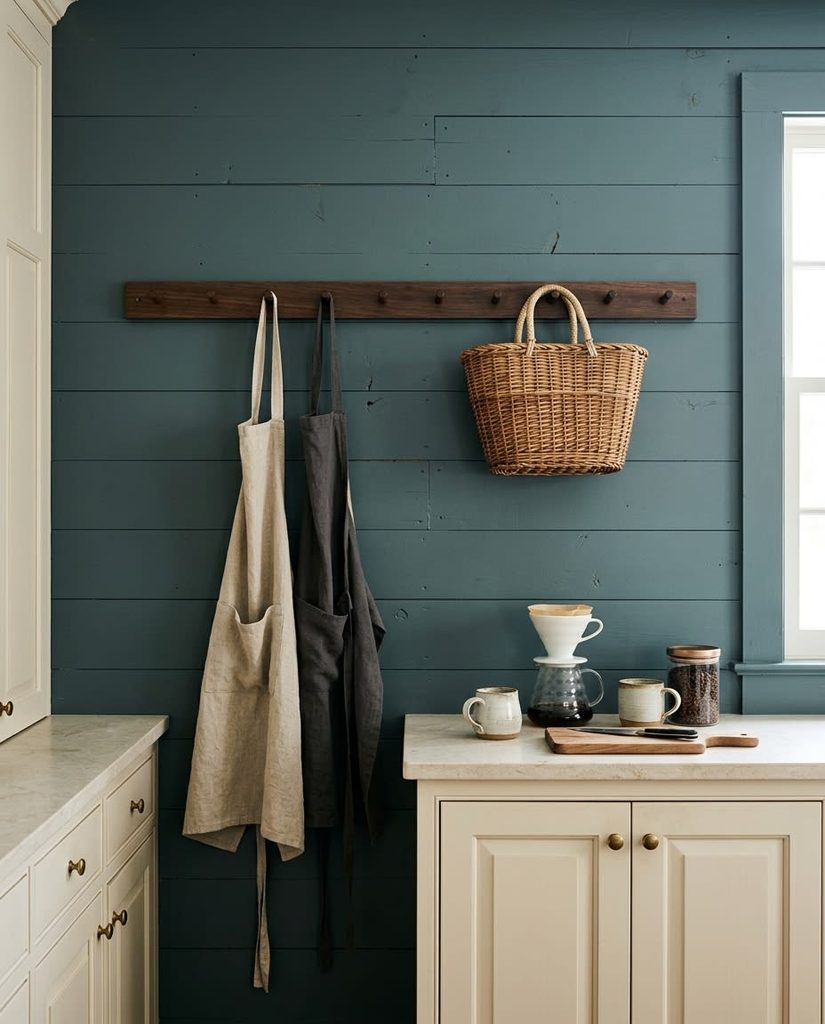
Horizontal shiplap takes on an entirely new personality when painted in a saturated, smoky teal. I like utilizing this treatment along a dedicated coffee station or secondary prep wall.
Installing a dark-stained shaker peg rail across the boards adds immediate storage for linen aprons, woven market baskets, and utility brushes. A deep teal shiplap wall instantly modernizes rustic board paneling while honoring traditional farmhouse lines.
Antique-Style Schoolhouse Lighting with Dark Honey Oak Cabinets
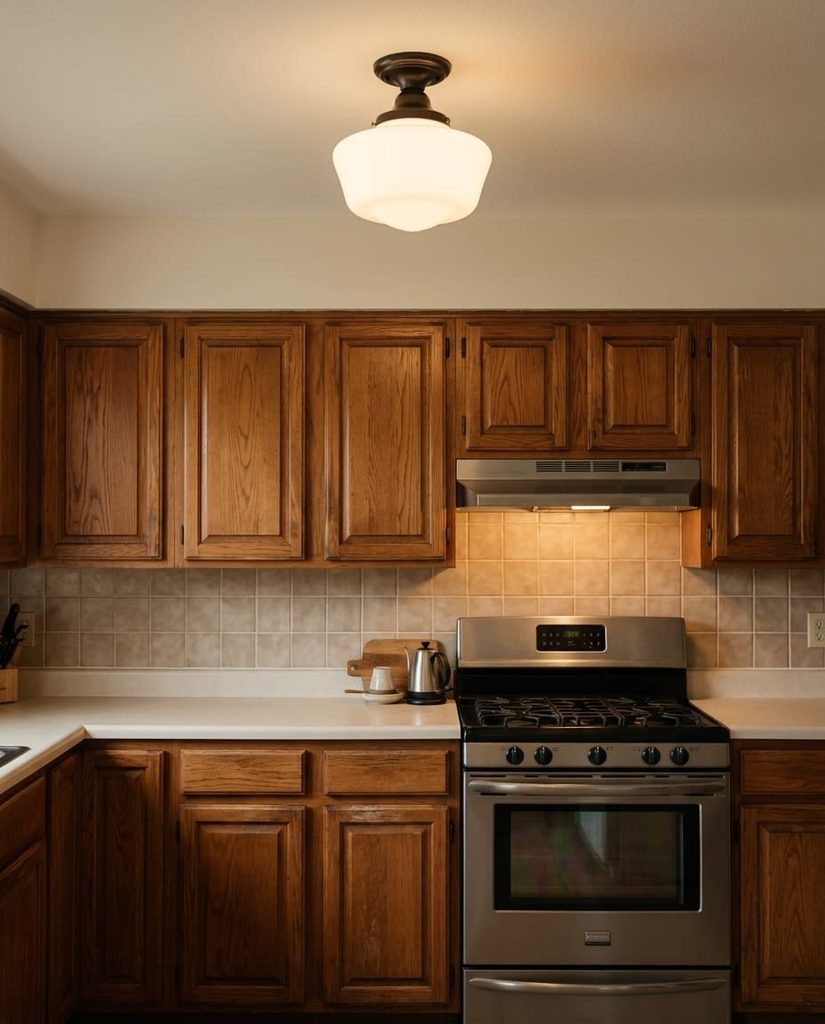
Overhead lighting can make or break the moody atmosphere of a home kitchen. Instead of cold recessed cans, I rely on milk-glass schoolhouse flush mounts with dark bronze fittings.
These frosted globes cast an even, golden glow across warm honey oak cabinets and pale ceramic backsplashes. Milk-glass schoolhouse fixtures provide the gentle, diffused illumination needed to flatter darker wood cabinetry.
Vintage Persian Runner in a Dark Farmhouse Galley Kitchen
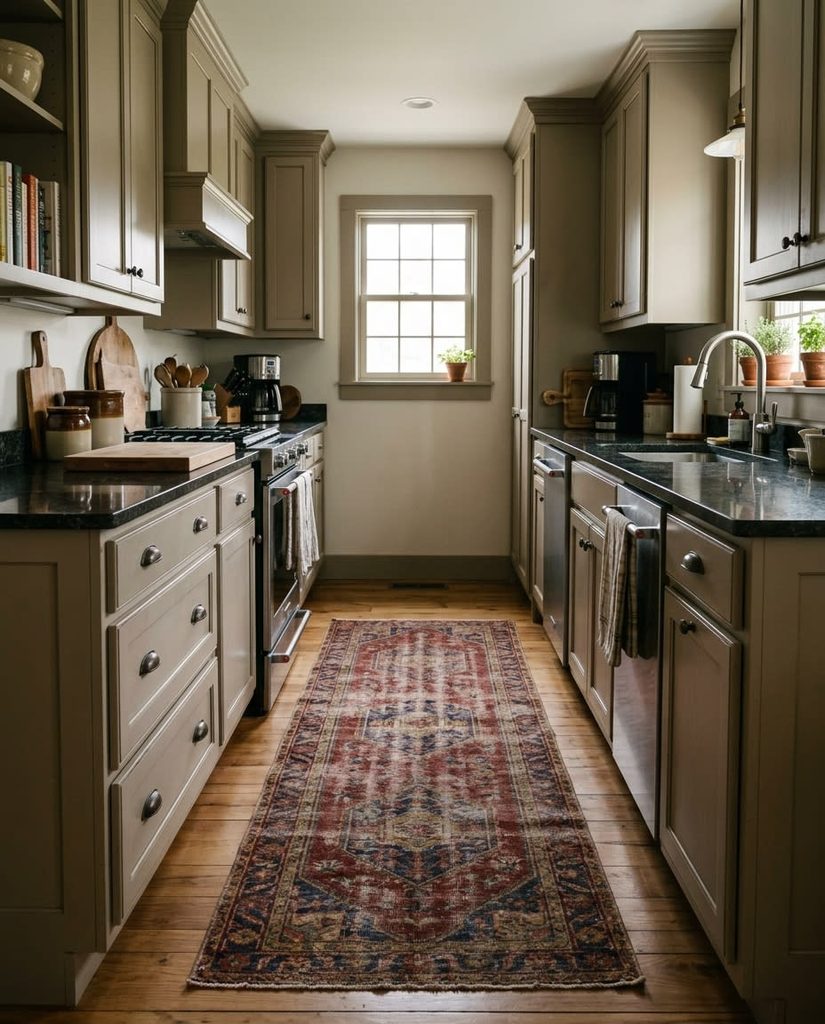
Galley kitchens can sometimes feel narrow and utilitarian, but textile flooring changes the entire equation. A long vintage runner with faded indigo, deep oxblood, and muted gold patterns adds warmth between parallel cabinet runs.
The low pile withstands daily foot traffic while hiding minor kitchen spills with ease. A weathered wool runner softens the hard lines of a galley layout and introduces effortless heritage charm.
I suggest following these practical shopping rules when outfitting a narrow galley aisle:
- Choose a wool flatweave or low-pile rug for easy vacuuming and spot cleaning.
- Measure carefully to maintain at least four inches of bare floor along cabinet bases.
- Always lay a non-slip rubber rug pad underneath to prevent shifting.
- Pick dark, multi-toned patterns that disguise inevitable kitchen crumbs.
Charcoal Black Shaker Cabinets with Butcher Block Countertops
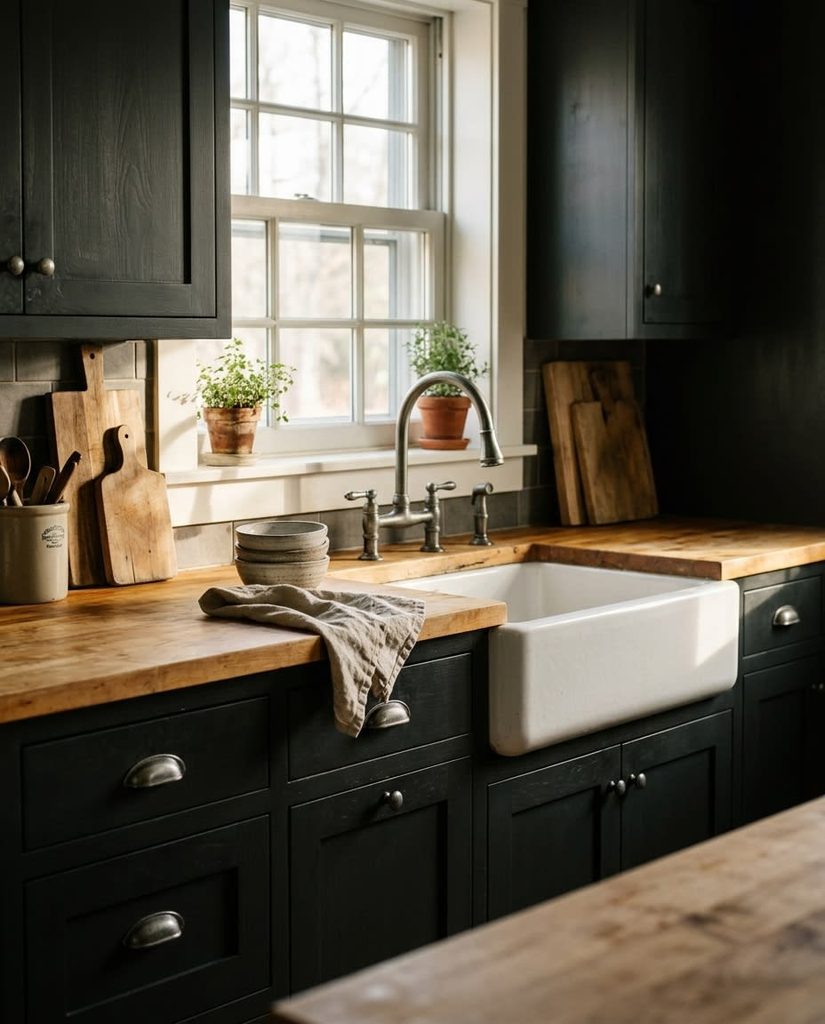
When clients ask me how to ground a sprawling kitchen without losing warmth, I immediately point them toward matte charcoal cabinetry. Thick honey-toned butcher block counters provide the perfect organic counterbalance to the stark drama of black Shaker millwork.
I always specify a classic white porcelain farmhouse sink to break up the lower cabinet run and bounce morning sunlight back into the room. Small details like aged pewter cup pulls and an unbleached linen tea towel keep the overall composition humble and approachable.
Dark Forest Green Cabinets with a Weathered Brick Backsplash
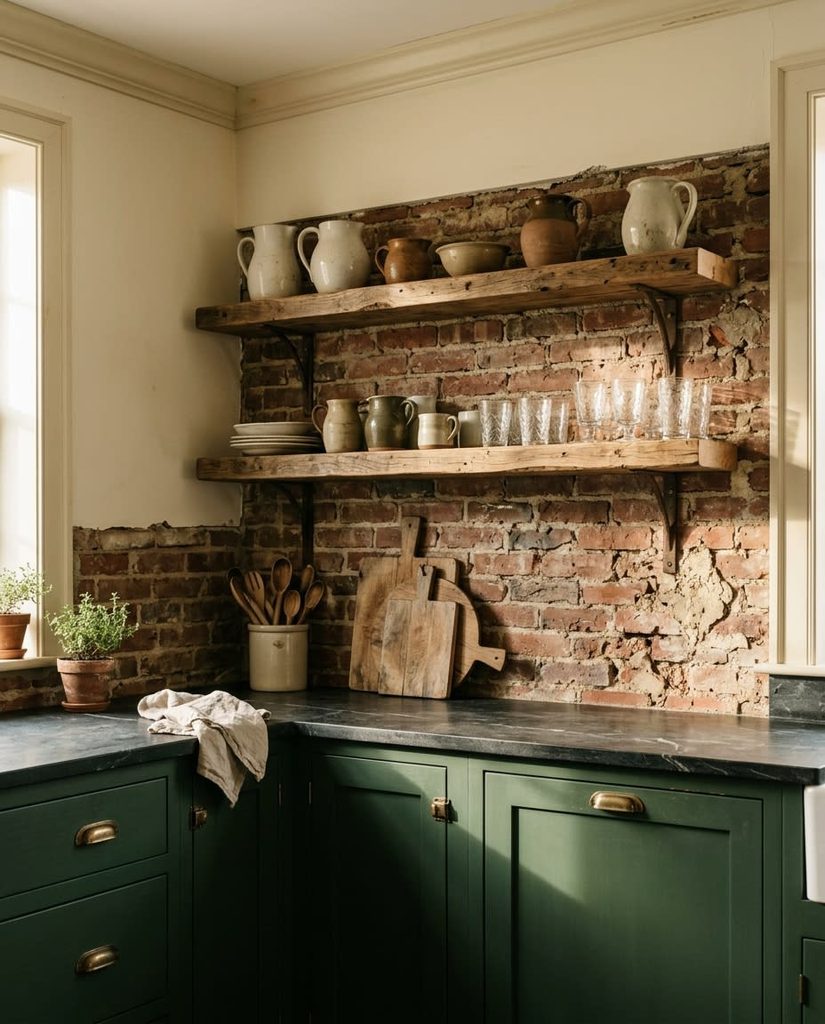
Dark forest green carries a quiet, grounded energy that feels deeply connected to the natural world outside. Pairing saturated green base cabinets with a reclaimed brick backsplash introduces instant historical character to an everyday kitchen.
The rough mortar lines and chipped edges of salvaged masonry soften the cabinetry lines effortlessly. To keep the workspace practical, I suggest open timber shelving above to display everyday ceramic pitchers and glassware within arm’s reach.
Burgundy Kitchen Island with Vintage Leather Bar Stools
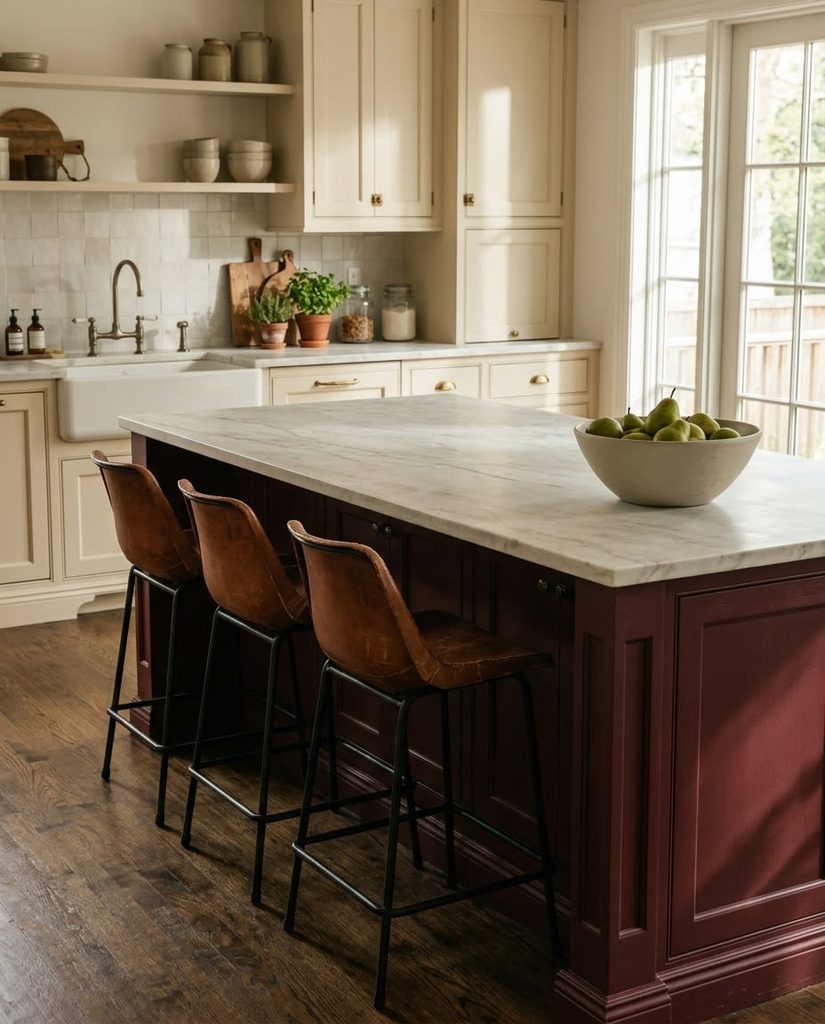
If you hesitate to coat every cabinet in a moody hue, focus your attention entirely on a central island. A deep burgundy base acts like a masterclass in subtlety, offering an earthy warmth that pairs beautifully with surrounding cream cabinetry.
Cognac leather bar stools pull out the amber undertones of the wine-colored paint while offering comfortable everyday seating. Crown the island with a honed white marble slab to provide an easy-to-clean prep zone for rolling out dough.
Smoky Navy Cabinets with a Vintage Checkerboard Floor
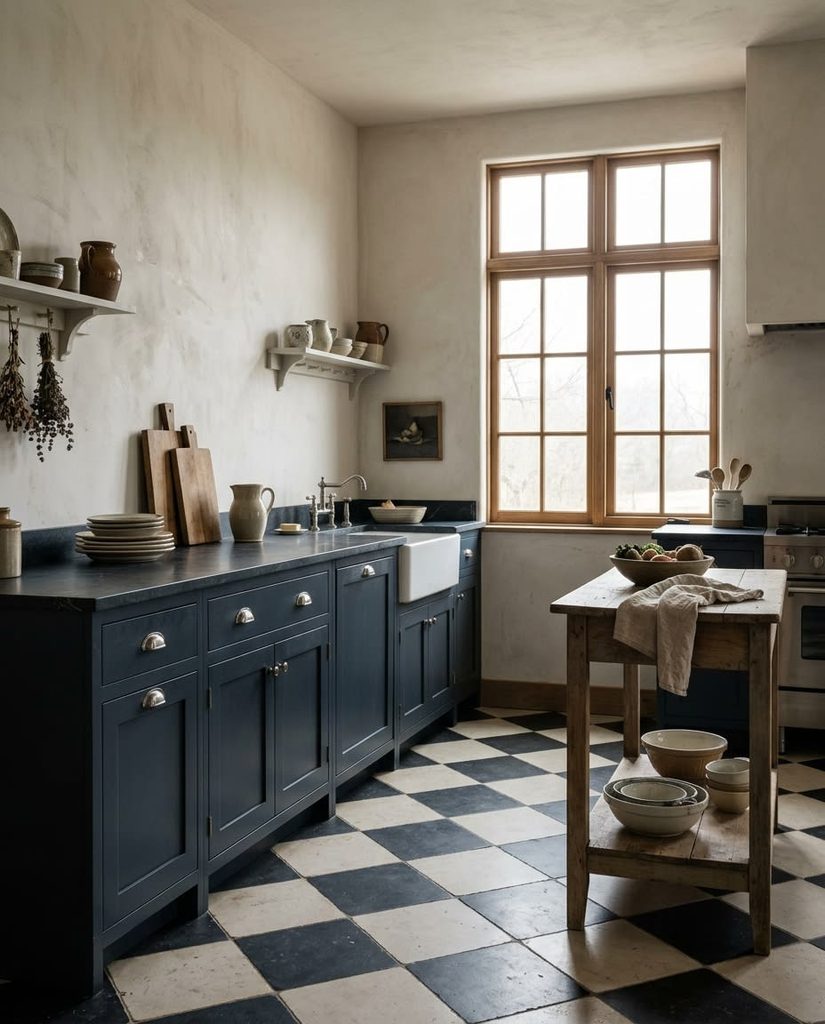
Smoky midnight navy provides a softer, moodier alternative to standard coastal blues. In this layout, I love grounding the rich blue joinery with a classic black and ivory checkerboard tile floor laid on the diagonal.
A softly aged matte finish on the floor tiles creates a lived-in European country house sensibility that never feels staged. Simple brushed nickel hardware keeps the focus firmly on the geometry beneath your feet while reflecting soft window light.
Aged Copper Range Hood with Warm Taupe Cabinetry
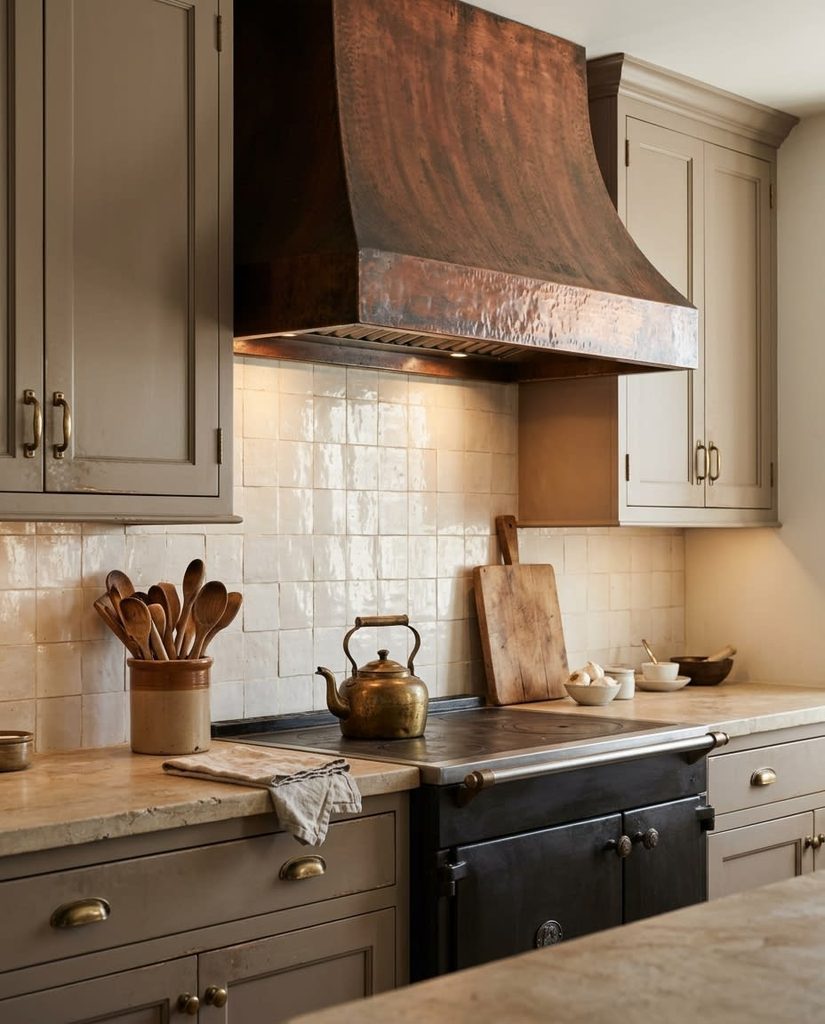
Nothing commands attention over a range quite like the warm, living finish of hand-hammered copper. A patinated copper hood adds an old-world focal point that pairs effortlessly with quiet mushroom-taupe cabinets.
To complement the metallic glow, I recommend beige limestone countertops and a softly textured plaster or ceramic backsplash. Keeping your countertop essentials down to an antique kettle and wooden spoons preserves the authentic, functional spirit of the cooking hearth.
These practical habits preserve the metal while enhancing its rustic charm:
- Allow the metal to develop its own natural patina over time rather than polishing it constantly.
- Pair the metal with warm under-cabinet illumination to accentuate its fiery undertones.
- Balance the reflective surface with matte stone countertops to prevent excessive shine.
Deep Olive Zellige Tile with Rustic Open Storage
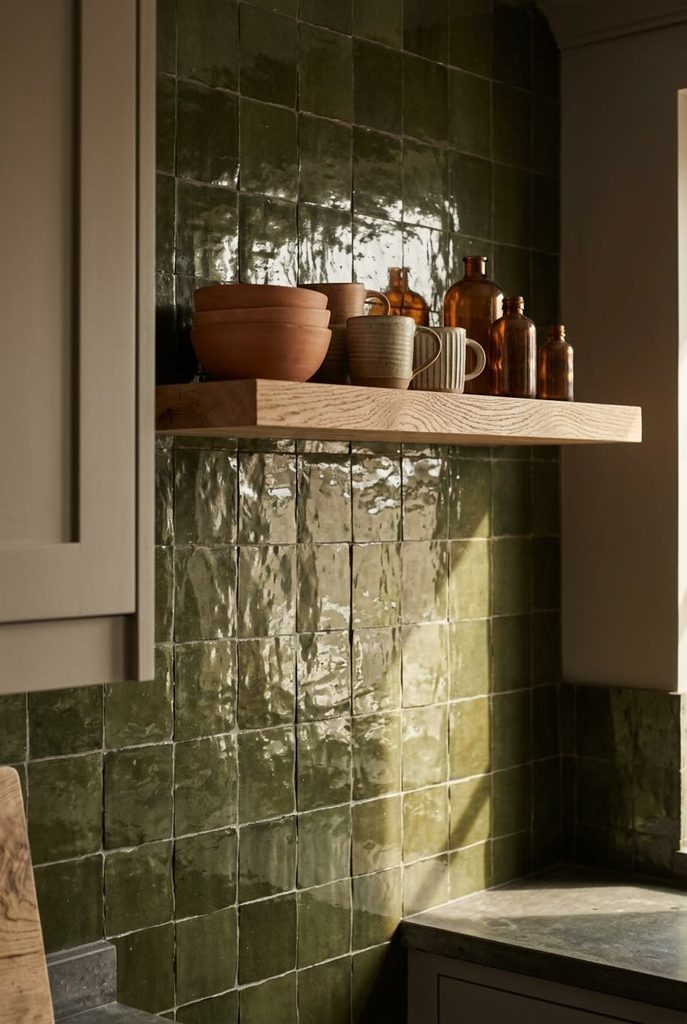
Glazed zellige tile remains one of my absolute favorite materials for introducing atmospheric depth into a kitchen. Each tile features tiny surface ripples and organic tonal shifts that catch sunlight in varied, mesmerizing ways.
Handmade olive-green zellige tiles create a richly textured wall that turns an ordinary sink area into a jewel box. Mount a single thick oak shelf across the tile to hold your daily stoneware bowls and amber apothecary jars.
Dark Walnut Kitchen with Gingham Café Curtains
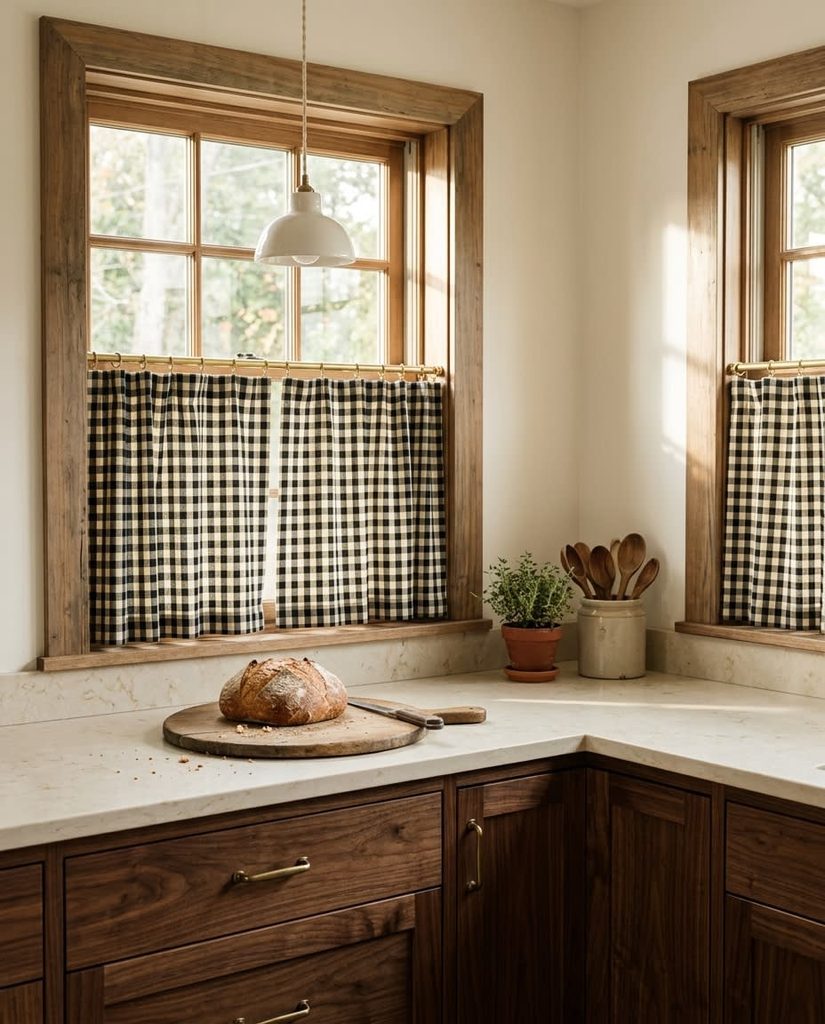
Natural timber cabinets in deep walnut tones bring an undeniable sense of permanence and craft. To prevent dark wood from feeling too heavy or masculine, I like introducing soft fabric touches directly at the window.
Black and cream gingham café curtains add a sweet nostalgic touch that softens the linear look of dark walnut millwork. Morning light pours through the exposed upper glass panes, illuminating natural wood grain, ceramic pendant lamps, and freshly baked bread.
Moody Breakfast Nook with Plaid Upholstery and Black Beadboard
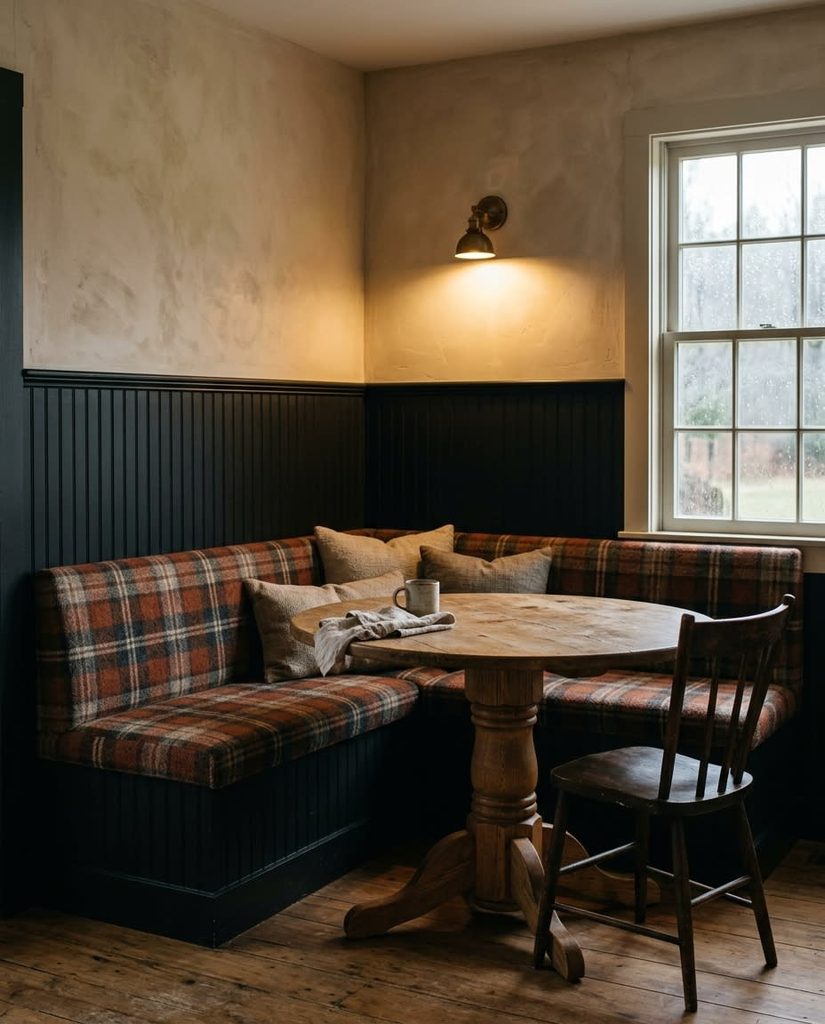
A kitchen corner can easily become the most magnetic spot in the house with the right millwork treatment. Wrapping a built-in banquette in matte black beadboard immediately establishes a comforting, enclosed alcove for casual family meals.
Upholstering the bench cushions in an earthy rust and charcoal wool plaid delivers texture, warmth, and stain resistance. A warm bronze wall sconce and a compact round pedestal table complete this cozy dining sanctuary.
Slate Gray Pantry Cabinets with Antique Glass Doors
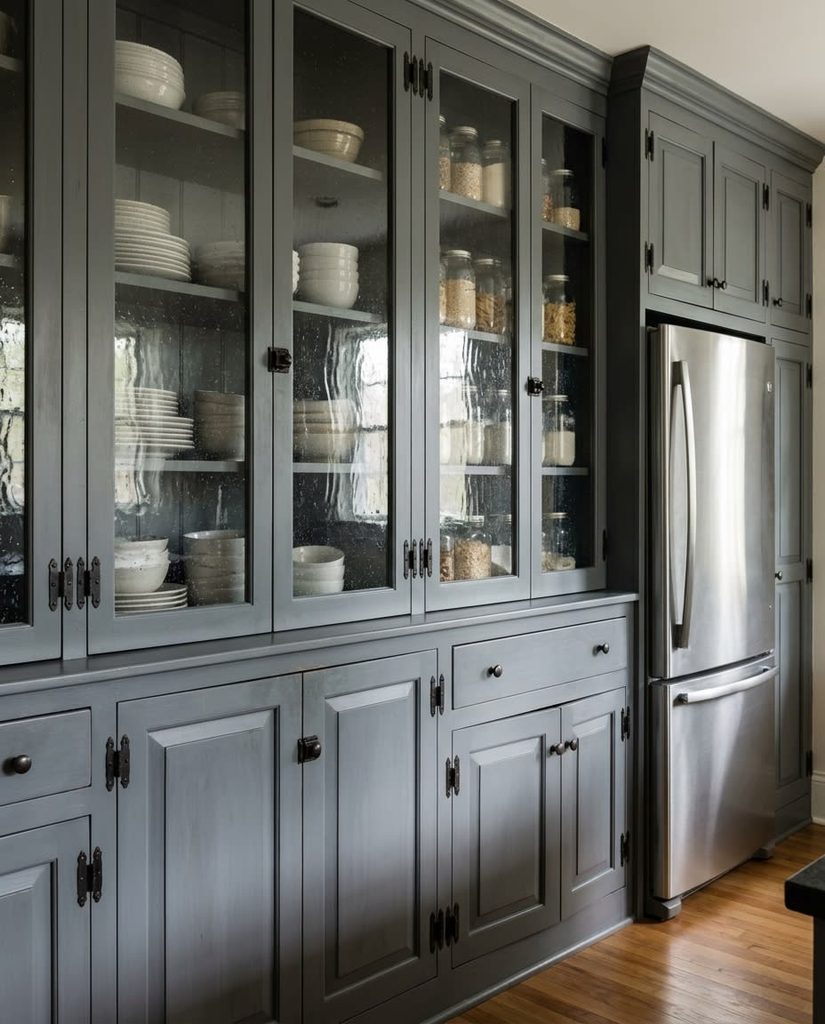
Tall storage runs can overwhelm a kitchen unless you break up the door profiles thoughtfully. I often specify floor-to-ceiling slate gray pantry units featuring seeded or wavy antique glass panels along the upper compartments.
Antique glass doors let you showcase neat stacks of everyday white dinnerware while bouncing natural daylight around the room. Heavy dark iron strap hinges provide honest durability and lend the cabinetry the quiet dignity of a vintage larder.
Rustic Farmhouse Dining Table Beneath Dramatic Pendant Lighting
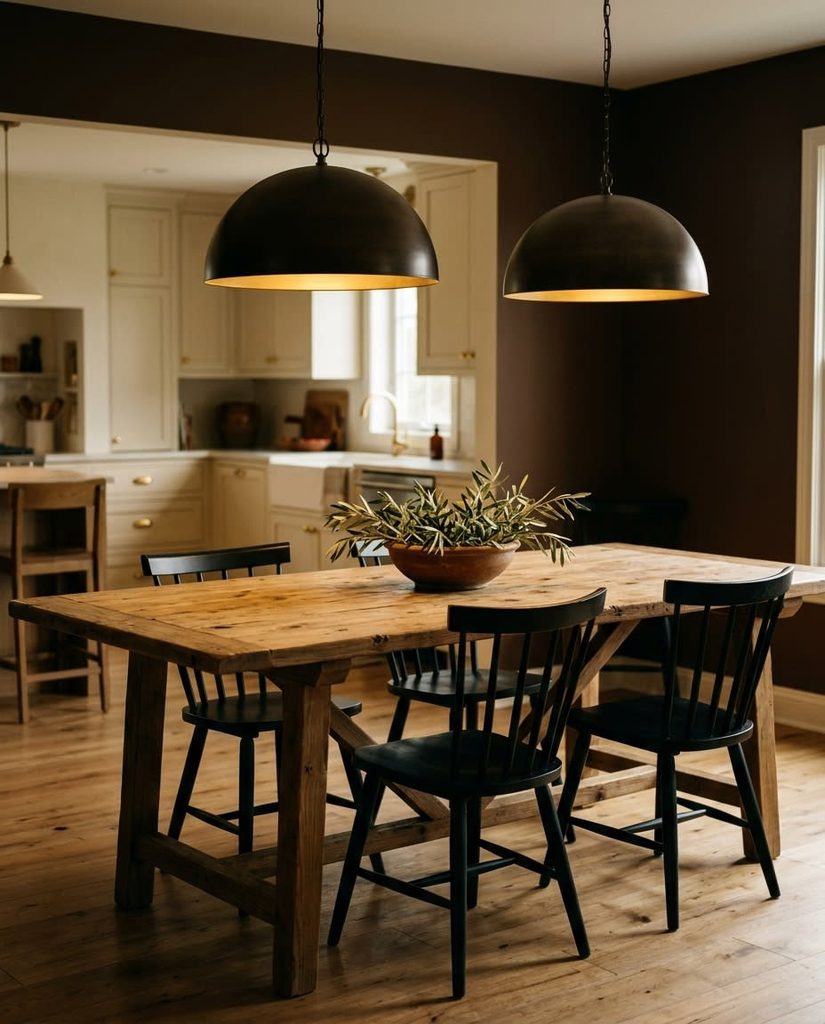
An open kitchen that transitions seamlessly into an informal dining space needs a strong visual anchor. A thick, reclaimed pine dining table with authentic saw marks and nicks brings an irreplaceable layer of history to the floor plan.
Hanging a pair of oversized dark bronze dome pendants low over the table creates an intimate pool of golden light. Surrounded by black spindle-back chairs and moody chocolate walls, this dining setting encourages long evening conversations.
Conclusion
Creating a moody farmhouse kitchen does not mean plunging your home into total darkness. Rather, it is an invitation to embrace richer colors, historical textures, and the soothing comfort of a room that feels lived in. By balancing deep charcoal, forest green, or burgundy joinery with honest materials like aged wood, raw brick, and unlacquered metals, you build a space of timeless beauty.
I always encourage homeowners to start small if painting an entire kitchen feels daunting. Try introducing a dark painted island, a run of olive tile, or a cozy plaid breakfast nook first. As the seasons change, you will find that these moody, welcoming tones make your kitchen the coziest room in the house.