
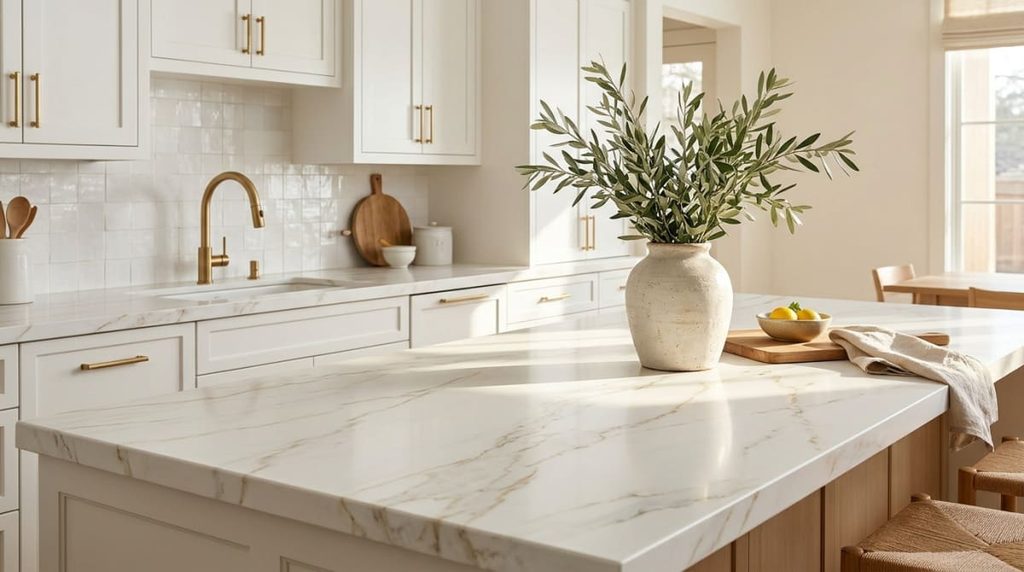
Replacing countertops often causes collateral damage to backsplashes, plumbing, and wall surfaces. Countertop paint kits and specialized acrylic enamel treatments offer a durable alternative that can revive tired laminate over a single weekend. With proper prep and a reliable topcoat, you can achieve the rich depth of natural stone or modern solid colors without tearing your kitchen apart.
Before diving into any painting project, I remind clients that surface preparation determines ninety percent of your final result. Thorough degreasing, scuff sanding, and acrylic bonding primer create the anchor needed for lasting everyday durability.
These practical projects prove that high style is achievable on an accessible residential budget.
Dated Beige Laminate to Elegant White Marble-Look Countertops
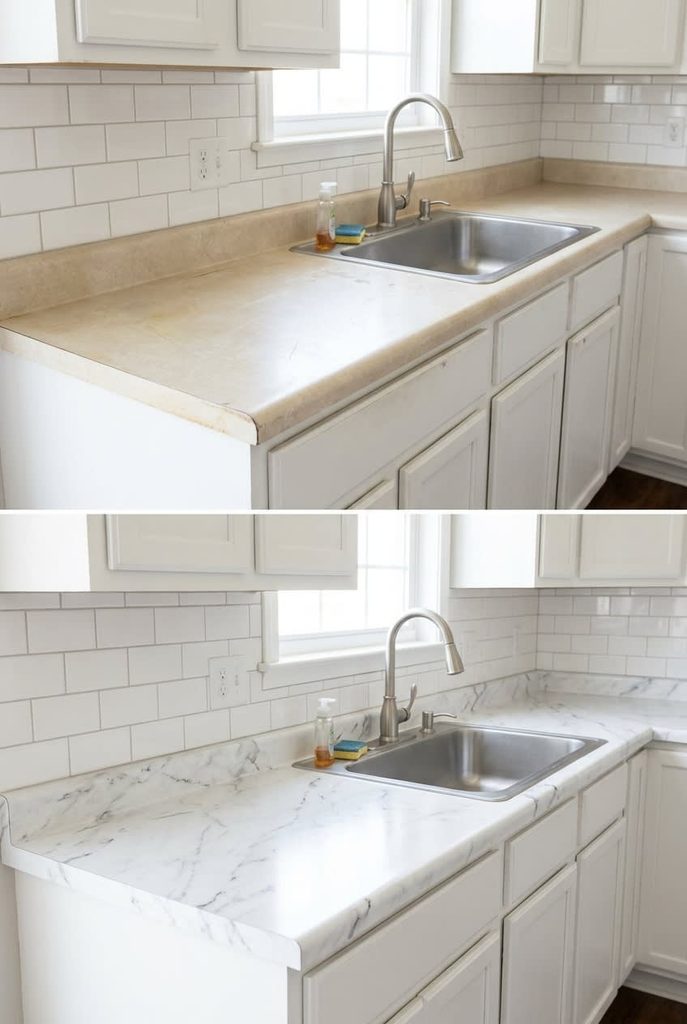
Old beige laminate can drag down an entire kitchen, even when your white shaker cabinets are in pristine condition. I always advise homeowners to tackle this transformation by layering soft gray mineral veins over an ultra white base coat with a damp sea sponge.
Applying a satin topcoat protects your delicate hand painted veining while mimicking the subtle sheen of honed Carrara marble. The resulting finish brightens the entire room and blends seamlessly with classic white subway tile backsplash installations.
Dark Brown Laminate to Matte Black Soapstone-Look Countertops
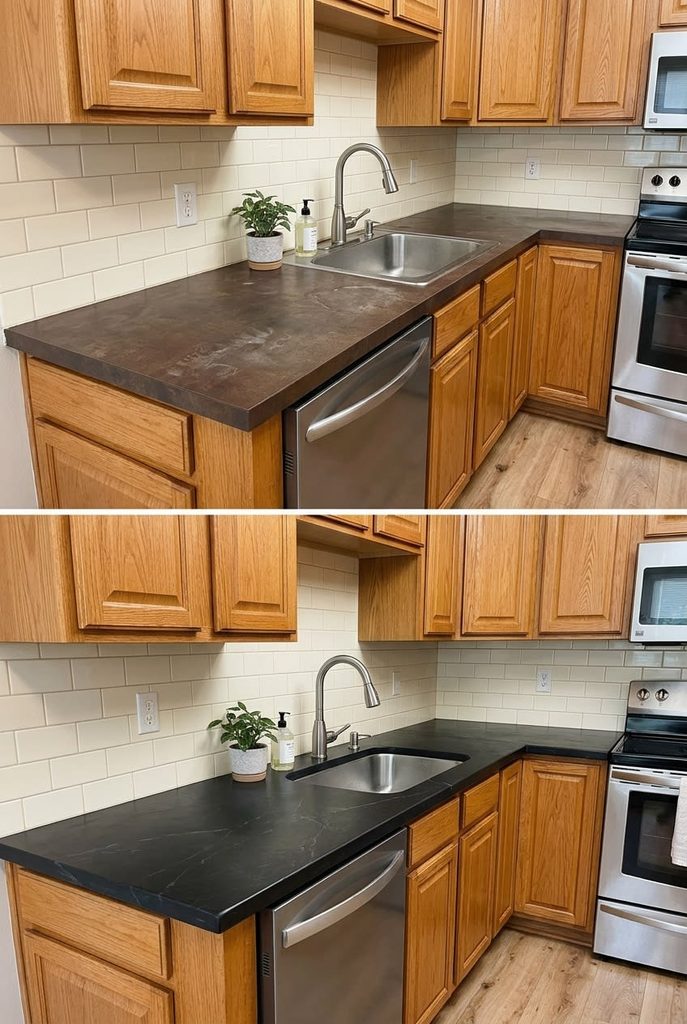
Tired brown laminate from past decades can make natural oak cabinets feel heavy and severely outdated. When clients want an earthy yet contemporary mood, I love introducing a deep charcoal soapstone aesthetic using mineral paint.
A deep matte black finish creates a striking modern contrast against warm honey oak cabinetry. You can add very faint pale veining with a fine artist brush before sealing the surface with a durable flat polyurethane topcoat.
Yellowed Laminate to Soft Gray Concrete-Look Painted Countertops
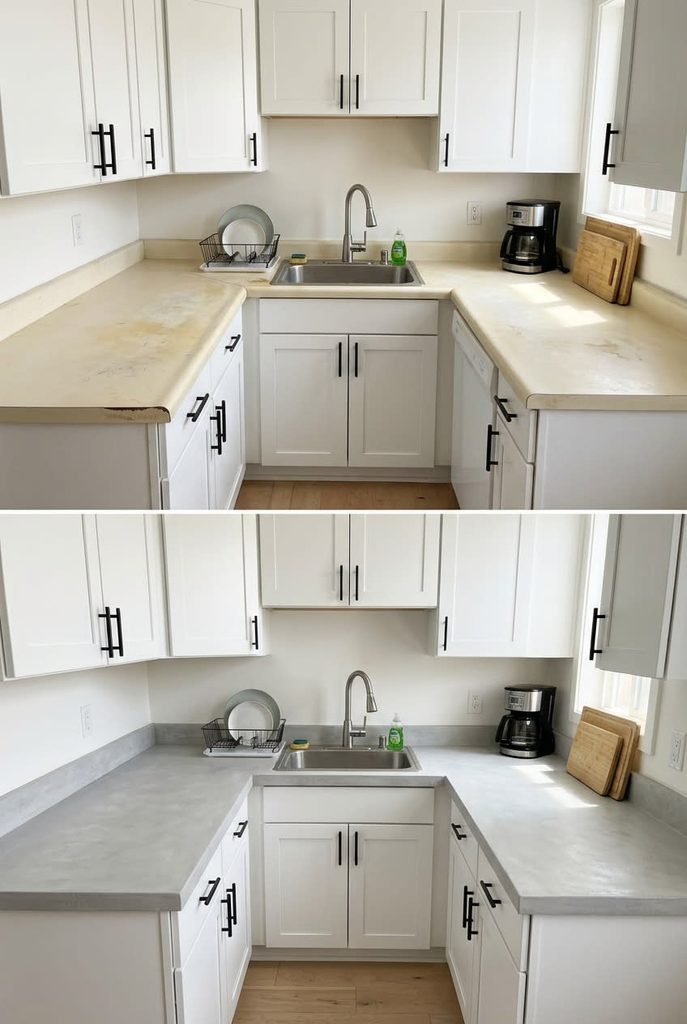
In compact city apartments, yellowed laminate counters instantly reveal their age and close in the entire cooking area. I often turn to a stippled pale gray paint application to replicate the industrial elegance of poured concrete.
Stippling multiple tones of light gray creates an authentic mineral depth that hides everyday kitchen wear. This smooth faux concrete finish pairs beautifully with modern black hardware and brightens tight quarters without requiring costly structural adjustments.
Scratched Green Laminate to Creamy White Quartz-Look Countertops
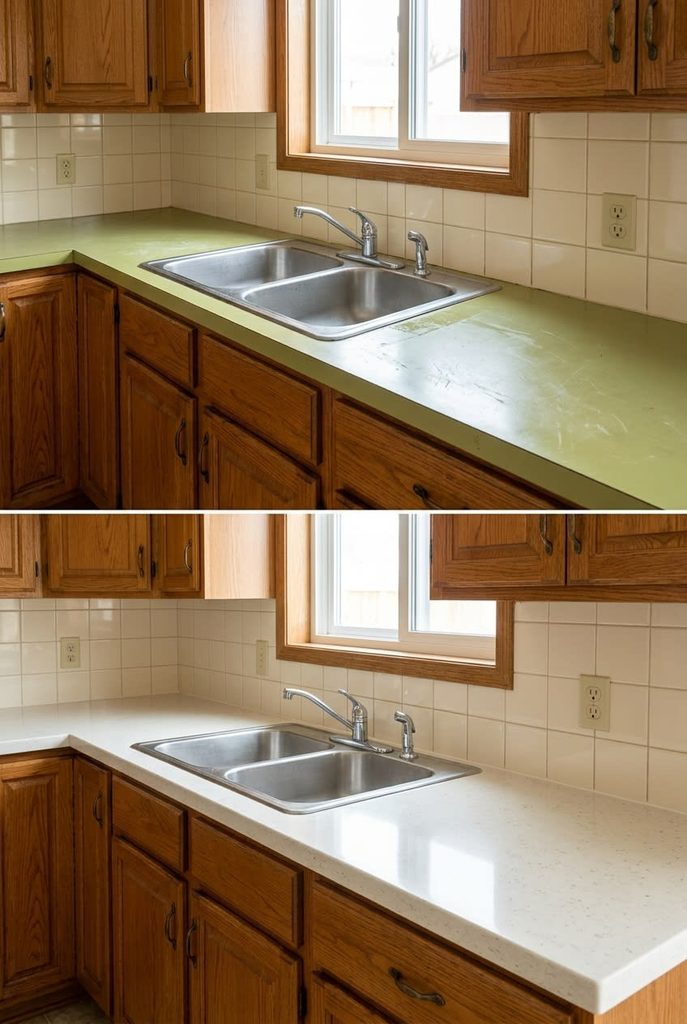
Faded avocado counters can be an absolute eyesore in a suburban kitchen that otherwise boasts sturdy wood cabinetry. To solve this aesthetic clash, I recommend rolling on an off white base and spattering micro droplets of warm gray for a quartz appearance.
Subtle speckled patterns naturally disguise existing surface scratches while lifting the overall brightness of the workspace. Once you apply two layers of high grade clear sealer, the surface gains a polished, clean aesthetic that endures daily meal preparation.
Outdated Speckled Laminate to Deep Emerald Marble-Look Countertops
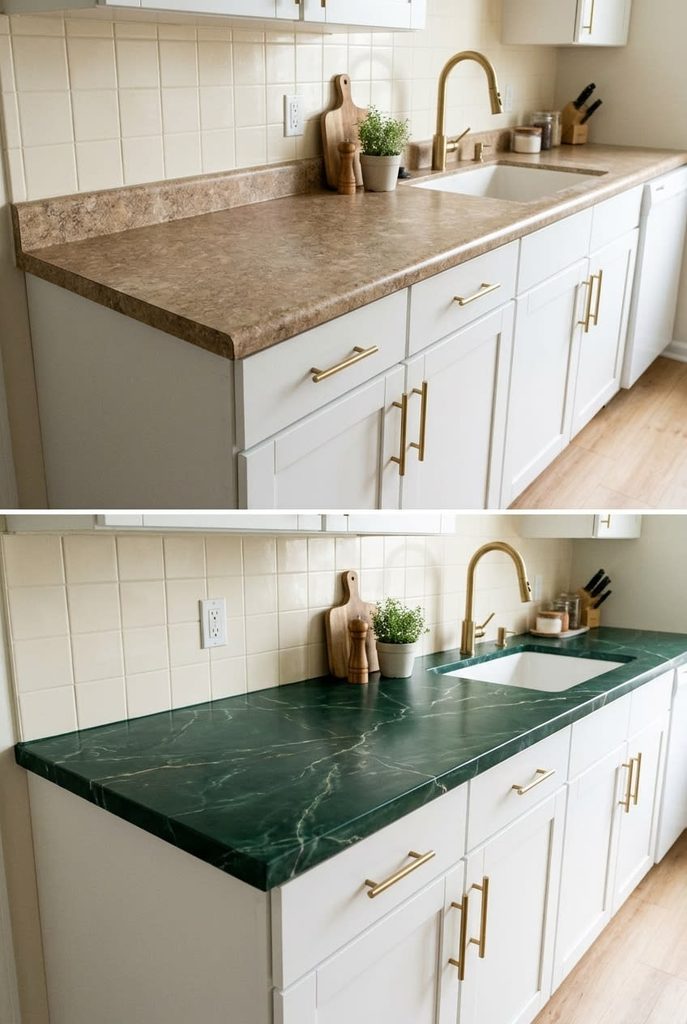
Standard tan speckled laminate often feels completely devoid of personality or high end design intention. For daring clients, I love painting a dramatic forest green marble look that instantly establishes an upscale boutique focal point.
Layering translucent shades of emerald and pine green produces a rich sense of organic stone depth. Warm brass hardware and crisp white cabinetry balance this rich shade, preventing the small room from feeling overly dark or heavy.
Worn White Laminate to Warm Beige Travertine-Look Countertops
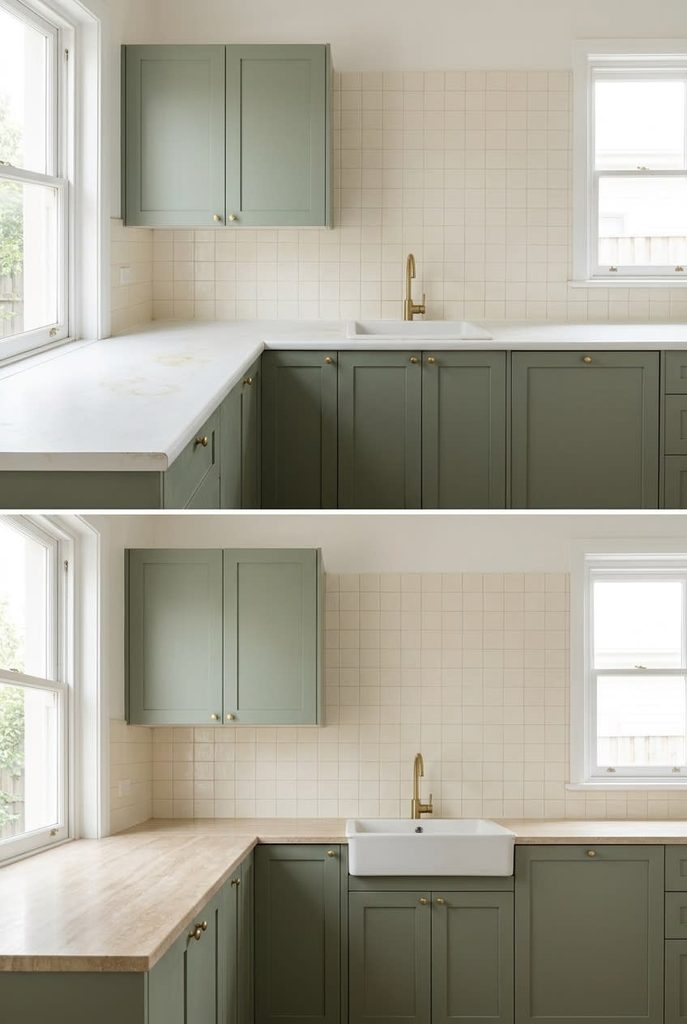
Worn white laminate tends to show every yellow grease mark, scuff, and water droplet along the sink rim. When renovating kitchens with soft sage cabinets, I favor dragging a dry glaze brush horizontally to simulate natural travertine banding.
Soft sandy undertones bring an organic earthiness that complements muted pastel cabinetry. The final look feels grounded and warm, turning an ordinary cooking space into a cozy Mediterranean retreat without replacing the original countertops.
Dull Gray Laminate to Colorful Terrazzo-Look Painted Countertops
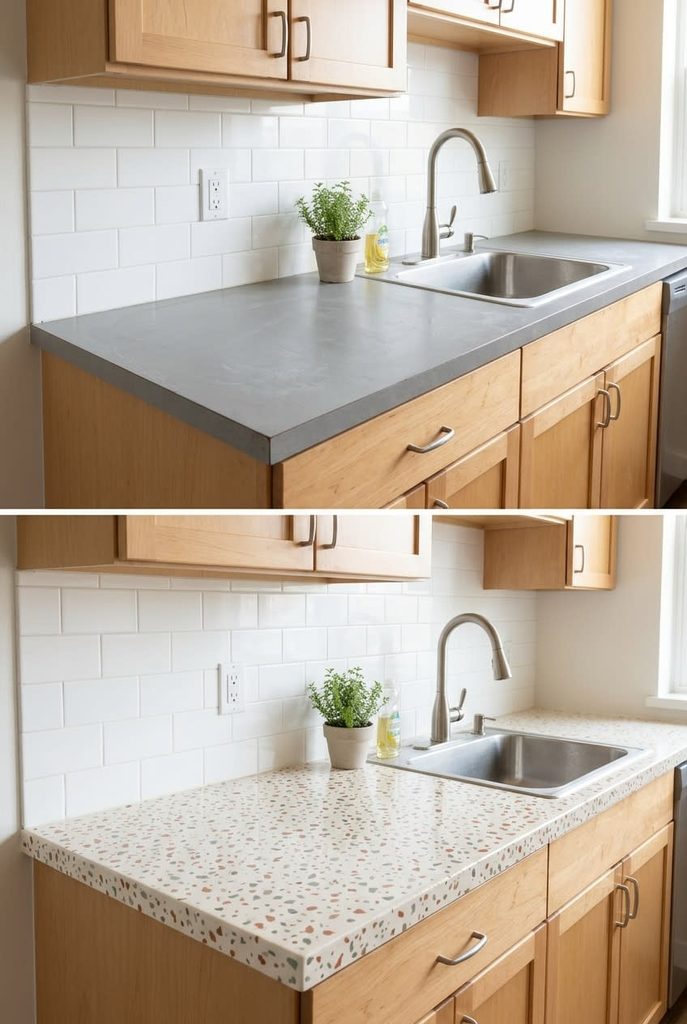
Flat gray laminate can make a rental or starter home feel cold, utilitarian, and completely uninspired. I often suggest a playful terrazzo finish using irregular stamps of muted terracotta, sage, and pale peach on a warm ivory base.
Hand stamped stone flecks turn an uninspired counter into a custom designer showpiece. Because the pattern is inherently random, it easily masks minor imperfections and keeps the prep area looking cheerful and visually engaging.
Pinkish-Beige Laminate to Dramatic Charcoal Slate-Look Countertops
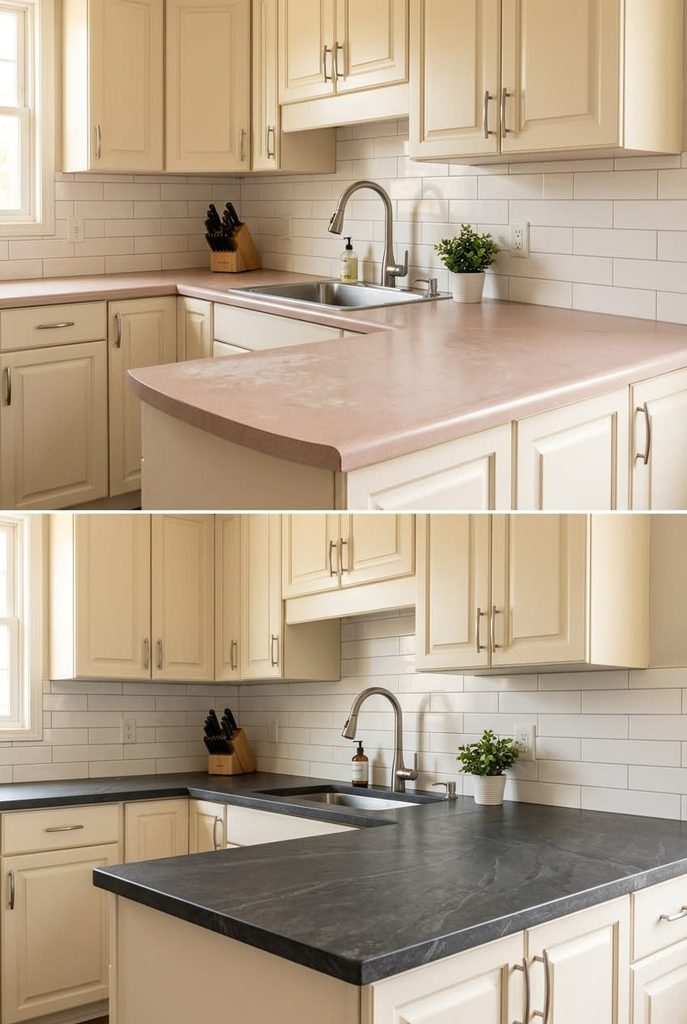
Faded mauve or pinkish beige surfaces from the nineties create an awkward clash with traditional cream cabinets. I resolve this color friction by rolling on an ultra dark graphite paint infused with fine mineral texture.
A textured slate finish anchors the perimeter counters and gives traditional cream cabinets a fresh architectural presence. A matte exterior grade sealant ensures the dark tone resists grease marks while retaining its tactile stone appeal under task lighting.
Outdated Blue Laminate to Luxurious Cream Marble-Look Countertops
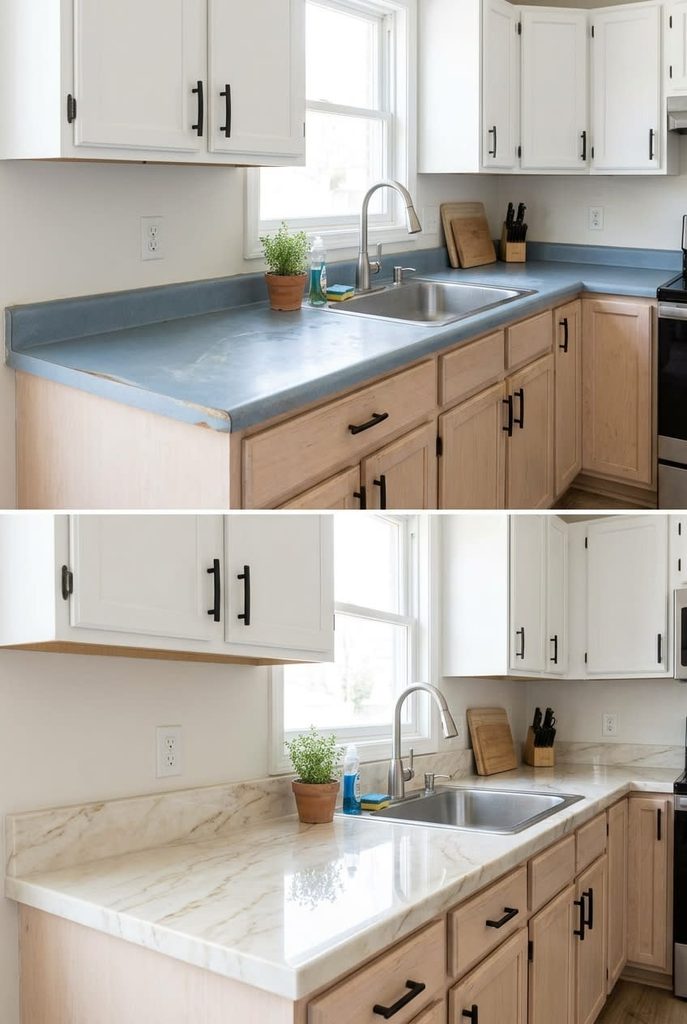
Powder blue counters were once trendy, but today they tend to make kitchen spaces feel cold and disconnected. I like to neutralize the room by building a warm cream background layered with feathery honey gold mineral ribbons.
Warm marble patterns reflect ambient daylight beautifully and tie together mixed two tone cabinets. A durable satin protective resin layer gives the painted ribbons realistic depth, mimicking expensive imported slabs while retaining your existing sink setup.
Dated Black Laminate to Bright White Granite-Look Countertops
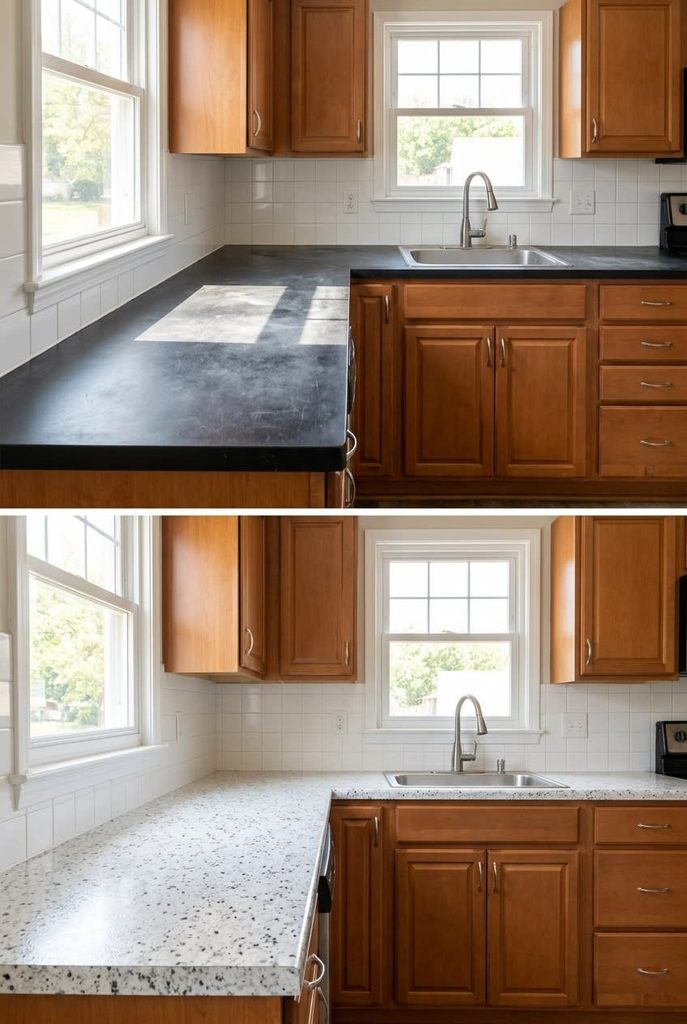
Glossy black laminate tends to show every single speck of dust and tiny utensil scratch. I often assist clients in flipping this surface completely by applying a crisp white base with dense mineral sponging.
Tapping charcoal and taupe pigments with a natural sea sponge creates a remarkably convincing granite effect. The light reflective transformation opens up the room visually and modernizes older medium tone wood cabinetry without expensive contractor fees.
Outdated Cream Laminate to Calacatta Gold Marble-Look Countertops
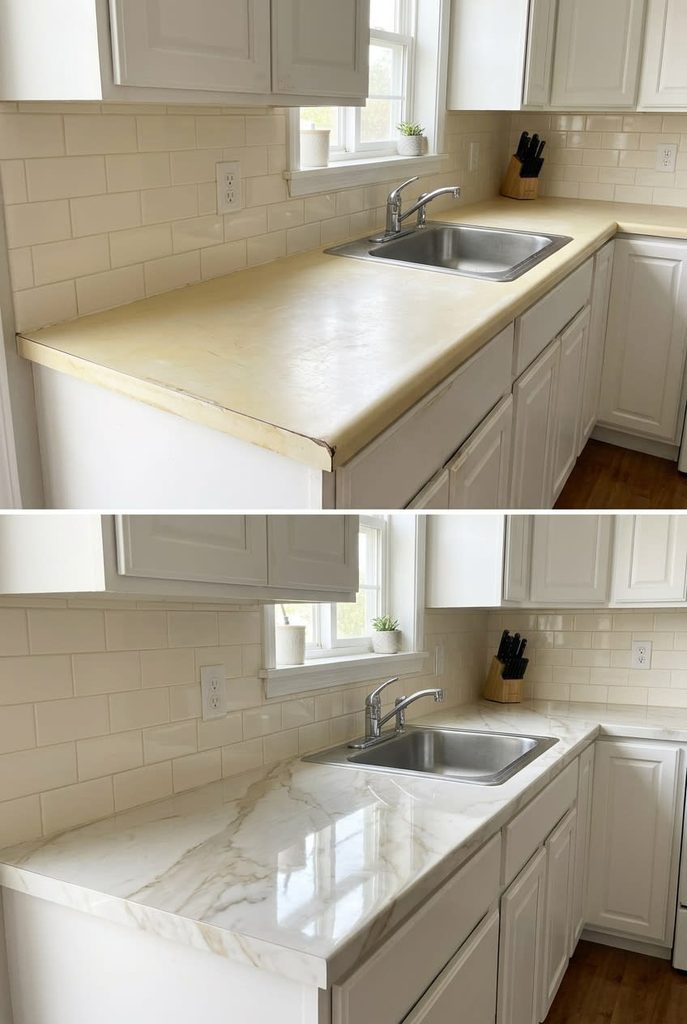
Old cream laminate with yellow undertones often drags down an otherwise charming kitchen. To emulate real Calacatta gold, I layer a bright white base with feathered charcoal veining and subtle warm ochre ribbons.
A sea sponge and a feathering brush soften the mineral lines into realistic, organic currents across the surface. A crystal-clear epoxy or polyurethane topcoat locks in the illusion while protecting the artwork from daily spills.
Orange-Brown Laminate to Modern Sage-Green Painted Countertops
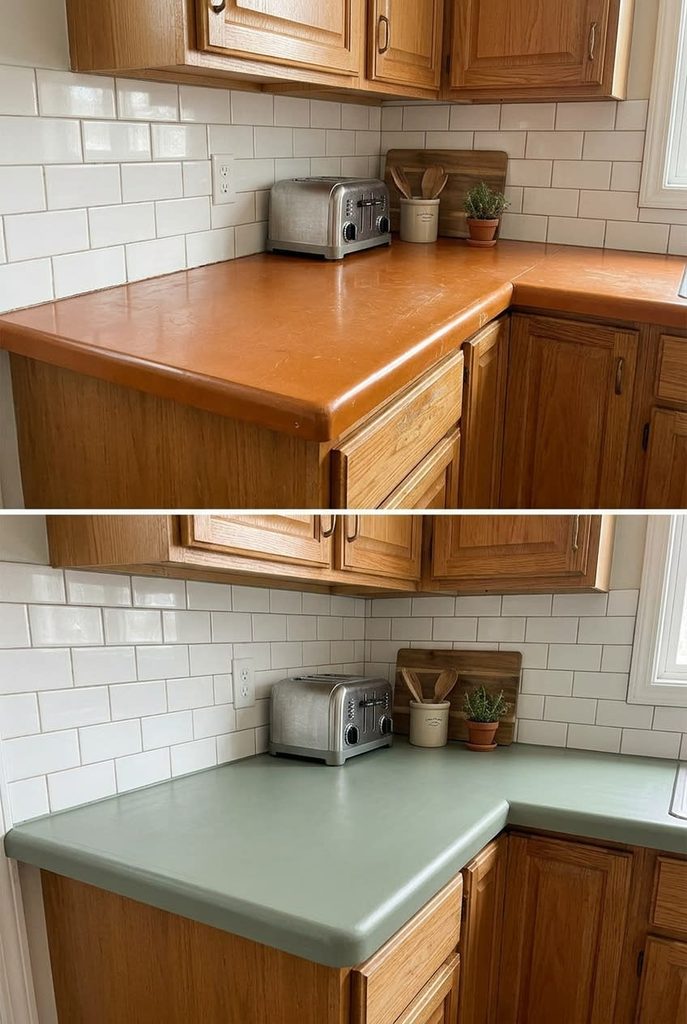
Heavy orange-brown laminate from past decades can make a kitchen feel dark and visually heavy. Applying an earthy sage green instantly balances warm wood cabinets without needing complex faux veining.
A velvety satin sheen highlights the clean green pigment while masking subtle surface flaws in old laminate. The soft earthy hue bridges vintage cabinet finishes and crisp white backsplashes effortlessly.
Worn Tan Countertops to Dramatic Black Marble With White Veining
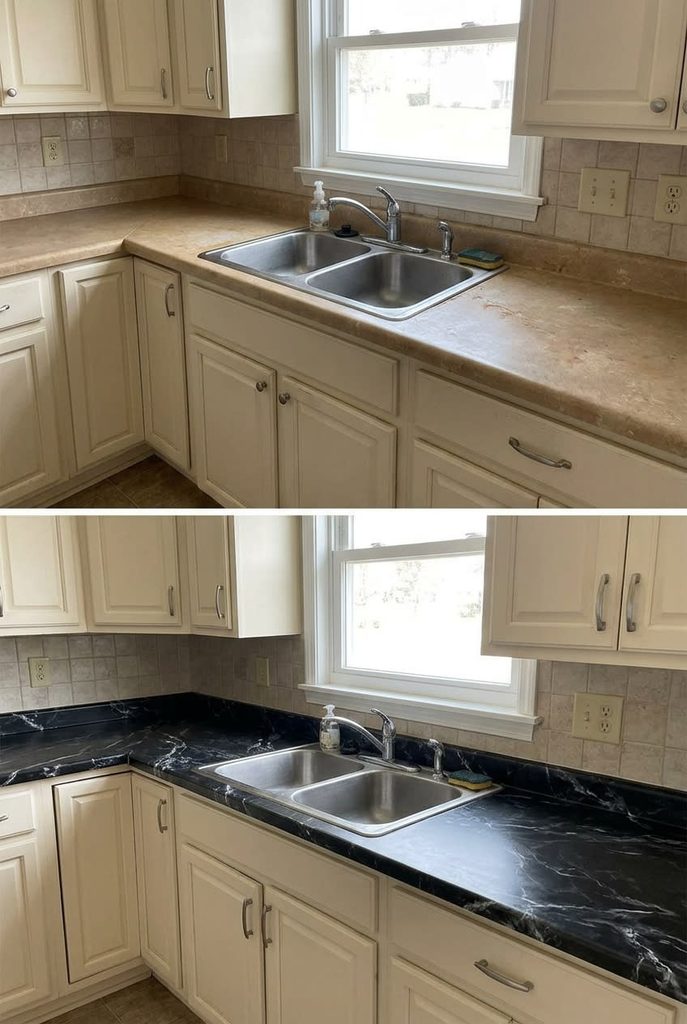
Faded tan counters often look muddy under standard kitchen lighting. Creating a dramatic black marble finish requires a solid charcoal foundation accented by fine, broken white fractures.
Carrying thin white veins over the bullnose edge provides the visual weight of real quarried stone. Paired with cream cabinetry, this high-contrast look delivers immediate architectural punch.
Dark Faux-Wood Laminate to Light Natural Oak-Look Painted Countertops
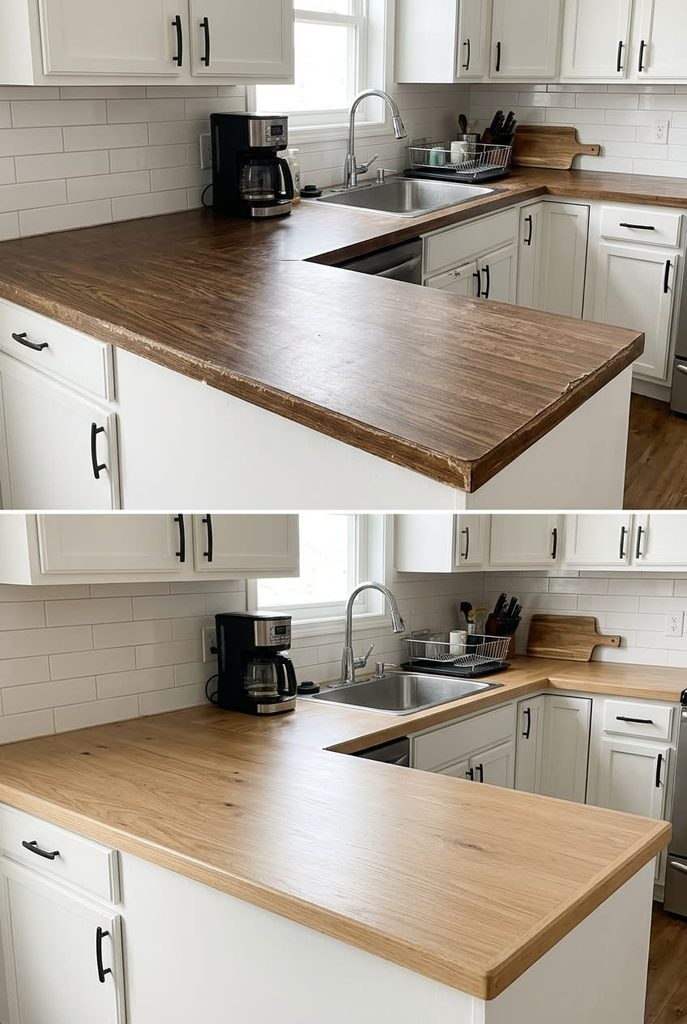
O
ld simulated wood surfaces from earlier eras look flat and unconvincing. You can simulate modern white oak by applying a warm beige ground followed by dry-brushed honey glazes.
Working in long, fluid strokes mimics the quiet linear grain of genuine quartersawn oak planks. A water-based satin topcoat preserves the raw Scandinavian aesthetic without adding unwanted glare.
Scratched White Laminate to Blush-Pink Terrazzo-Look Countertops
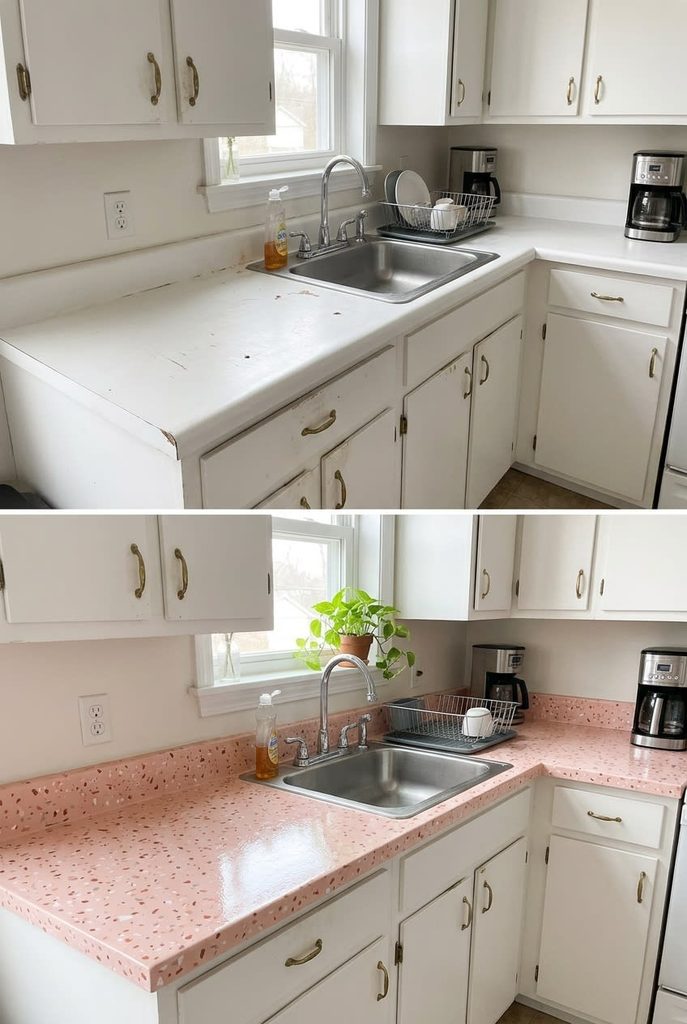
Standard white laminate that shows scratches and stains provides the ideal canvas for a playful update. I love introducing a soft blush base and speckling it with irregular flecks of terracotta, gray, and cream paint.
Using an artist detail brush to scatter varied mineral shapes ensures the terrazzo appears custom rather than stamped. It brings playful mid-century personality to small apartment kitchens.
Yellowed Laminate to Warm Copper-Look Painted Countertops
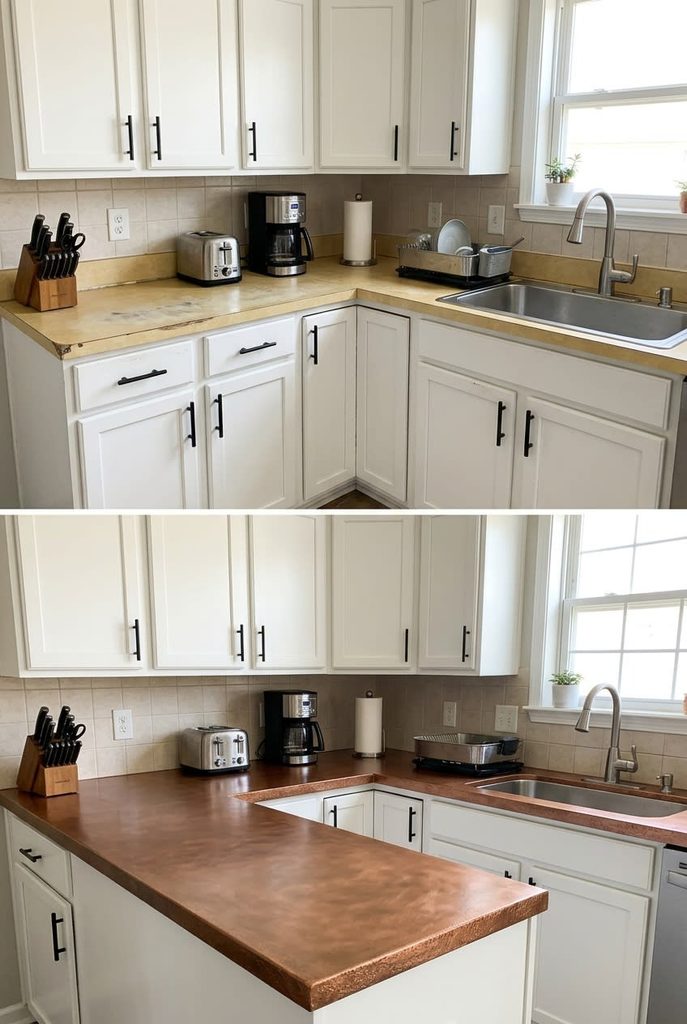
Discolored surfaces with yellow undertones can ruin the clean lines of black hardware and white cabinets. A metallic copper paint technique blends burnished bronze undertones with luminous copper highlights for radiant depth.
Dabbing metallic glazes with a crumpled cotton rag creates the weathered patina of artisan metal sheets. Sealed beneath high-gloss protective enamel, this surface reflects ambient light beautifully across the workspace.
Dull Black Laminate to White Marble With Soft Blue Veining
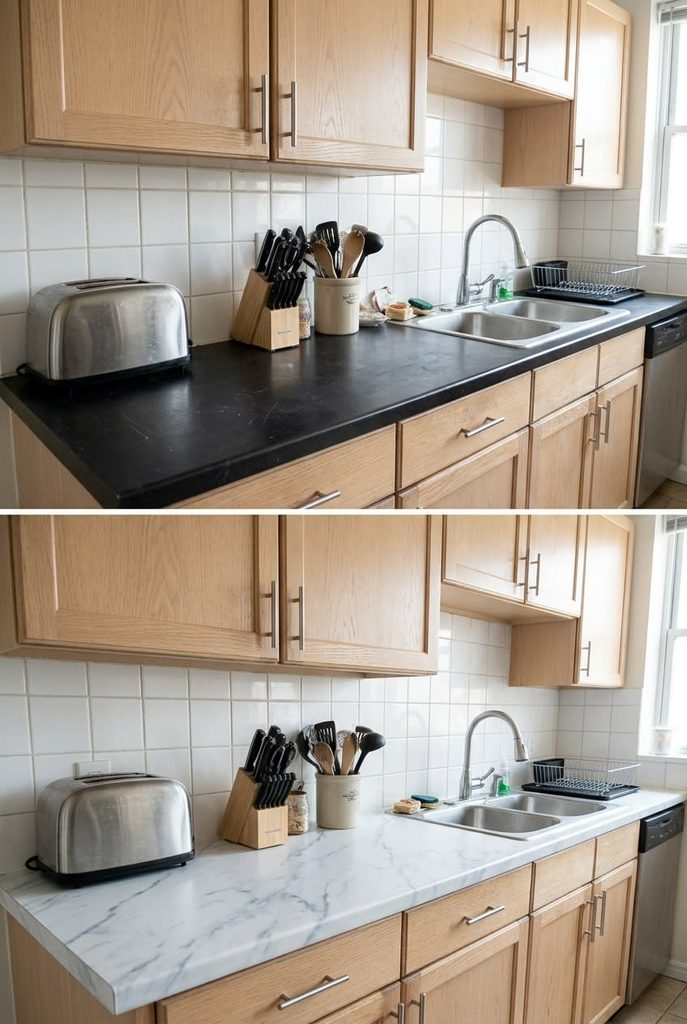
Scratched black laminate absorbs light and makes compact work areas feel closed in. Replacing that dark void with an ivory base and whispering blue-gray veining brightens the entire room.
Misting wet veining lines with rubbing alcohol diffuses the edges into realistic water-dropped mineral shadows. The subtle blue hints connect harmoniously with brushed nickel hardware and cool backsplash tiles.
Brown Speckled Laminate to Soft Dusty-Blue Painted Countertops
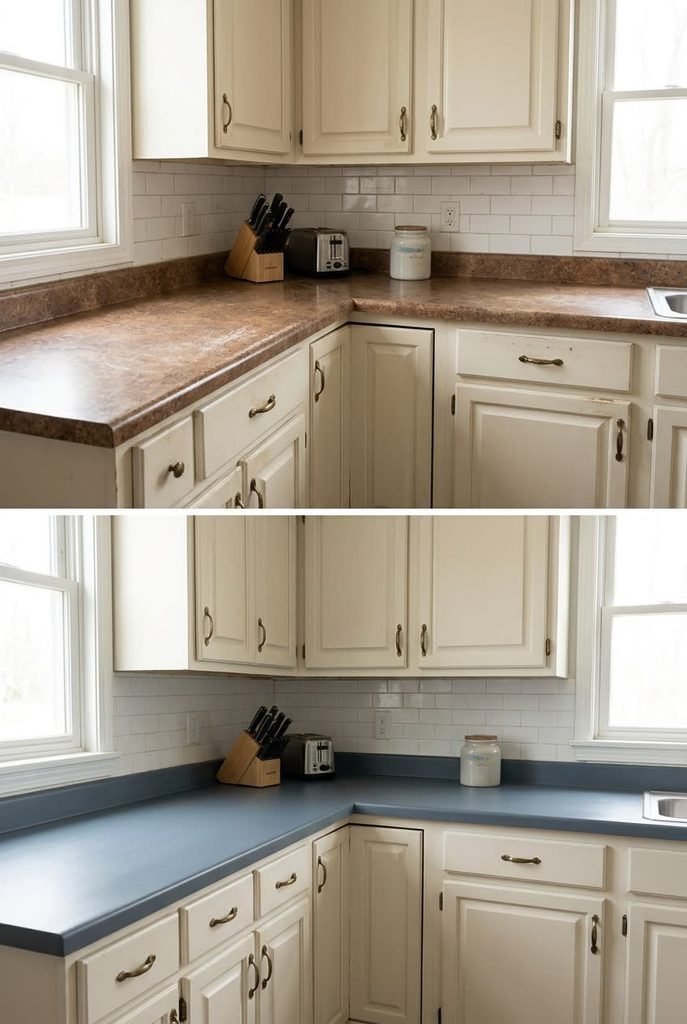
Dated brown speckled patterns often make kitchen countertops look perpetually dusty. A smooth coat of dusty blue provides a tailored, cottage-inspired color story that flatters traditional cream cabinetry.
Applying two self-leveling coats with a high-density foam roller eliminates roller stipple for a factory-smooth texture. This simple solid-color transformation requires zero faux-finishing expertise yet completely redefines the kitchen mood.
Outdated Pink Laminate to Deep Navy Slate-Look Countertops
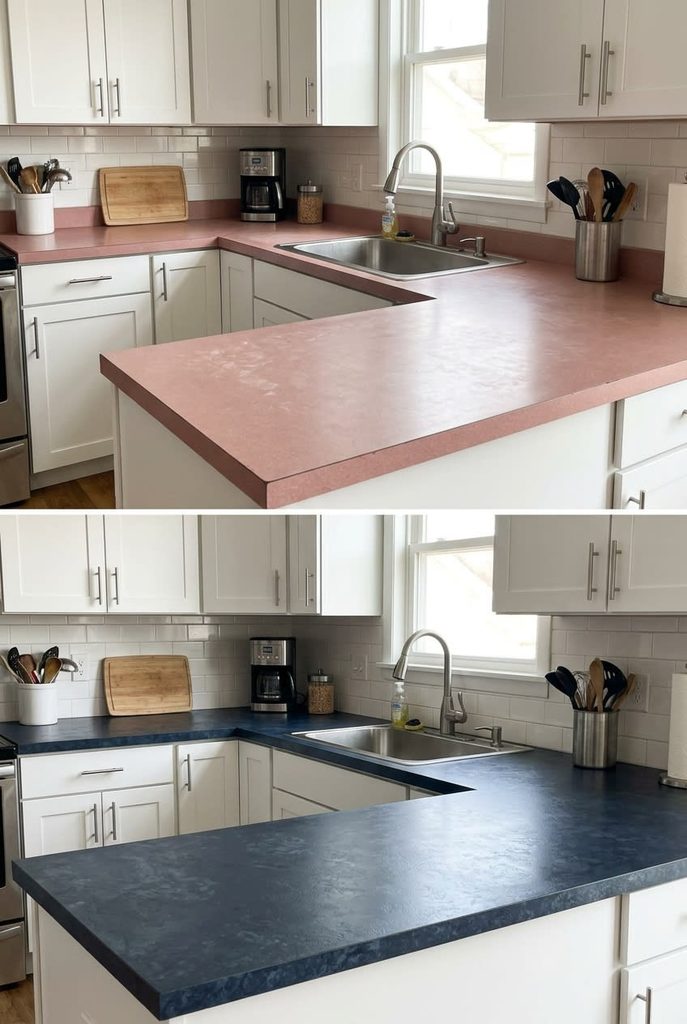
Dusty pastel pink counters anchor a room firmly in bygone trends. Painting over that retro pink with deep midnight navy gives the space an upscale, moody anchor.
Layering faint slate-gray sponge marks over the navy base introduces realistic stone texture without looking messy. The bold shade anchors white shaker cabinets and creates a stunning backdrop for brass hardware.
Outdated Olive Laminate to Warm Beige Sandstone-Look Countertops
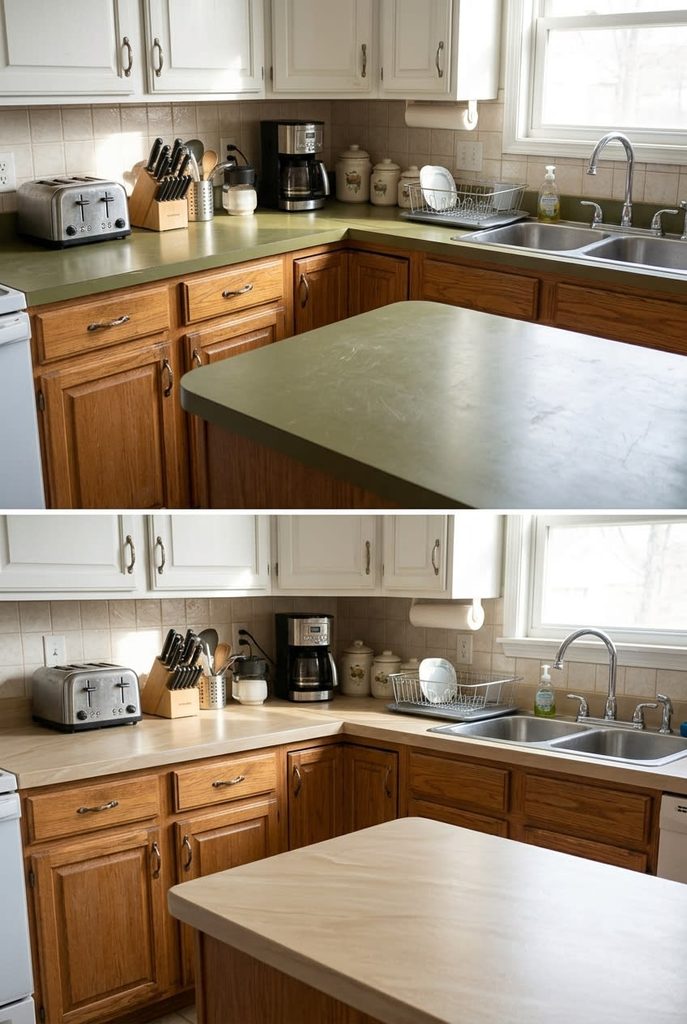
Murky olive green laminate from decades past tends to clash with modern interior palettes. I recommend applying a sandstone treatment composed of soft almond, buff, and biscuit hues.
Lightly stippling complementary beige tones with a dense sea sponge creates the natural texture of desert sedimentary rock. The result feels calm, neutral, and welcoming alongside both stained oak and painted cabinets.
Conclusion
Transforming your kitchen surfaces with paint requires patience, but the visual payoff is undeniably rewarding. By practicing your veining or stippling techniques on scrap boards first, you can master your chosen faux finish with complete confidence. Always remember that a durable clear coat is the ultimate guardian of your artistic hard work.
Taking the time to properly sand between clear coats guarantees a smooth, professional feel under your fingertips. These budget friendly projects prove that you do not need expensive stone slabs to create a warm, inviting heart of the home. With the right supplies and a bit of weekend dedication, you can achieve an enviable designer look on an attainable everyday budget.