
Are you wondering how many times you can taser someone? The weapon sends electrical voltage through the target’s body, stopping them from pursuing further. While manufacturers don’t categorize a taser as a lethal weapon, it still can severely damage someone’s health if used incorrectly.
Standard tasers are less-lethal weapons and aren’t considered non-lethal due to the nature of their design. There is a possibility of serious injury or even death when using a taser on an attacker. You should taser someone as much as necessary to stop them from continuing to put your life in danger.
Various factors determine the damage that a taser will inflict on someone. This article will discuss how much you can taser someone, the dangers of excessive force, and other common questions.
Disclaimer: The information presented in this article is strictly educational. We do not condone the usage of weapons and are not liable for any injury caused by this topic.
Is a Handheld Taser or Stun Gun More Dangerous?
If you want to learn the lethality of your taser, you first need to see which type of weapon you will be carrying. There is a significant difference between the effects of a handheld taser and a stun gun on someone.
Handheld Taser
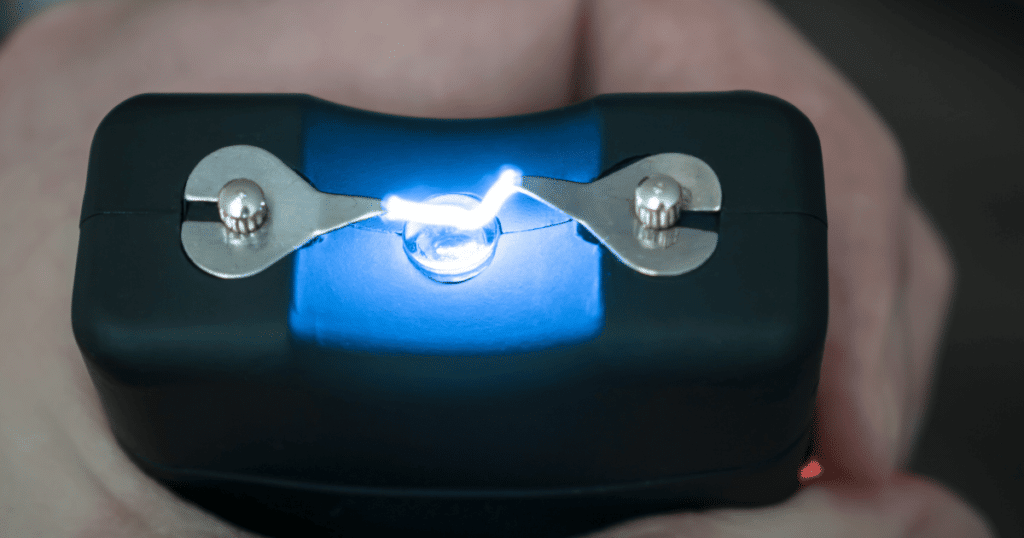
A handheld taser is an inexpensive option that civilians can carry. Instead of fully disabling the attacker, the handheld taser delivers a painful shock. This shock occurs with high-voltage electricity passing across two electrodes at the end of the taser.
However, the voltage takes a different path in the handheld taser than in the stun gun. The handheld taser delivers a shock to the skin’s surface and does not require two points of contact within the skin.
The shock lasts a split second before the person flinches and backs away from the person. When using a stun gun, the shock can feel like an eternity for the target, and they cannot escape the painful shocks.
When deploying a stun gun, the two probes must enter the target’s skin. As the voltage pulses from the stun gun, the person’s body acts as a circuit with the electricity flowing from one probe to another.
Stun Gun
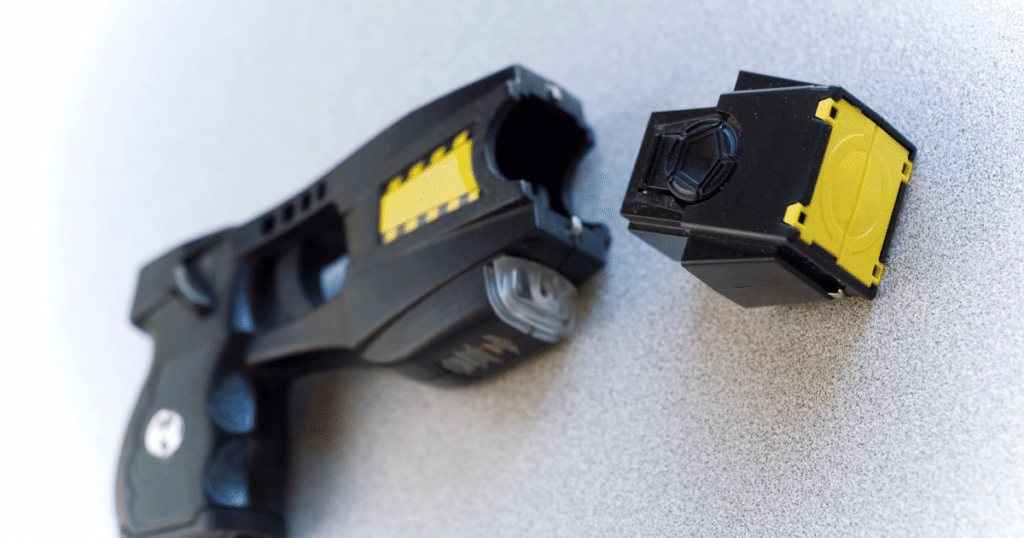
While there is no official data on the number of deaths resulting from tasers, there have been an estimated 1,081 deaths in the past 20 years, according to Reuters. Police departments use the taser on suspects who resist arrest, but don’t pose a risk.
The standard police-grade tasers law enforcement uses are the M26 and X26. Government agencies view these products as the most effective stun guns for police officers. The X26 is newer, with police departments replacing their M26 models.
Various risk factors come with hitting someone with a stun gun. When the electricity flows through their body, the muscles cease, and the person falls. Many deaths attributed to tasers occurred from the victim hitting their head on the ground.
Another risk is someone’s heart can stop when the taser is pulsing high-voltage electricity into their body. The electricity can affect the heart’s rhythm and cause it to stop if it cannot regain stability in time.
However, most stun gun manufacturers add safety features that limit the amount someone can use the weapon continuously. The unmodified stun gun will stop shocking someone in 5-second intervals to lower heart attack risks.
How Many Times Can You Taser Someone?
There is no set amount of times you can taser someone. If you need to use a taser, you should use it as many times as necessary to get someone to stop threatening your safety. Fortunately, most people don’t want to continue after the initial shock.
If you wonder how many times you can taser someone before they die, this depends on the person’s health. For people with heart problems, a taser can stop their heart with minimal pulses from the device.
When you are healthy, most people can withstand the shock for long durations without serious consequences. Manufacturers design tasers to be non-lethal when used on the general population.
However, a taser isn’t a toy, and you should not put yourself into dangerous situations to test your strength. Use the taser to defend yourself, but don’t use excessive force to hurt someone intentionally.
Frequently Asked Questions
Yes, a taser can permanently damage someone if they fall and hit their head after being tased. A taser can result in a loss of consciousness, abnormal brain function, and seizures after deployment. It’s best to use a taser in last-choice circumstances when you determine it’s the correct action.
A taser is incredibly painful, and many people describe it as the most terrible pain they’ve felt. When using a taser, you should think about the pain you inflict on someone and don’t use it excessively. Once you’ve stopped the person from threatening your life, you should flee the area quickly.
The chest is a sensitive area that shouldn’t be tased to avoid the risk of a heart attack. Shocking someone in the chest can cause a heart attack. When aiming a stun gun, you should aim lower on the body in the stomach region. You will still hit a sensitive area but not put the person at risk of dying.
Conclusion
Tasers have been a trusted choice for law enforcement for decades, with the first generation of this weapon being introduced in 1974. While you may believe these devices are harmless, they do pose a threat to someone’s life.
Never discharge a taser on someone who poses no physical threat to you. The consequences could result in the loss of life and a life behind bars.