
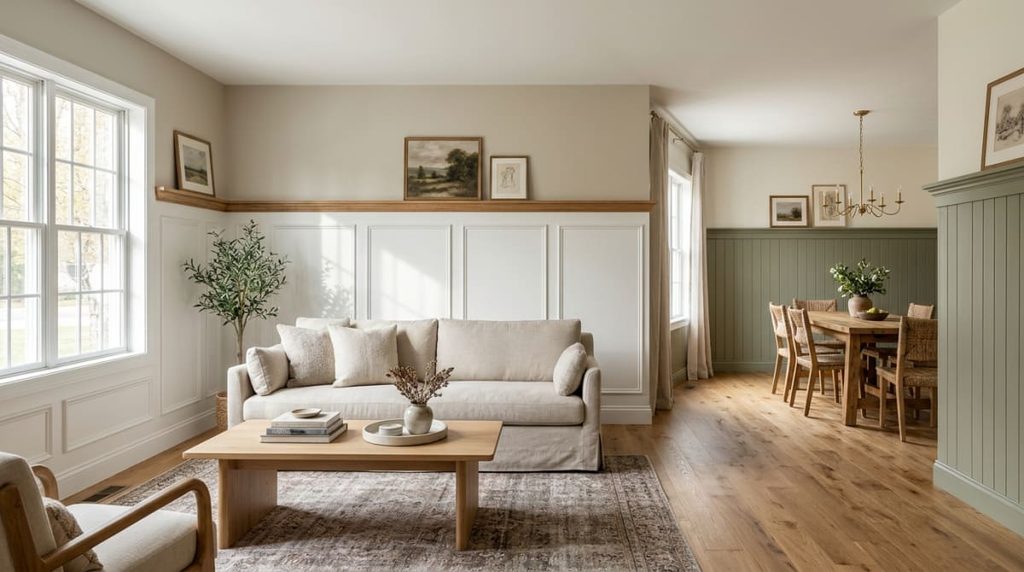
When I walk into an empty room, I immediately look at the vertical surfaces to see how light moves across them. Flat drywall often leaves a space feeling cold, hollow, and unfinished regardless of how much furniture you bring inside.
Wall paneling creates an immediate sense of permanence that paint alone simply cannot deliver. Whether you prefer the historic weight of raised panels or the relaxed vertical lines of cottage beadboard, these architectural details ground your decor choices.
In this guide, I want to share my favorite millwork concepts along with practical advice to help you bring lasting charm into your own home.
Dramatic Black Beadboard Breakfast Nook
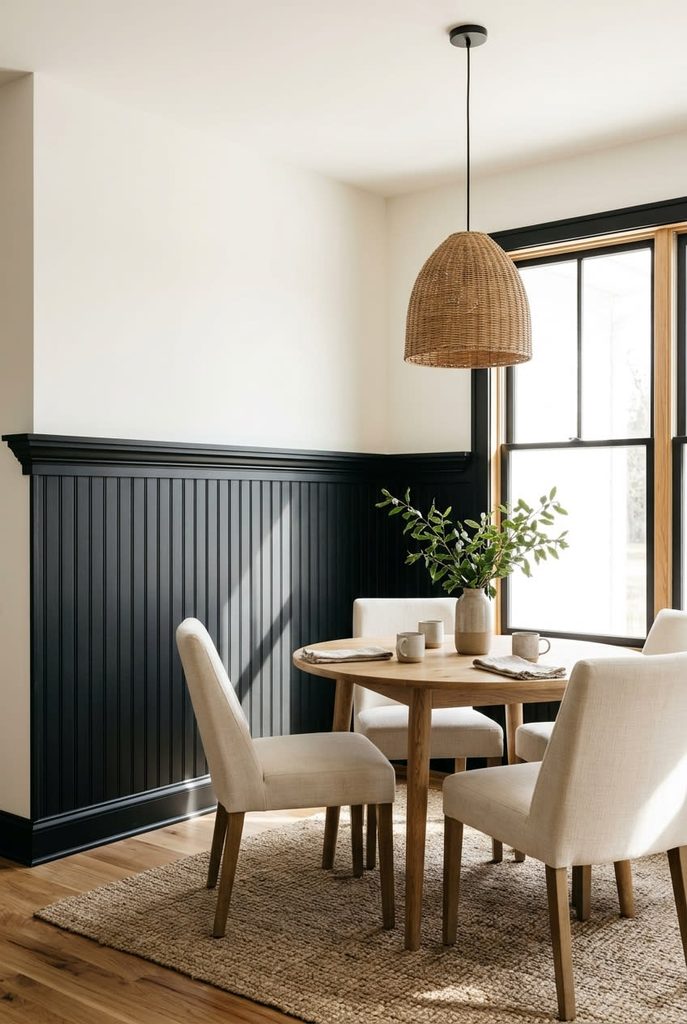
In small dining zones, deep colors can create an intimate setting that draws everyone together naturally. For this breakfast nook, I chose vertical beadboard finished in a velvety matte black extending forty-two inches from the floor.
Grounding the lower walls in deep charcoal or black creates an anchor that makes crisp white upper walls soar. The dark cap rail and matching baseboards give the woodwork a continuous, tailored look that frames the entire eating area.
Soft Blue Scalloped Beadboard Laundry Room
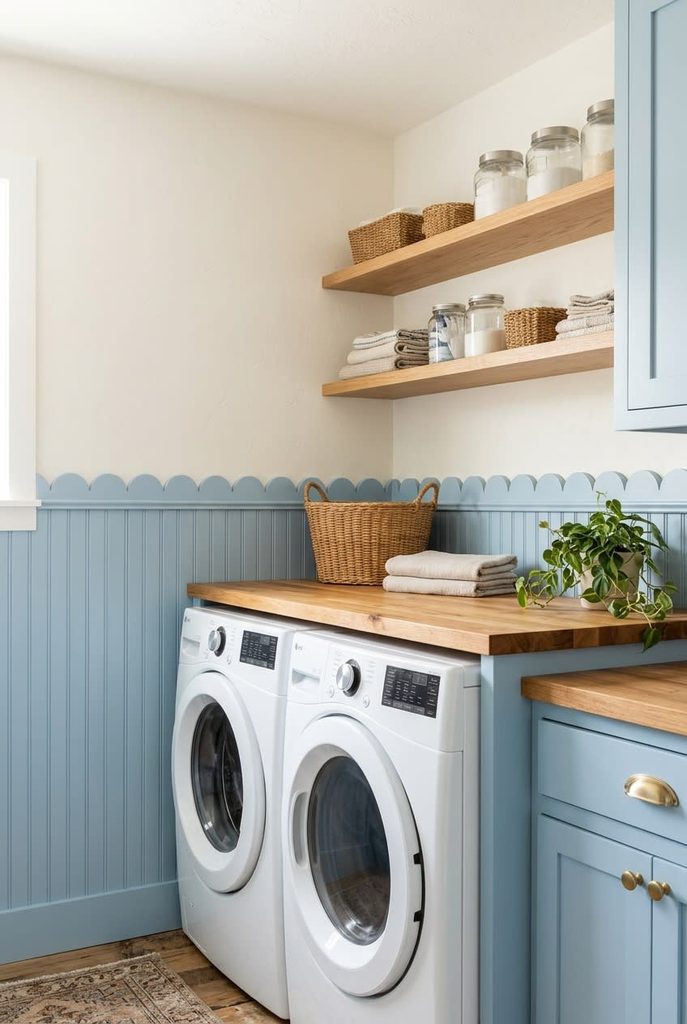
Laundry rooms often get overlooked during renovations, yet they are prime candidates for whimsical decorative touches. In this space, I installed forty-eight-inch powder blue beadboard topped with a charming continuous scalloped wood border.
A playful scalloped cap softens the utilitarian feel of heavy laundry appliances while adding undeniable cottage charm. Soft off-white paint across the upper walls keeps the small workspace feeling airy and bright.
Natural White Oak Flat-Panel Wainscoting
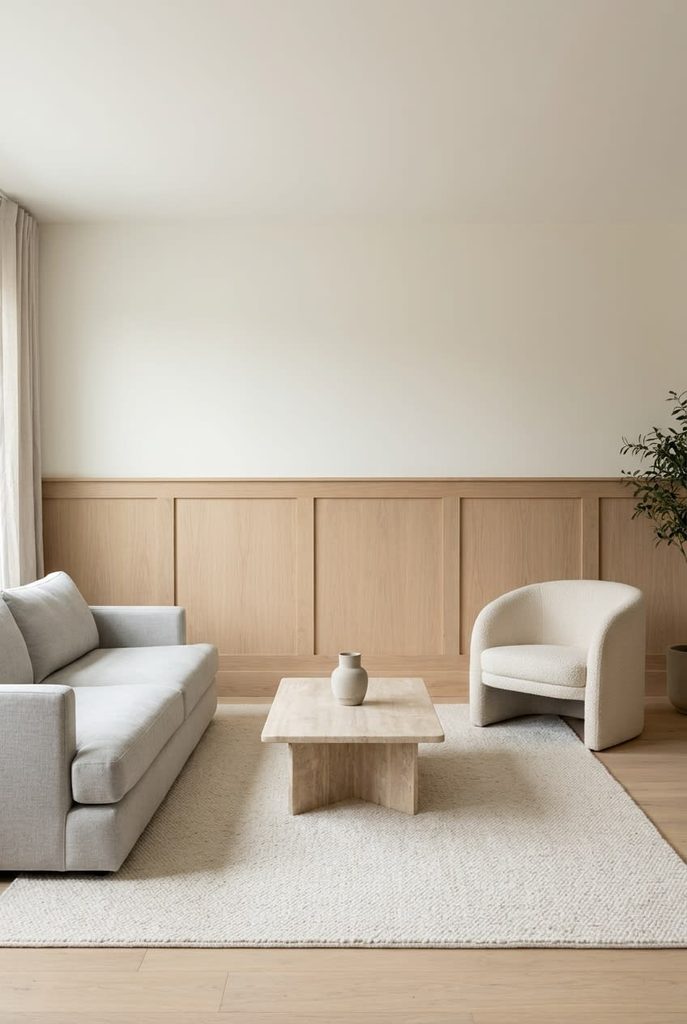
When designing clean contemporary living rooms, I often turn to raw wood finishes rather than painted surfaces. This installation utilizes smooth flat white oak panels set forty inches high with sturdy stiles and a broad top rail.
Preserving the natural pale honey tones of authentic oak infuses contemporary architecture with organic Scandinavian warmth. Recessed rectangular panels create subtle shadow lines without cluttering the visual horizon.
Burgundy Color-Drenched Wall Paneling
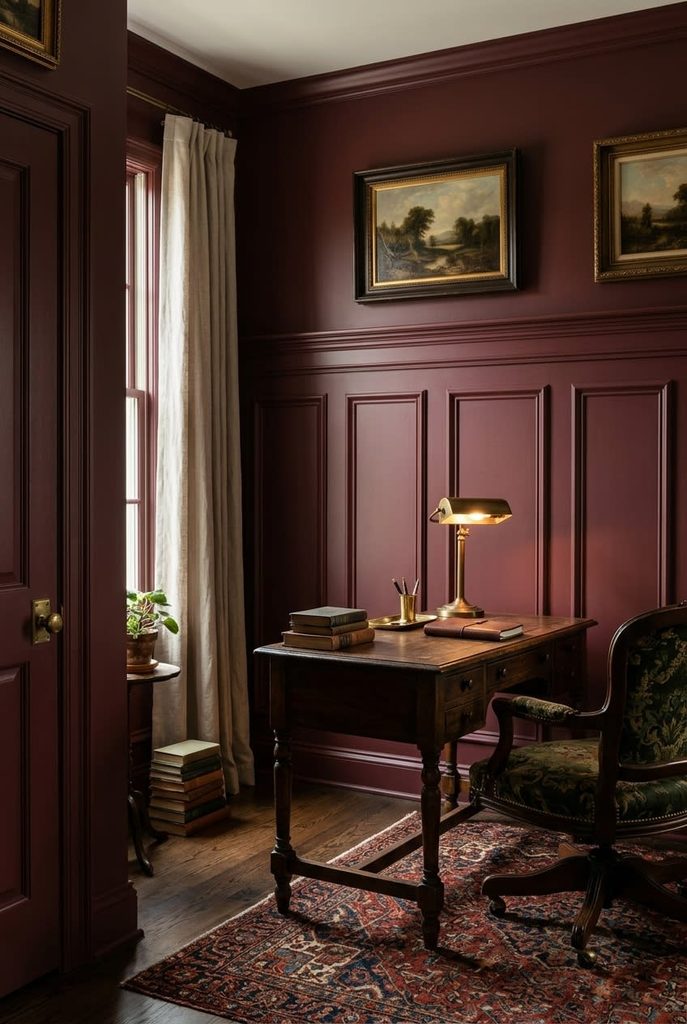
Monochromatic color drenching transforms a standard study into a dramatic, cocooning retreat. I extended sixty-inch recessed wall panels straight into matching burgundy upper walls, baseboards, and window trim.
Painting the wainscoting and upper drywall in an identical rich hue blurs boundaries and makes modest rooms feel grand. This continuous saturation lets the architectural woodwork cast deep, moody shadows that shift throughout the day.
Butter Yellow Beadboard Dining Nook
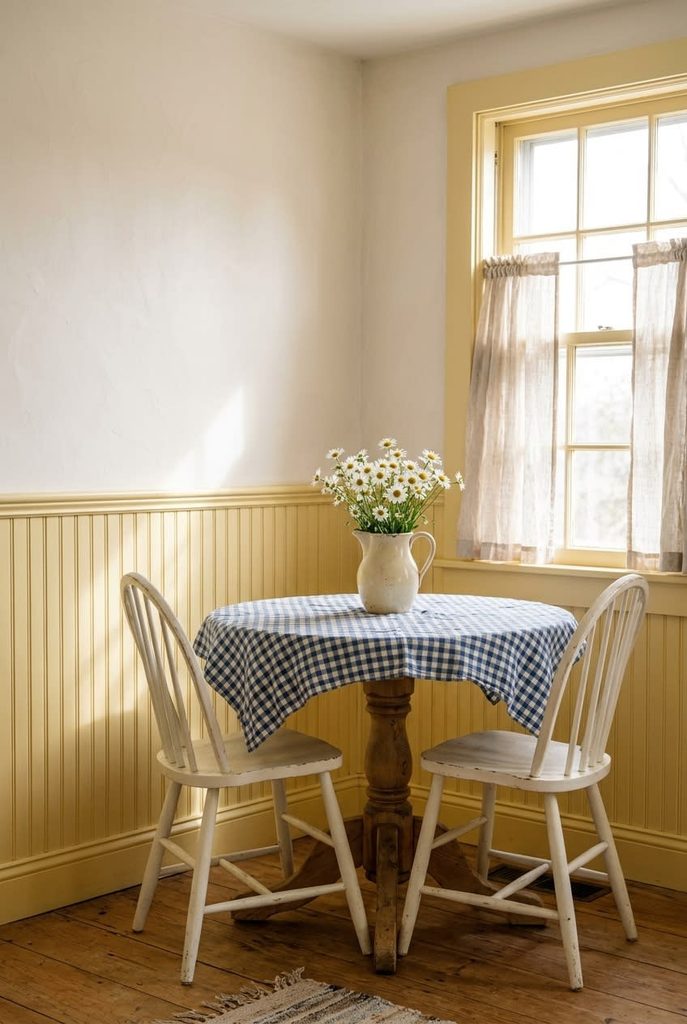
Warm sunny hues can instantly energize breakfast corners that do not receive ample morning exposure. I installed traditional vertical beadboard thirty-six inches high and coated it in a creamy buttercup yellow.
A cheerful sunny yellow wainscoting brings nostalgic warmth that keeps a casual kitchen corner feeling bright and welcoming. Creamy white paint on the upper drywall balances the golden hue so the room never feels overwhelming.
Modern Olive Green Vertical Slat Wainscoting
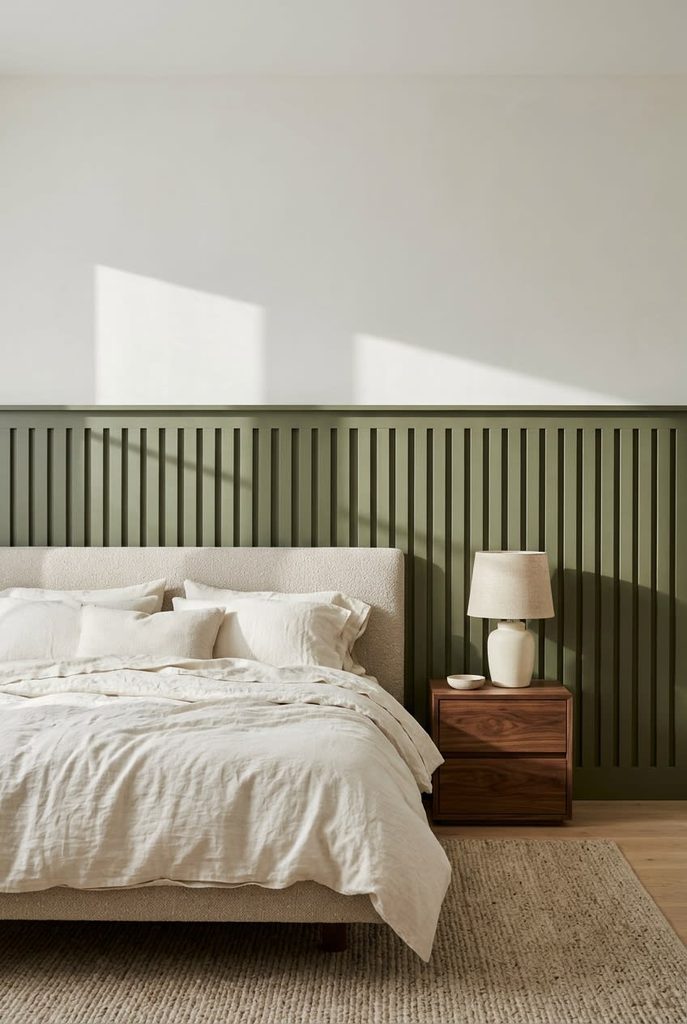
Narrow vertical battens offer a crisp, architectural alternative to traditional tongue-and-groove paneling. In this bedroom, closely spaced rectangular wooden slats stretch forty-eight inches upward beneath a smooth flat cap.
Arranging slender painted battens at exact intervals creates a geometric rhythm that acts as a built-in architectural headboard. Coated in a restful olive green, this treatment adds depth behind low modern furniture.
Elegant Ivory Double-Panel Wainscoting
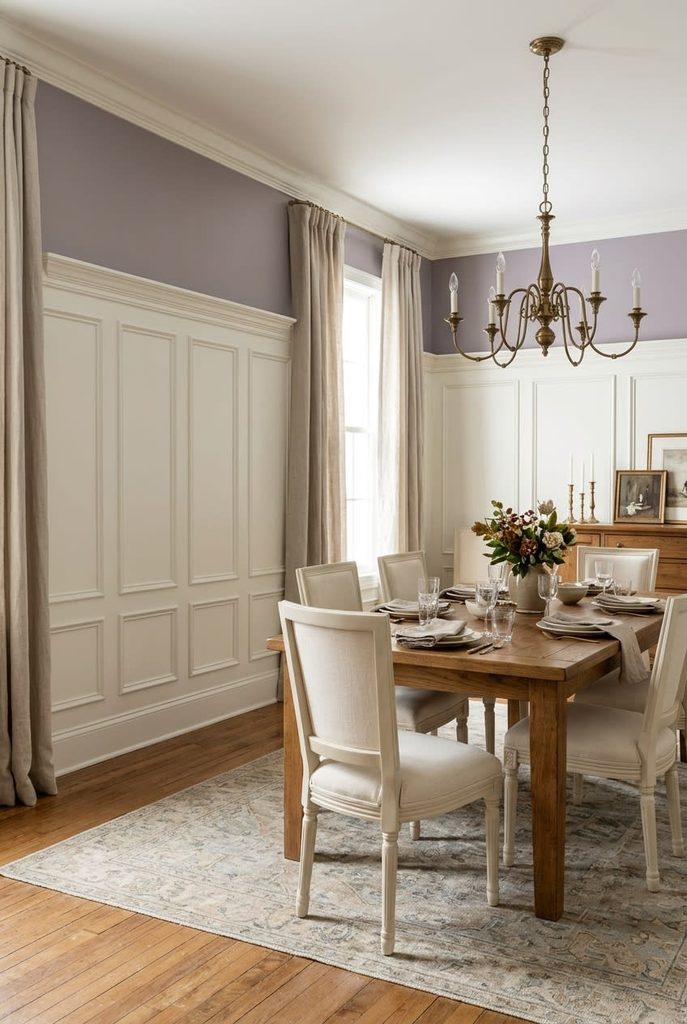
Classic dining rooms benefit from formal millwork that respects traditional proportions and historical balance. For this setting, I specified a sixty-inch double-panel system featuring compact bottom squares below taller elongated rectangles.
Stacking shorter bottom panels below taller rectangular frames draws the eye upward to accentuate standard ceiling heights. Painted in crisp ivory, the woodwork provides structural elegance that elevates everyday dinners.
Dusty Teal Square-Grid Wainscoting
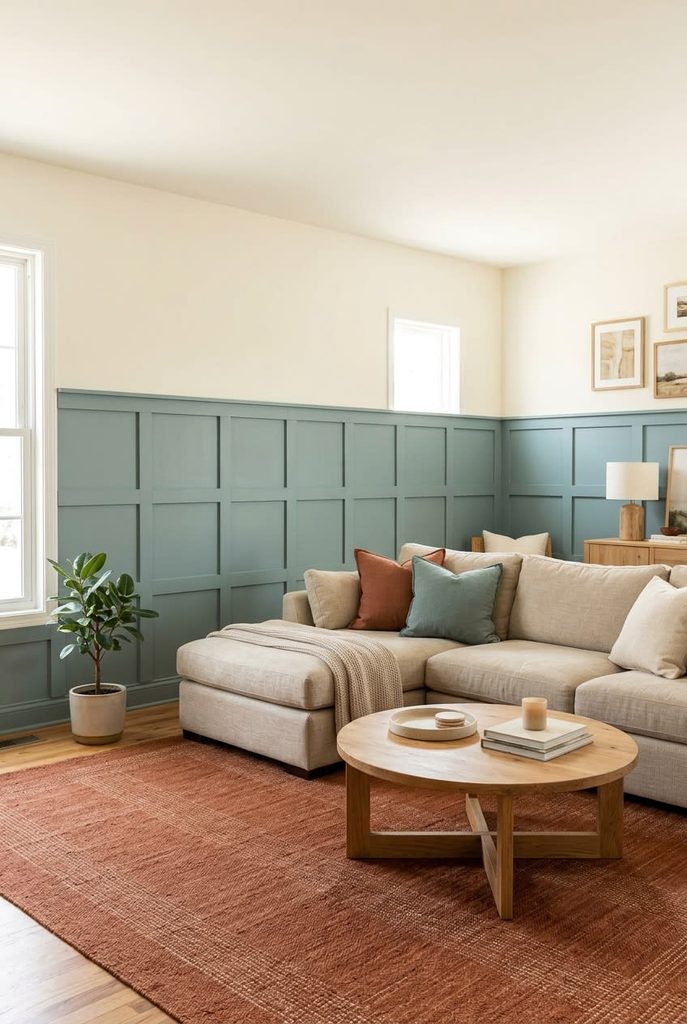
When designing active family rooms, I look for wall treatments that combine durability with graphic punch. This installation uses wide horizontal and vertical battens forming a repeating square grid across the lower four feet of the room.
A tailored square grid paneling finished in muted dusty teal lends modern structure while protecting high-traffic walls from scuffs. Pale cream upper walls maintain openness above the colorful architectural grid.
Coastal Blue Beadboard Staircase
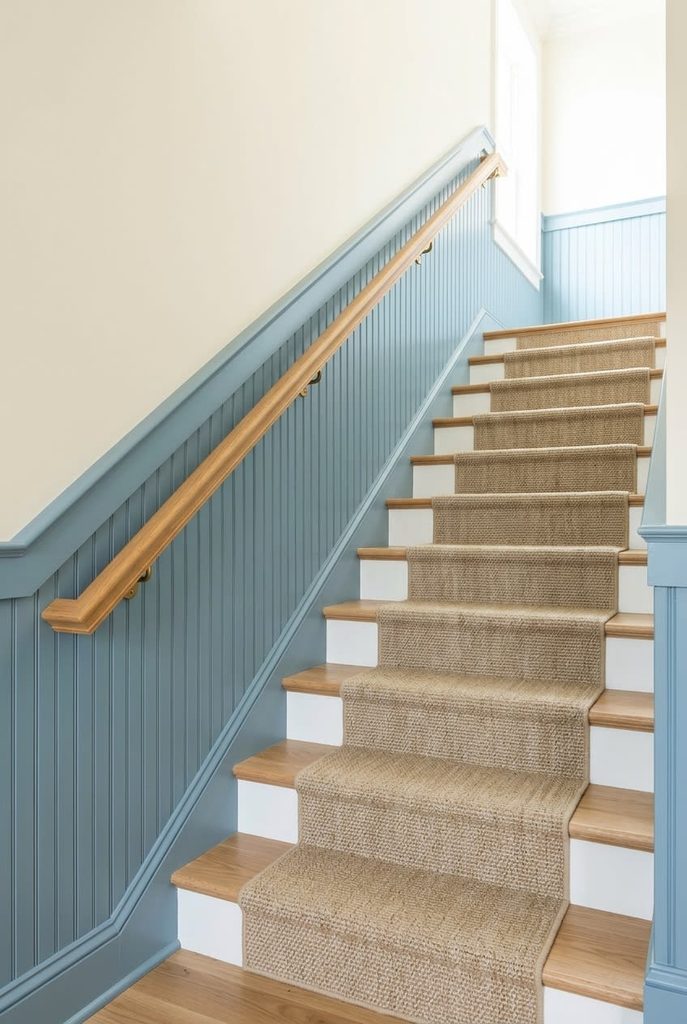
Staircases are frequently neglected transition zones, yet their vertical walls present wonderful architectural opportunities. I installed classic vertical beadboard following the staircase pitch, capped with a crisp diagonal rail running parallel to the steps.
Carrying coastal blue wainscoting up the stair pitch anchors the transitional corridor and adds timeless seaside charm. Off-white upper drywall and white risers prevent the stairwell from feeling narrow or dim.
Planning your staircase trim requires strict attention to diagonal angles and stringer alignment.
Here are three essential details I always specify for stair beadboard installations:
- A natural oak handrail should be mounted securely above the paneling with unlacquered brass brackets.
- A durable woven stair runner provides traction while complementing the painted vertical grooves.
- Clean white baseboards along the stair stringers maintain a polished architectural transition.
The rhythm of vertical beadboard grooves breaks up tall staircase drywall with subtle linear texture. Natural light cascading from an upper landing highlights the soft blue paint finish.
Rich Walnut Herringbone Wood Wainscoting
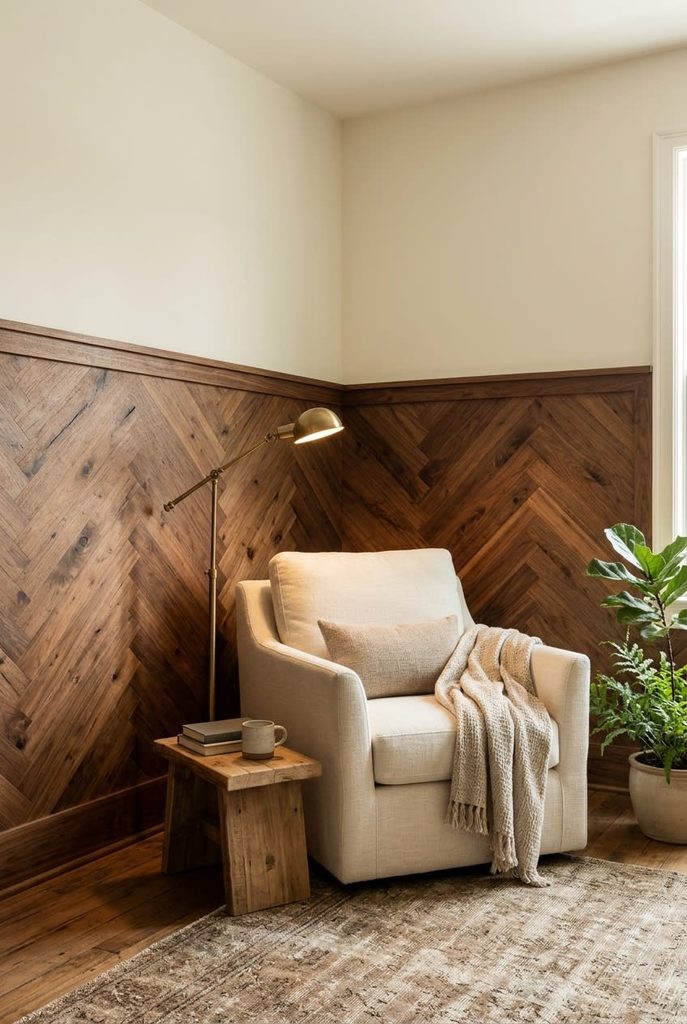
Wood paneling does not need to follow standard vertical layouts to command attention. In this reading corner, narrow walnut boards are set in a tight diagonal herringbone pattern across the lower forty-eight inches.
Arranging authentic walnut boards in a herringbone pattern transforms humble wall paneling into a striking piece of handcrafted art. A broad walnut cap rail and tailored baseboards frame the intricate woodwork cleanly.
Classic White Raised Panel Wainscoting
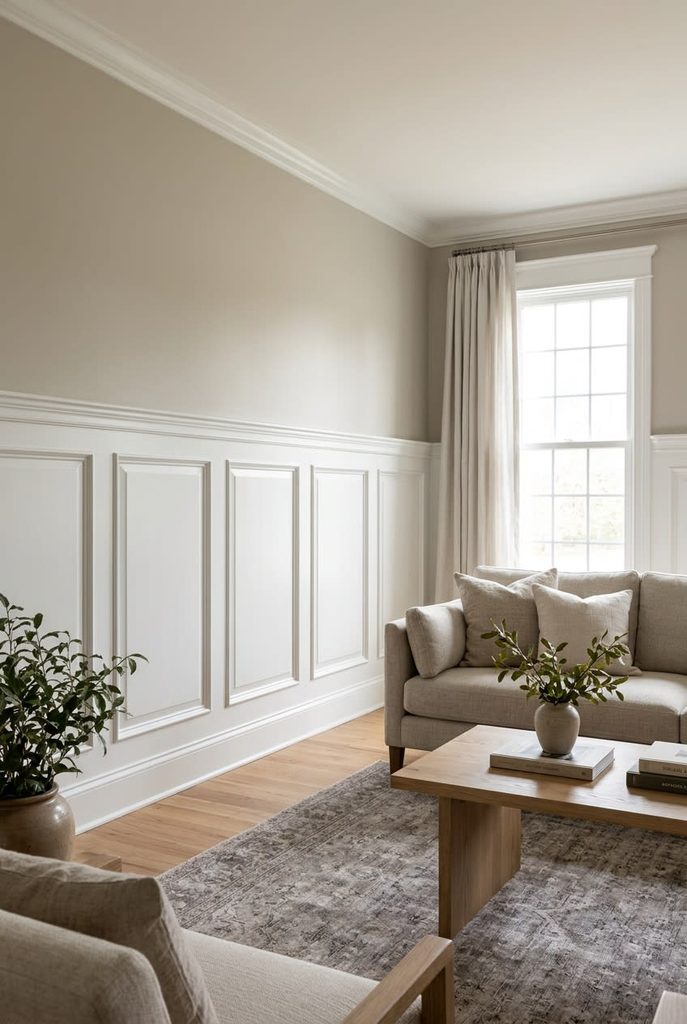
I often turn to traditional raised panel woodwork when a formal living room needs grounded elegance without feeling stiff. Installing these panels at roughly thirty six inches from the floor creates a balanced proportion that aligns naturally with most standard furniture heights.
A substantial chair rail running across crisp white millwork provides an anchor that allows softer wall shades to shine. For upper walls, a gentle greige adds subtle warmth while letting the beveled panel edges catch the natural daylight.
Sage Green Cottage Beadboard Bathroom
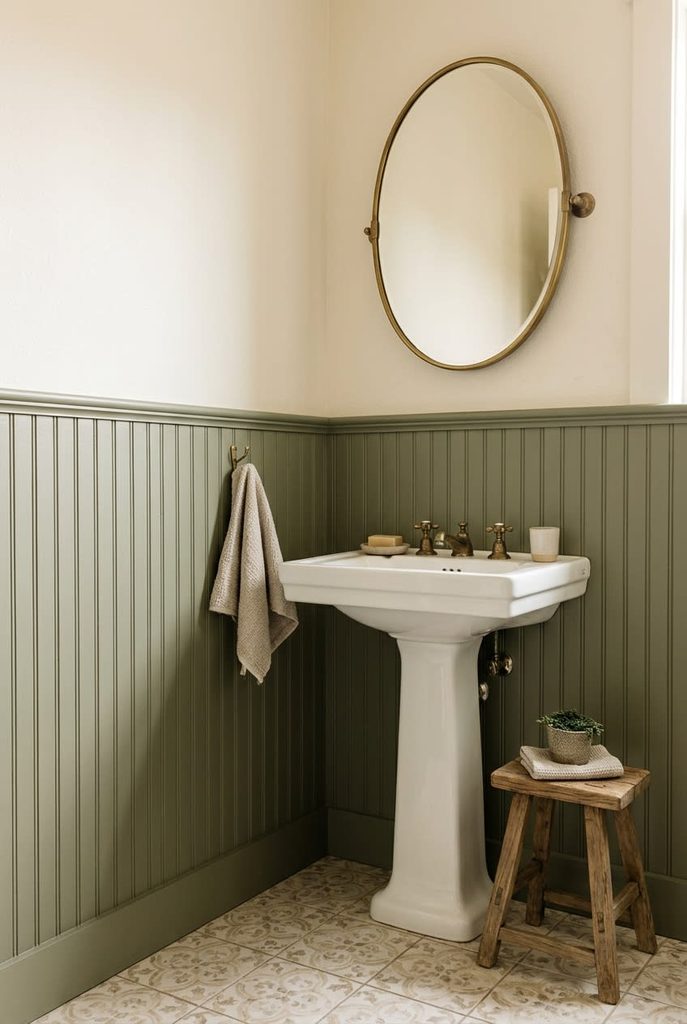
Bathrooms benefit immensely from the cozy texture and practical durability of tongue and groove beadboard. In smaller spaces, running narrow vertical panels up forty two inches shields your drywall from daily water splashes while adding cottage charm.
Choosing a muted sage green paint turns ordinary utilitarian paneling into a tranquil focal point. I like pairing this soft green finish with warm ivory upper walls, brass plumbing fixtures, and a simple wooden stool for organic balance.
Moody Navy Shaker Wainscoting
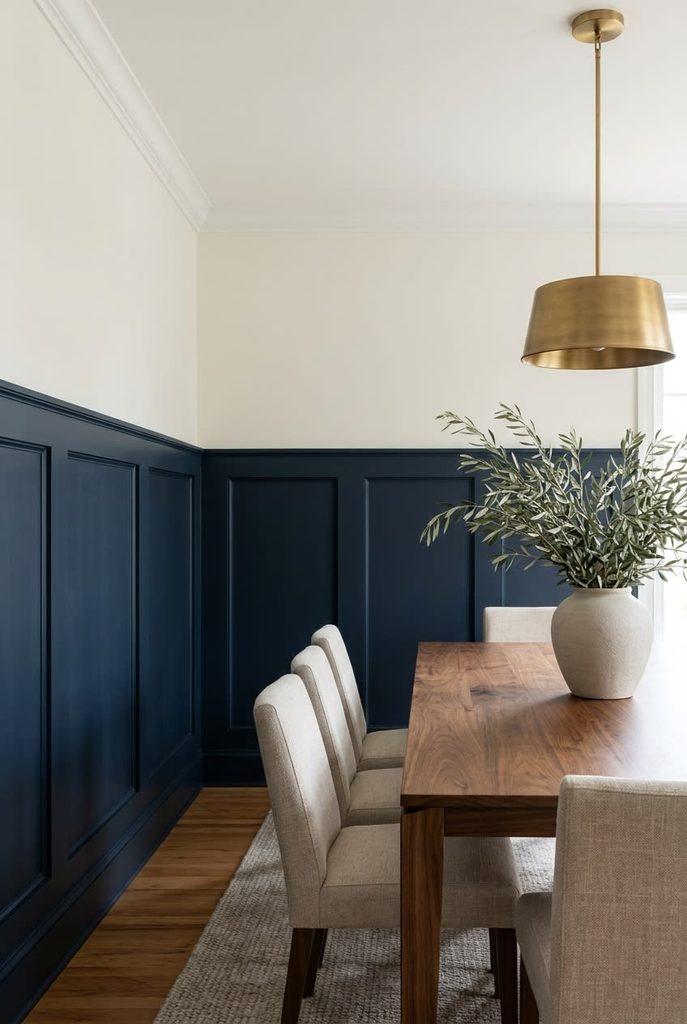
If you want to create an intimate atmosphere in a dining room, deep paint colors on structured millwork will immediately set the mood. Shaker style recessed panels offer clean, squared lines that feel distinctly modern while honoring historic carpentry practices.
Extending dark navy panels forty eight inches upward establishes a dramatic visual boundary that anchors your dining table. Keep the upper drywall a clean, warm white to keep the room feeling open and visually balanced.
Dusty Sage Board and Batten Hallway
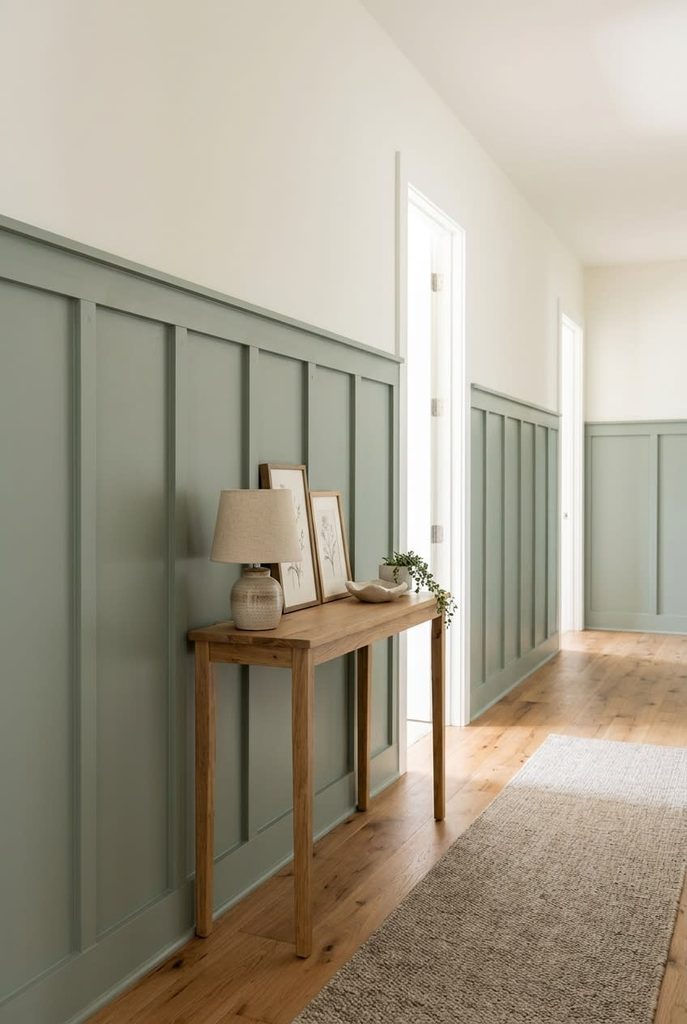
Hallways are frequently overlooked transition spaces that suffer from long, flat walls and minimal natural light. Installing vertical board and batten up to fifty four inches helps break up the tunnel effect and adds welcome architectural rhythm.
Evenly spaced battens draw the eye upward and make standard eight foot ceilings feel noticeably taller. I recommend finishing the boards in a soft dusty sage, which provides gentle color without overwhelming narrow hallways.
Blush Pink Picture Frame Wainscoting
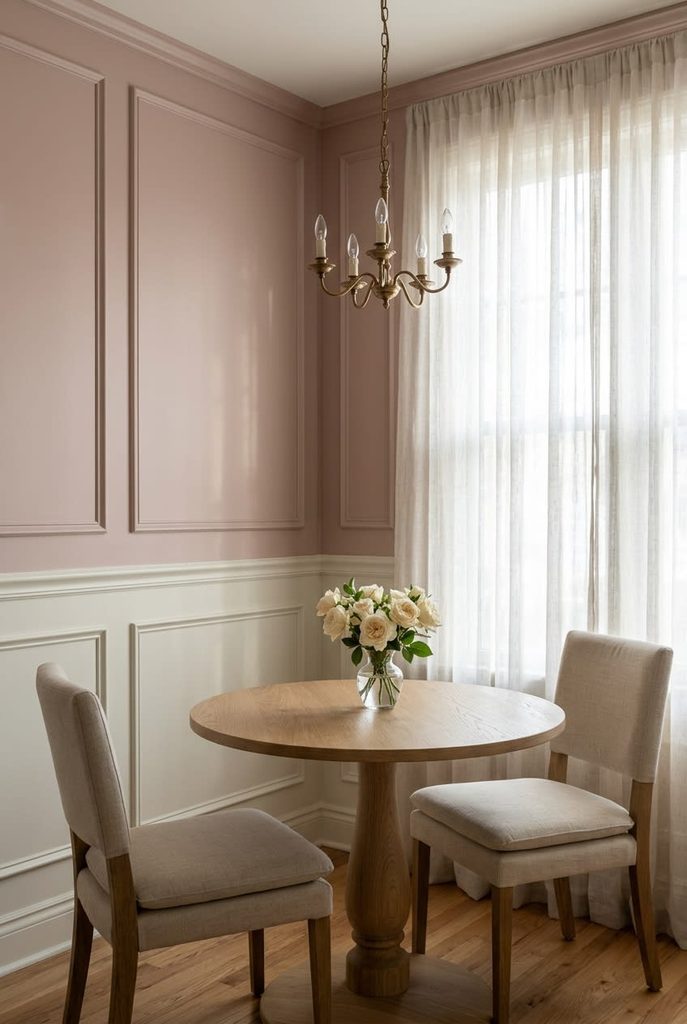
Picture frame molding is one of my favorite budget friendly treatments because it creates architectural depth using applied surface trim rather than full wall panels. Running delicate rectangular molding forty inches above the floor defines a cozy breakfast nook or dining corner with grace.
A muted dusty blush hue lends unexpected sophistication while keeping the surrounding room bright and inviting. Pair this soft rose tone with a round white oak dining table to highlight the quiet shadows within each frame.
Warm Walnut Stained Beadboard Living Room
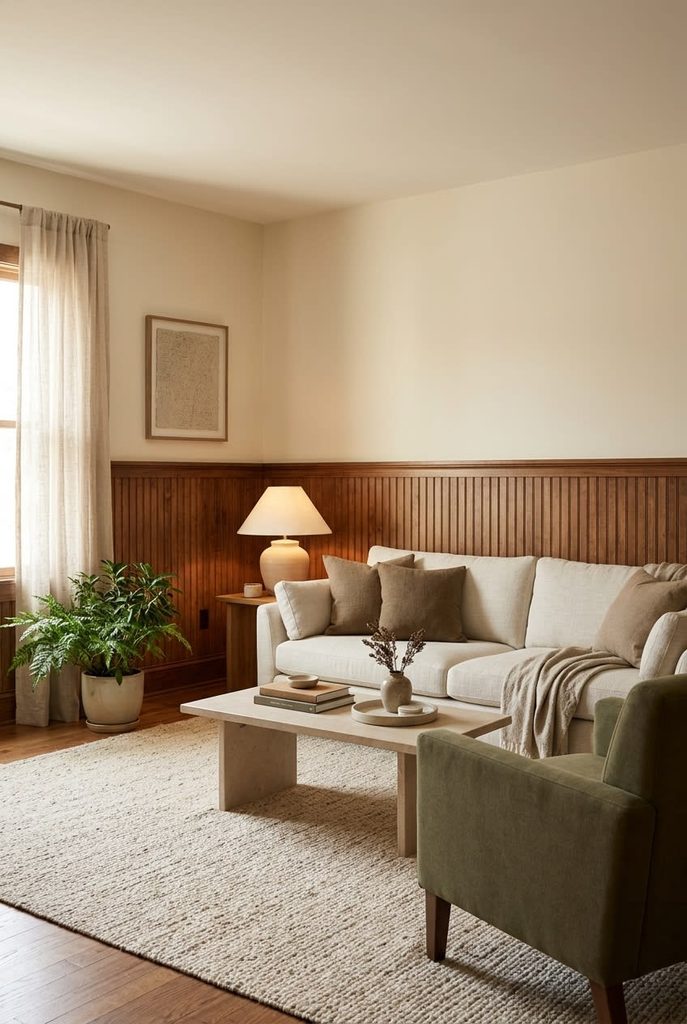
Painted millwork is wonderful, but natural wood grain brings an irreplaceable organic warmth into everyday family rooms. Using real wood beadboard finished in a medium walnut stain celebrates authentic craftsmanship and nods to classic library aesthetics.
Capping thirty six inch walnut paneling with a matching solid wood rail establishes an inviting sense of craftsmanship. I balance the visual weight of dark timber by dressing the upper walls in warm creamy beige and adding light upholstery.
Terracotta Full Height Vertical Wall Paneling
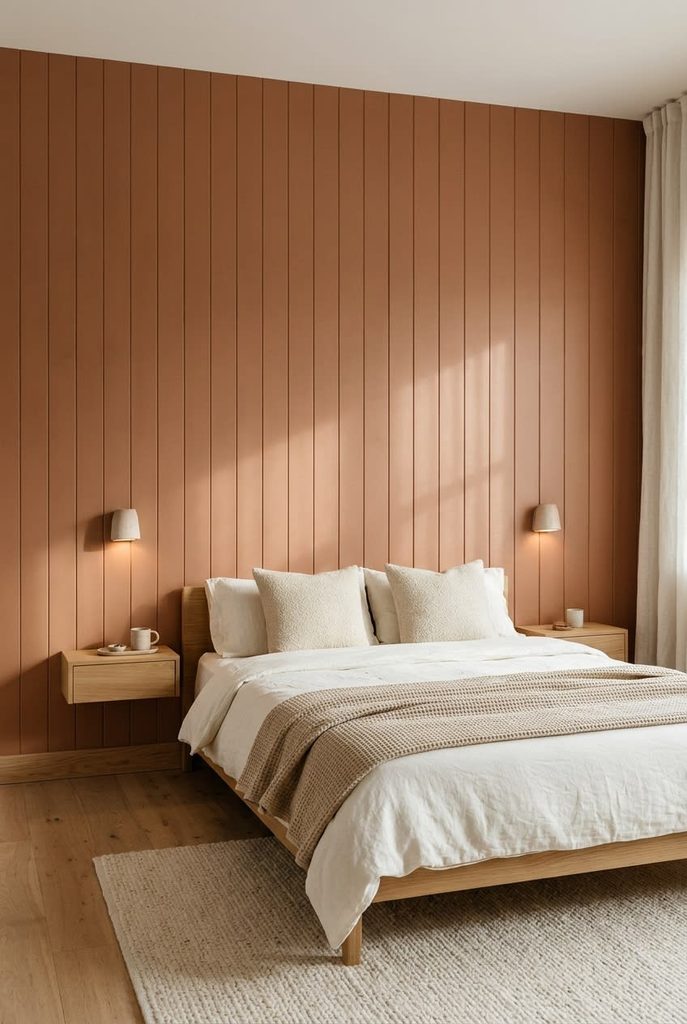
Sometimes the most impactful way to use paneling is to abandon traditional chair rails and take the woodwork all the way to the ceiling. Wide vertical planks separated by sharp V grooves create clean continuous lines that immediately modernize a bedroom.
Full height terracotta wall paneling envelops a sleeping space in earthy warmth and architectural interest. Because the color makes a bold statement, I keep the bedding simple with layered creams, textured linens, and natural oak furniture.
Cream Horizontal Beadboard Powder Room
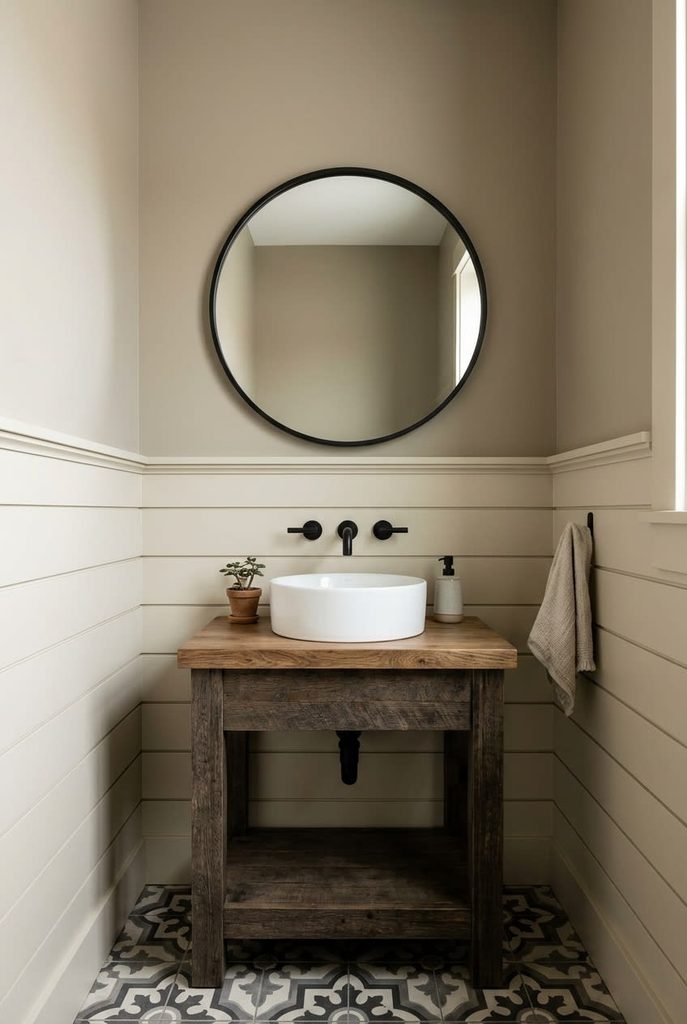
While beadboard is traditionally installed vertically, turning the planks horizontally can work wonders in compact powder rooms. The horizontal lines trick the eye by leading it outward, which makes narrow powder rooms feel surprisingly wider. Antique cream horizontal boards topped with a flat cap rail offer a fresh take on classic farmhouse design.
- Install narrow boards to keep lines from overwhelming small spaces.
- Choose satin finishes to wipe away daily splashes easily.
- Pair light cream woodwork with matte black fixtures for clean contrast.
Dark wood vanities and patterned floor tiles balance the creamy paneling with grounded weight. The subtle grooves catch overhead light and prevent small windowless bathrooms from feeling flat or sterile. This simple orientation change proves that unexpected layouts can make a massive functional difference.
French Blue Reeded Wainscoting
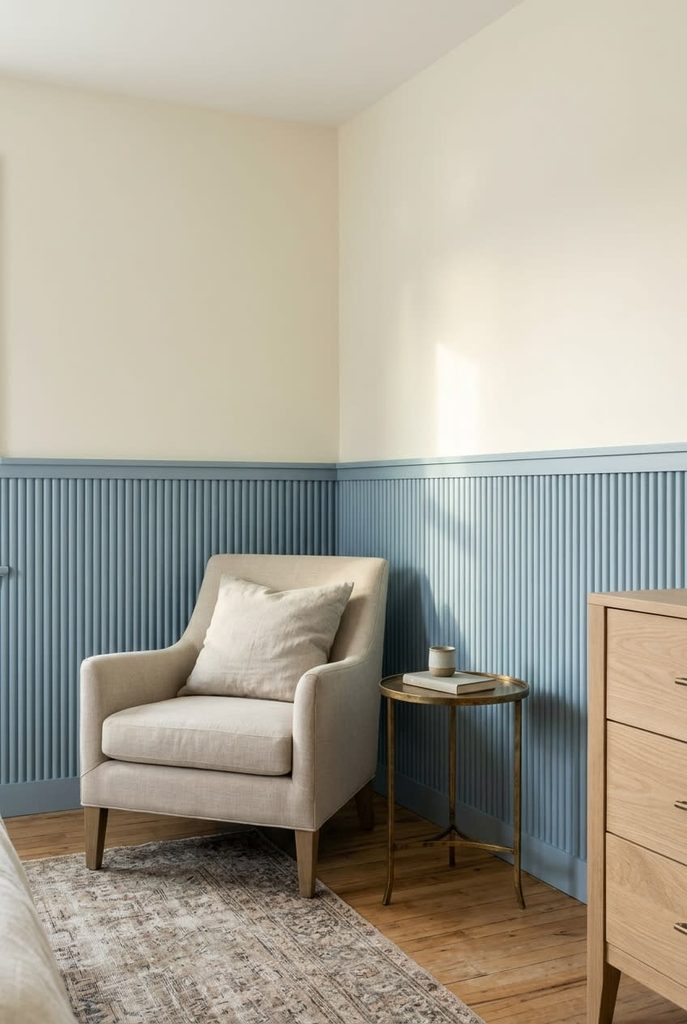
Reeded wainscoting introduces a tactile, ribbed profile that feels modern yet deeply rooted in classic architectural origins. The closely spaced convex dowels produce a fluid rhythm of light and shadow along the lower forty inches of the wall.
A coat of powdery French blue paint highlights the continuous curved texture while creating a peaceful bedroom retreat. I like pairing this distinctive trim with pale ivory walls and natural oak furniture to let the subtle woodwork remain the star.
Botanical Wallpaper Above Ivory Beadboard
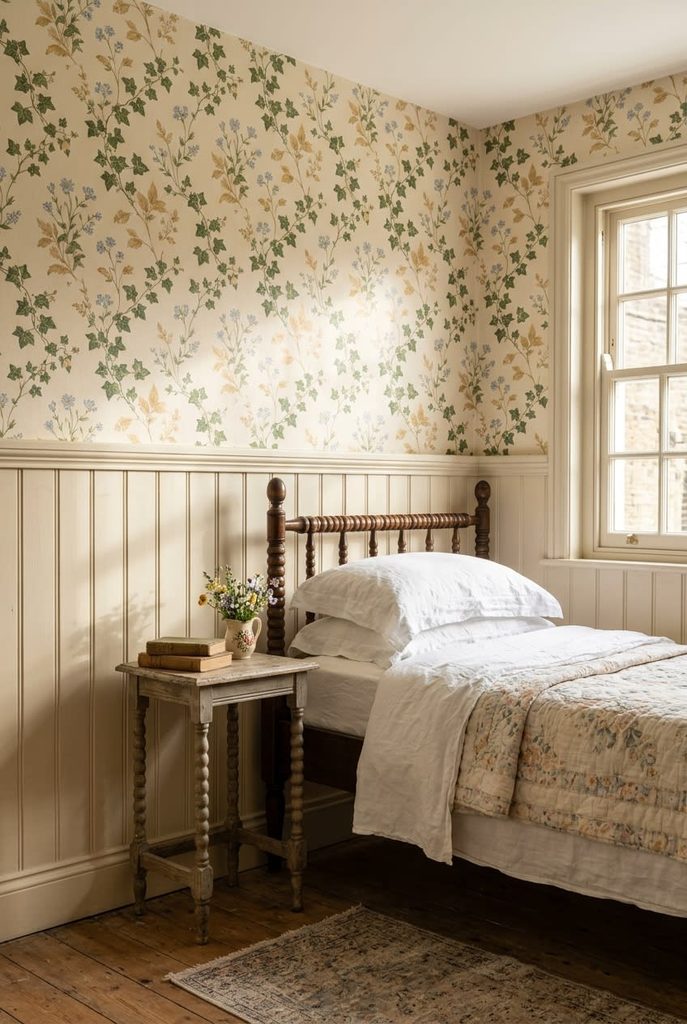
Combining classic beadboard with patterned wallcoverings is a timeless technique that instantly evokes English cottage romance.
Covering the lower forty two inches with vertical ivory beadboard protects walls from scuffs while giving your eyes a place to rest. Delicate trailing botanical wallpaper positioned above neutral paneling keeps intricate floral prints from overwhelming the room.
- Pull an accent color from the wallpaper pattern to use on your trim.
- Maintain a clean chair rail profile so the transition remains crisp.
- Incorporate traditional brass hardware to echo the vintage aesthetic.
An antique dark wood bed frame and faded floral quilts complete the cozy atmosphere effortlessly. Morning light washing across the soft ivory grooves brings out the handmade feel of traditional millwork.
Conclusion
Transforming your home with architectural millwork does not require rebuilding your entire floor plan from scratch. By adding wainscoting or beadboard, you introduce texture, visual structure, and timeless character that flat drywall simply cannot match. I encourage you to look at your blank walls as opportunities to experiment with classic panel heights and personal color palettes. Whether you choose full height terracotta planks or traditional raised white panels, intentional trim work always makes a house feel like a cherished home.
Carefully measuring your proportions and choosing complementary paint finishes will ensure your project looks intentional and professionally crafted. Take your time selecting materials that match the functional needs of your household, from moisture resistant bathroom trims to durable hallway boards. With thoughtful planning, these beautiful millwork installations will continue to elevate your everyday living spaces for decades to come.