
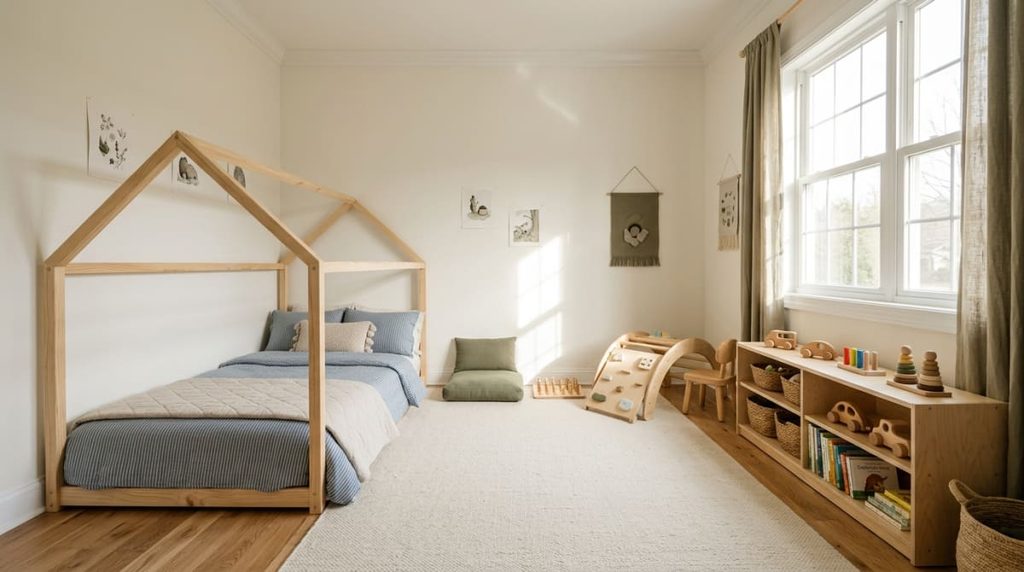
When I design a bedroom for a toddler, my primary goal is fostering gentle independence while keeping the overall atmosphere deeply restful. Many traditional children rooms lean into hyper stimulating plastic toys and bright graphic themes that overwhelm developing nervous systems. I find that a thoughtfully arranged Montessori environment provides children with quiet confidence and freedom of movement. By keeping furnishings at child scale, we allow young boys to navigate their daily rituals with genuine joy.
A calm palette combined with natural materials softens the room and turns everyday routines into reassuring experiences. When young children can reach their clothing, choose their books, and climb safely into bed, bedtime struggles often melt away. I love curating family spaces where thoughtful organization and peaceful design work hand in hand.
Let us explore 18 practical design concepts that transform an ordinary toddler bedroom into a nurturing and independence-focused sanctuary.
Low Natural-Wood Floor Bed With Accessible Bedside Storage

I always encourage parents to start their Montessori transition with a grounded sleeping arrangement. A solid oak floor bed with gently rounded corners gives your toddler complete ownership over his sleep schedule.
The low mattress height removes the fear of dangerous falls while inviting your child to rest whenever his body feels tired. Beside the frame, a slim wooden cubby holds a soft ceramic nightlight and a woven basket for favorite sleep comforts.
Child-Height Open Wardrobe With Simple Everyday Outfits

Getting dressed in the morning often turns into an overwhelming struggle when closets are packed with endless options. To solve this hurdle, I install a compact open wardrobe crafted from pale beech or natural maple. Limiting the exposed hanging rail to a few weather appropriate outfits empowers your little boy to dress himself without decision fatigue.
- Soft pull on trousers allow little hands to practice dressing easily.
- Breathable crewneck shirts slip overhead without catching on small ears.
- Two low woven baskets keep clean socks and pajamas organized below.
This intentional arrangement turns morning routines into moments of calm competence. Your toddler learns how to manage his daily wardrobe without becoming frustrated. Over time this quiet consistency builds genuine pride in personal self care.
Front-Facing Picture Book Ledges Beside a Cozy Reading Cushion
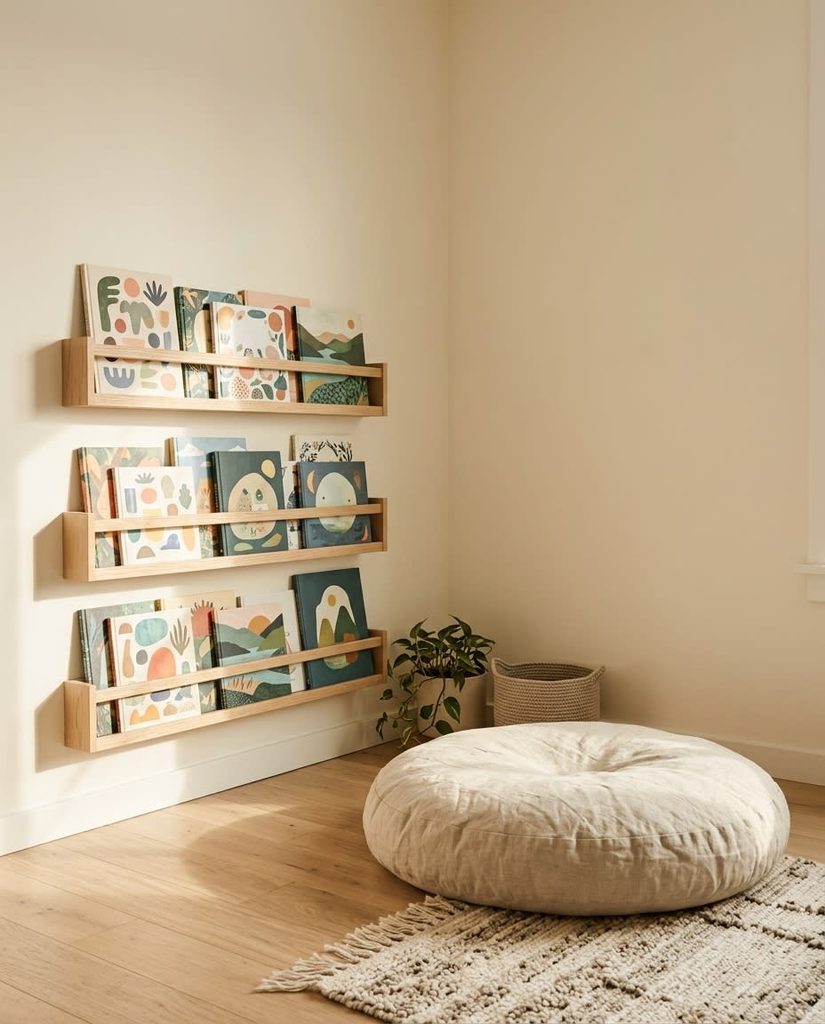
Traditional bookshelves hide beautiful book illustrations behind narrow spines that small children cannot easily recognize. Instead, I mount three shallow oak picture ledges low on the wall where little hands can select stories effortlessly.
Displaying book covers face forward invites spontaneous quiet reading throughout the afternoon. Beside the shelves, a generous oatmeal linen floor cushion and a small circular wool rug establish an inviting reading retreat.
Low Activity Shelf With Wooden Montessori Toys
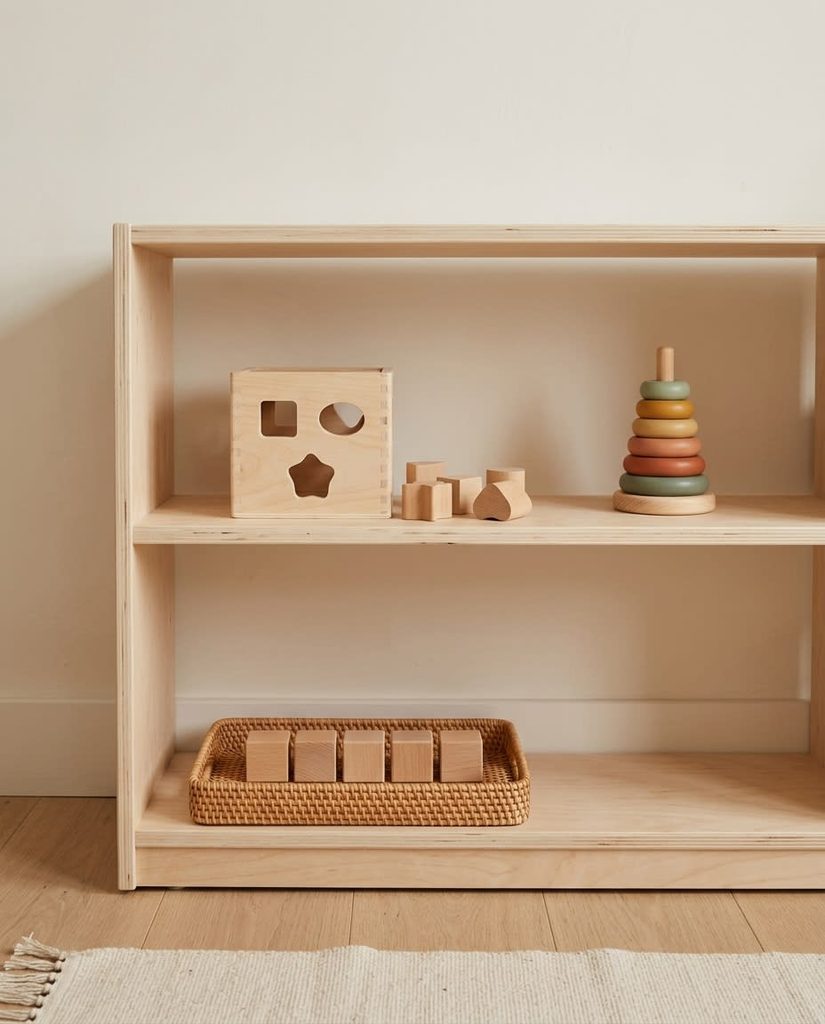
Toy clutter frequently leads to overstimulation and shortened attention spans in energetic toddlers. I prefer a low two tier birch shelf styled with only four or five quality wooden activities spaced generously apart.
Giving each wooden toy its own distinct spot on an open shelf helps your child practice deep focus and tidy habits. Shallow woven trays keep small materials neatly contained while maintaining visual order across the bedroom.
Soft Sage Half-Wall With Warm White Upper Walls
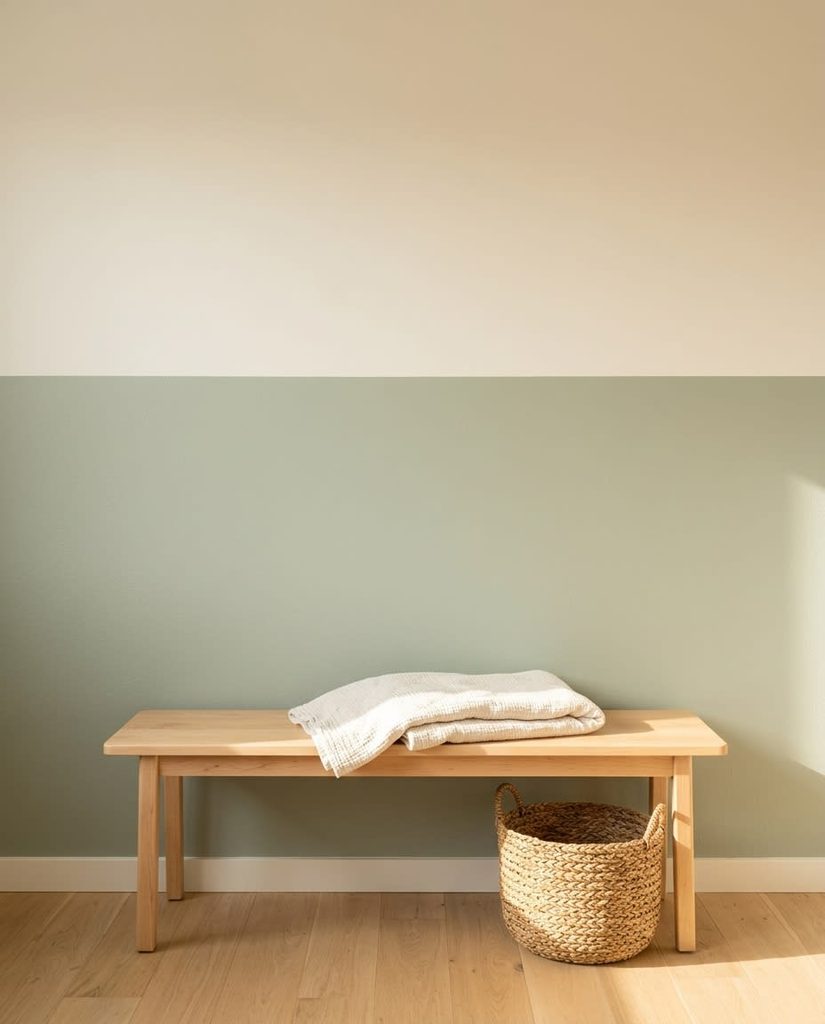
Color plays an essential role in settling busy toddler energy before bedtime. I often paint the lower half of the walls in a muted earth toned sage while keeping the upper portion a warm creamy white.
A grounded two tone wall division visually lowers the ceiling line to create an intimate sanctuary scaled specifically for a child. A low maple bench placed against the green paint offers a quiet resting spot and anchors the perimeter gracefully.
Montessori Dressing Station With Rounded Mirror and Wooden Pegs
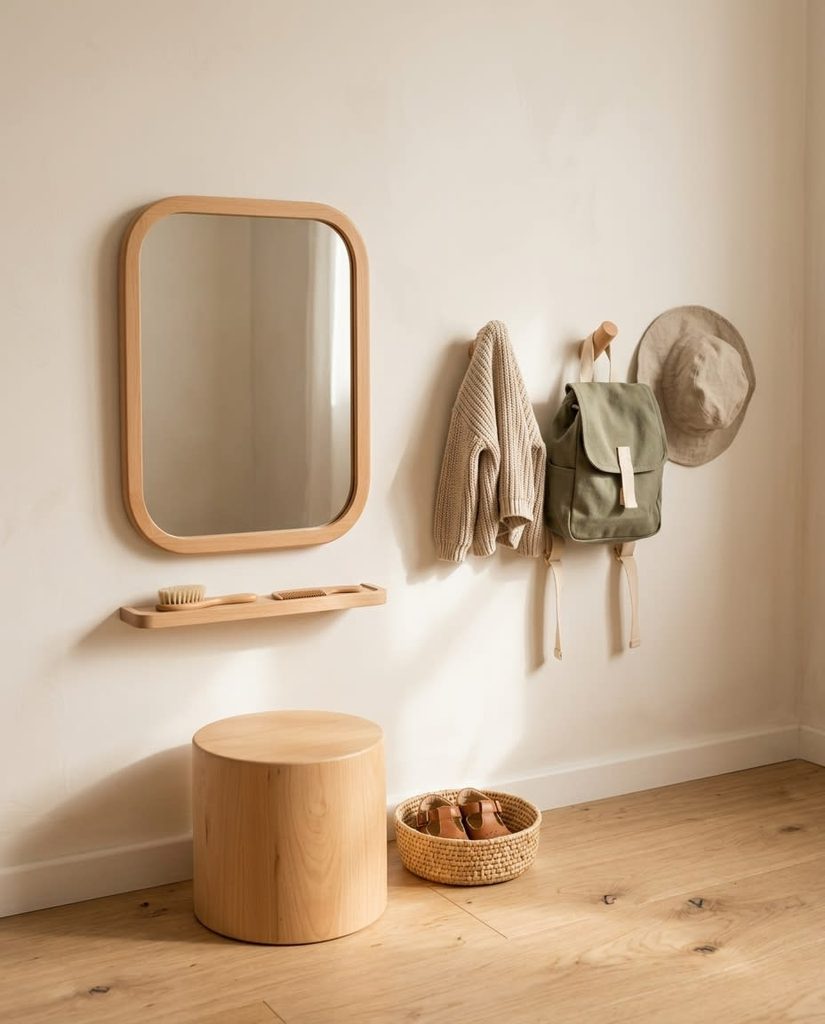
Self care routines become natural habits when children have access to properly sized grooming stations. I mount an unbreakable acrylic mirror with smooth rounded edges directly above a slim wooden display ledge.
Smooth birch wall pegs installed alongside the glass hold your toddler daily coat, sun hat, and small canvas bag. Placing a sturdy wooden stool beneath the mirror provides your boy with a dedicated spot to practice pulling on boots.
Under-Bed Rolling Drawers for Easy Toy Cleanup
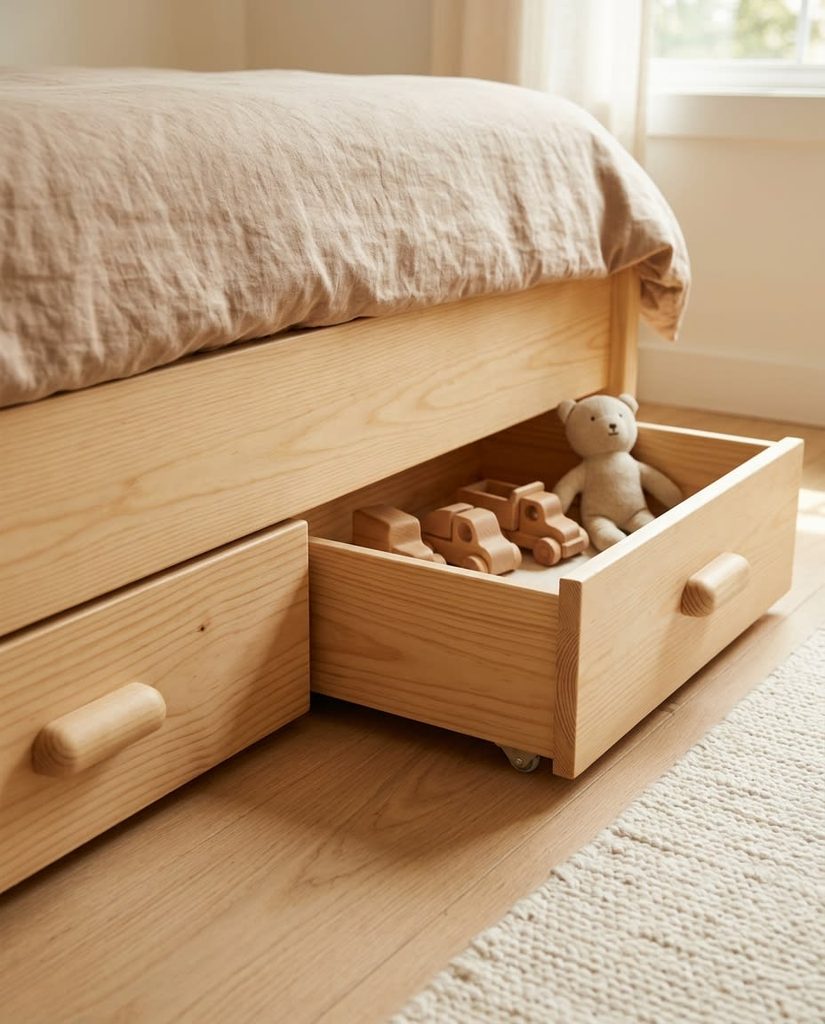
Storage solutions in a Montessori bedroom must be as simple to maintain as they are functional. I love incorporating shallow solid pine drawers on smooth castors underneath a low profile toddler bed.
Oversized wooden drawer pulls allow small fingers to slide storage compartments open and closed without adult assistance. Rotating collections of wooden cars and soft fabric toys inside these hidden bins keeps floor surfaces wonderfully clear.
Soft Linen Canopy Reading Nook in an Empty Bedroom Corner
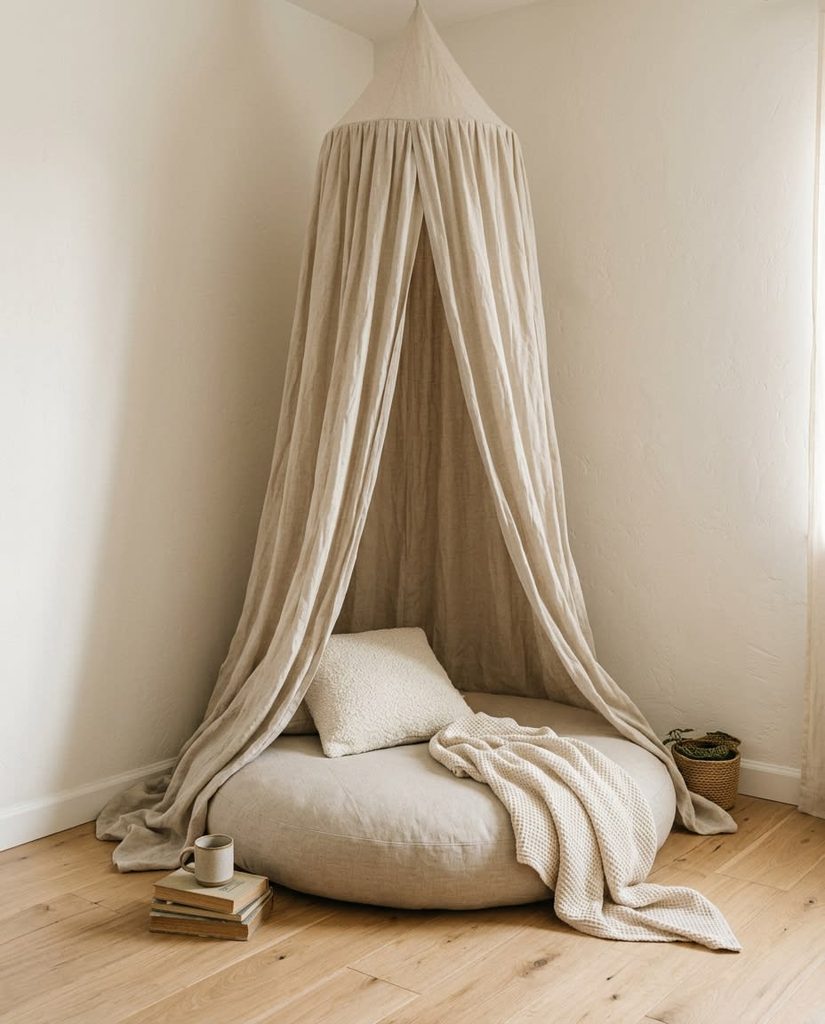
Every growing child occasionally needs a quiet hideaway where he can decompress away from household noise. An unbleached flax linen canopy suspended gently from the ceiling turns an unused corner into a peaceful nest.
Draping breathable natural linen over a plush floor cushion creates a cozy sanctuary that feels both protective and open. I accent the cushion with a textured boucle pillow and a lightweight cotton blanket for restful sensory comfort.
Child-Height Art Display With Removable Wooden Frames
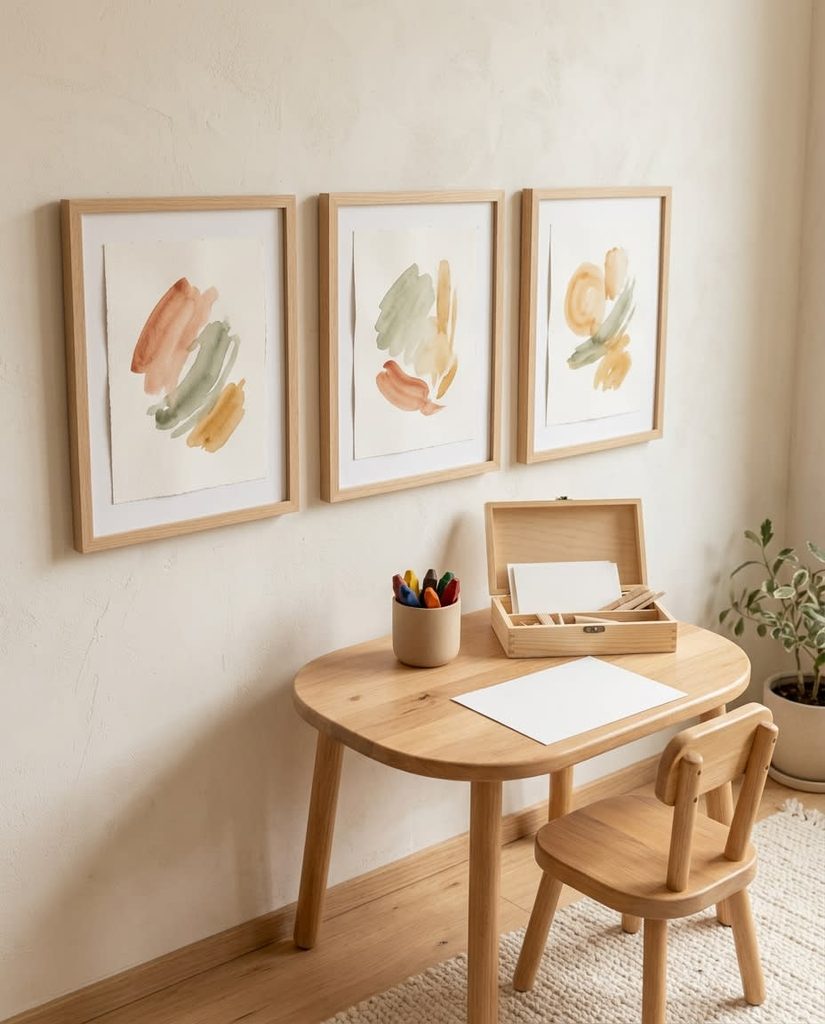
Creative expression flourishes when children see their own artwork treated with dignity and care. In my client spaces, I hang three lightweight wooden frames at exact toddler eye level above a small workstation.
A round child sized wooden chair and a ceramic cup holding beeswax crayons invite spontaneous sketching throughout the day. Rotating your child watercolor experiments inside magnetic frames builds creative confidence without creating permanent wall clutter.
Montessori House-Frame Floor Bed With Earthy Blue Bedding
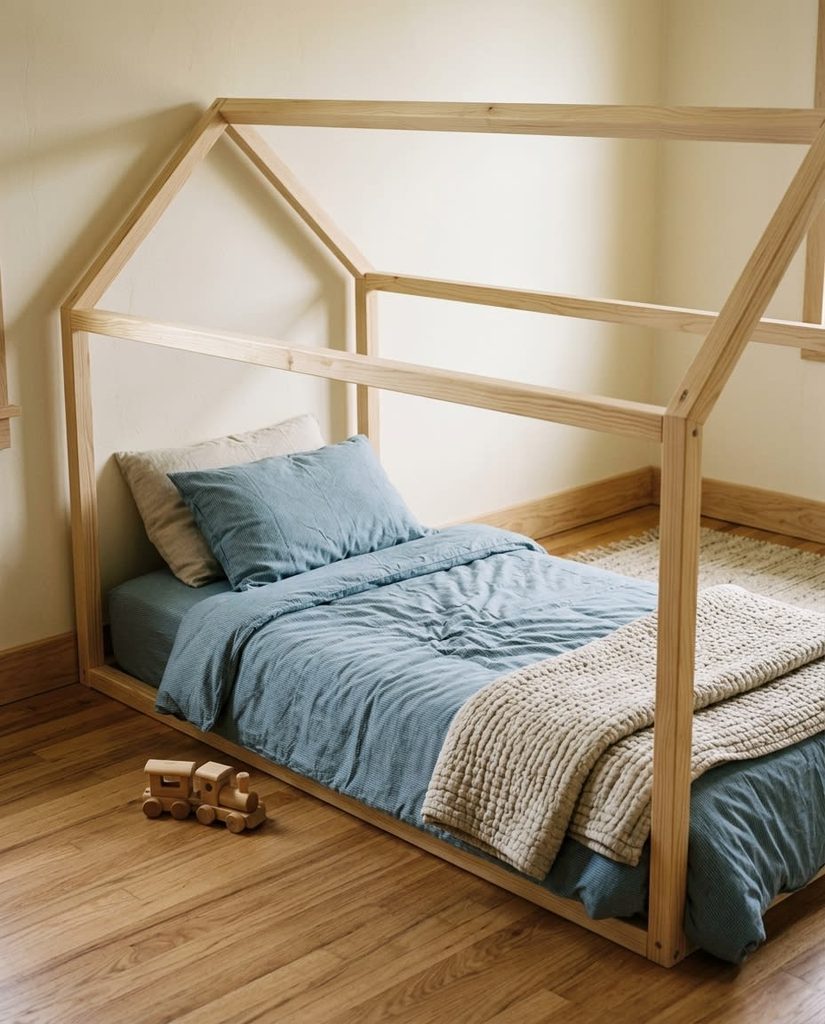
A floor bed is the foundational element of any authentic Montessori bedroom because it gives toddlers full autonomy over their sleep. I love using an unfinished pine house frame because the pitched roof adds charming architectural interest without enclosing the space.
Dressing the low mattress in breathable dusty blue cotton creates an inviting focal point that feels grounded and serene. A soft oatmeal quilt folded at the foot adds gentle texture and warmth for chilly nights.
Built-In Window Seat With Hidden Toy Storage
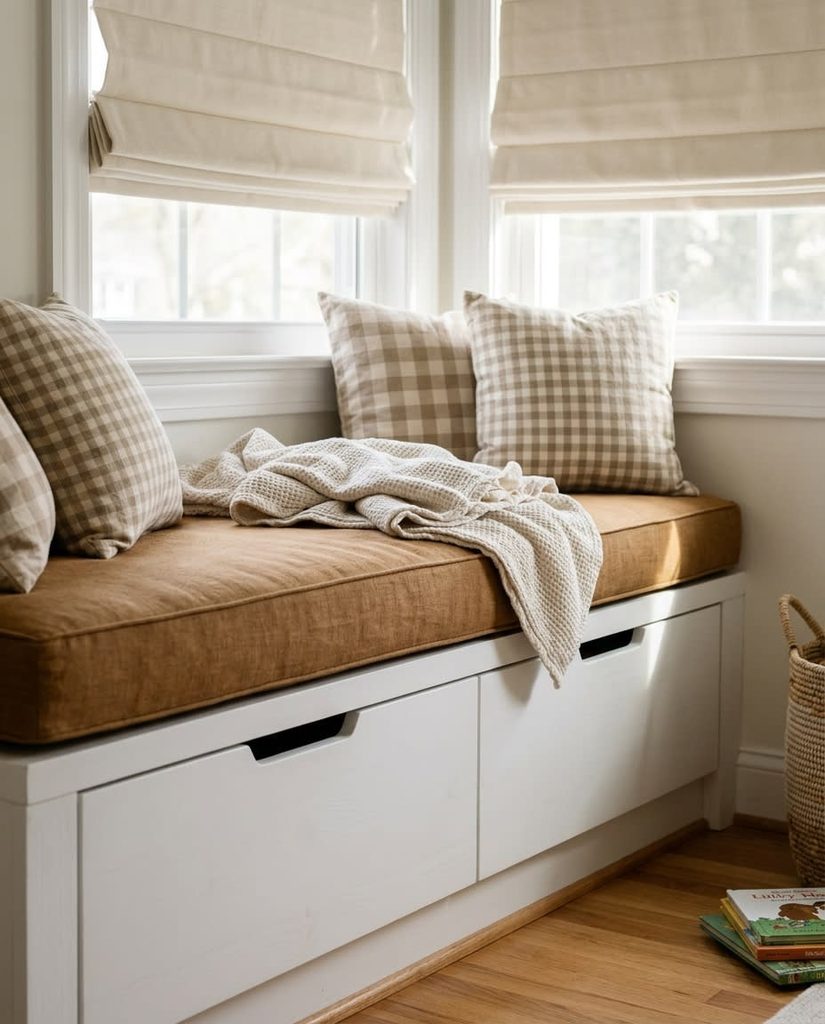
Window seats offer the perfect perch for quiet afternoon reading while keeping bedroom clutter completely out of sight. I recommend building a low bench scaled to toddler height with smooth pull-out drawers featuring recessed finger grooves.
Deep storage drawers allow your child to put away his own toys easily at the end of each play session. A caramel-colored seat cushion and neutral gingham pillows make the sunny nook feel exceptionally welcoming.
Adventure-Themed Mountain Mural With Low Wooden Furniture
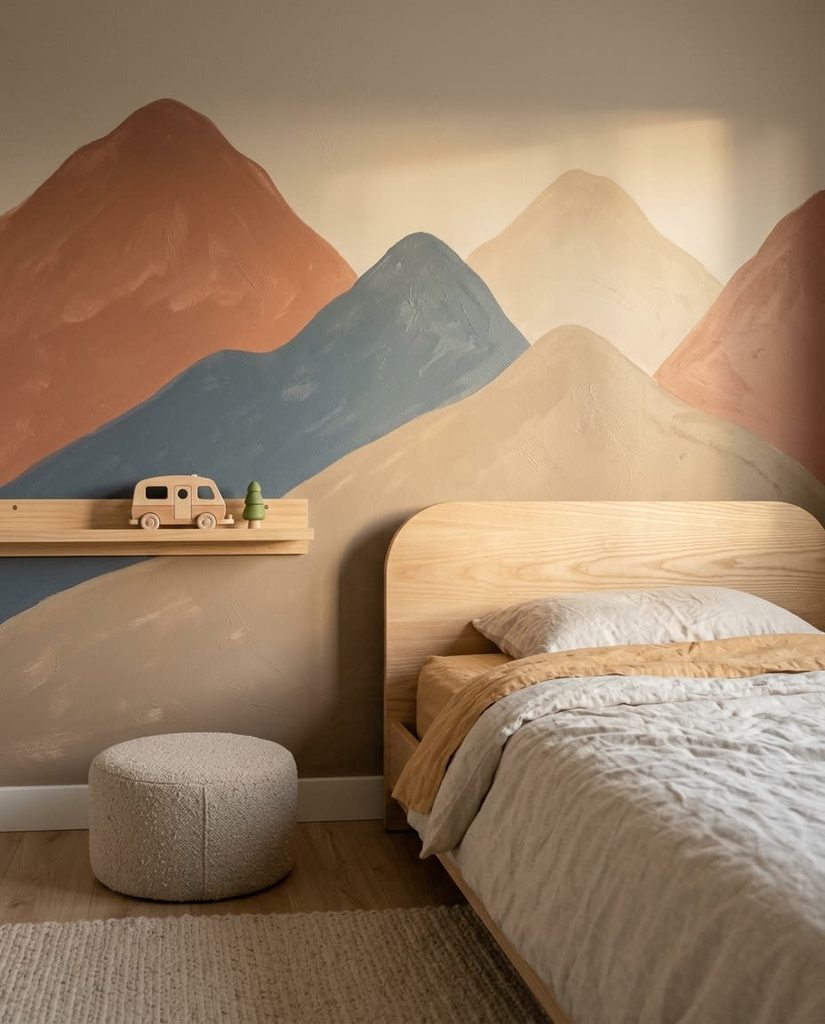
Murals can bring dynamic visual energy to a boy’s room without introducing loud plastic decor or overstimulating colors. I often paint soft geometric mountain peaks using warm terracotta, slate blue, and sandy beige tones.
Anchoring the room with a natural ash bed keeps the focus centered on simplicity and sturdy craftsmanship. This understated setup provides plenty of open floor area for your little explorer to stretch out.
Montessori Sensory Wall With Interactive Wooden Activities
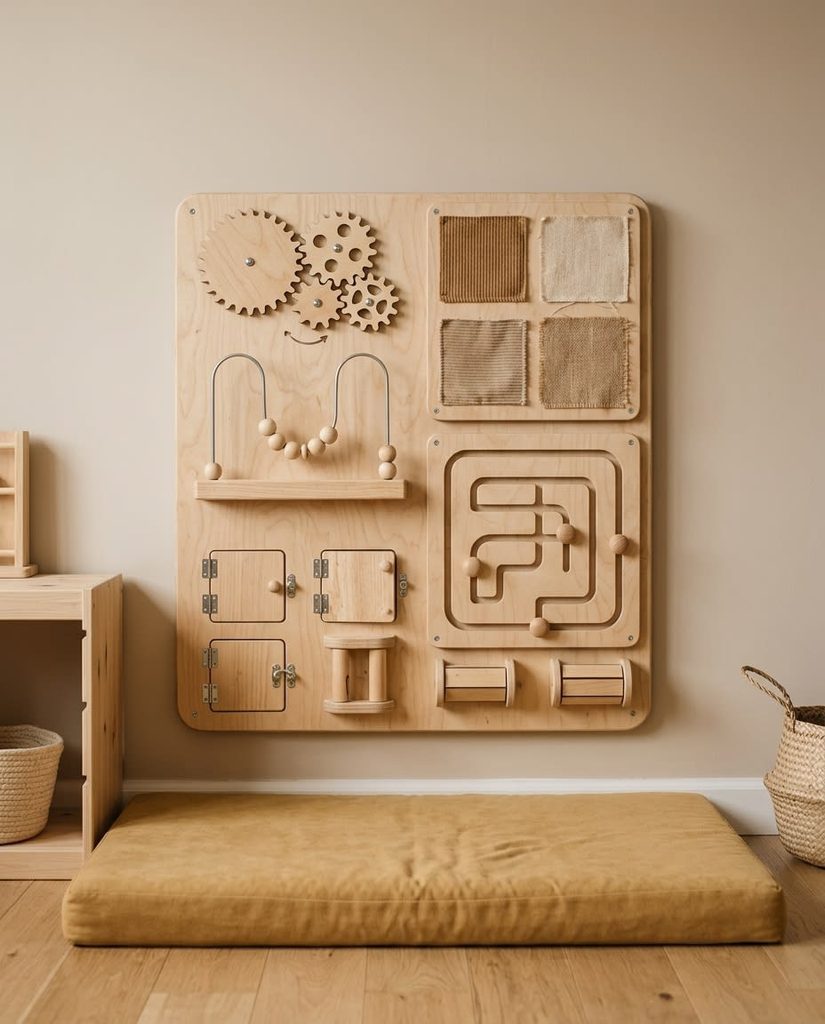
Tactile engagement is vital during the toddler years when hands are actively discovering how the physical world works. I always secure activity panels directly to wall studs at the child’s exact standing eye level for maximum safety.
A thoughtfully curated sensory board encourages fine motor development through natural wood gears, quiet sliding beads, and routed mazes. When planning your child’s sensory corner, prioritize tactile variety using durable materials:
- Smooth birch turning gears that spin freely
- Natural wooden beads strung on durable coated cords
- Tactile fabric swatches including ribbed corduroy and linen
- Rounded routing channels that guide smooth wooden tracing pegs
These interactive components stimulate problem-solving skills without flashing lights or loud electronic noise. Leaving ample open space around the sensory board prevents physical crowding during playtime.
Scandinavian Toddler Bedroom With a Low Curved Birch Bed

Scandinavian design principles blend seamlessly with Montessori philosophy because both styles celebrate light, utility, and honest timber. I selected a low birch frame with soft, rounded edges to protect active toddlers from sharp bumps during morning play.
Pairing pale birch wood with a rich rust-colored waffle blanket introduces cozy warmth without visually cluttering the clean room. A wall-mounted pale yellow sconce provides gentle indirect light for quiet bedtime routines.
Montessori Nature Discovery Corner With an Observation Table
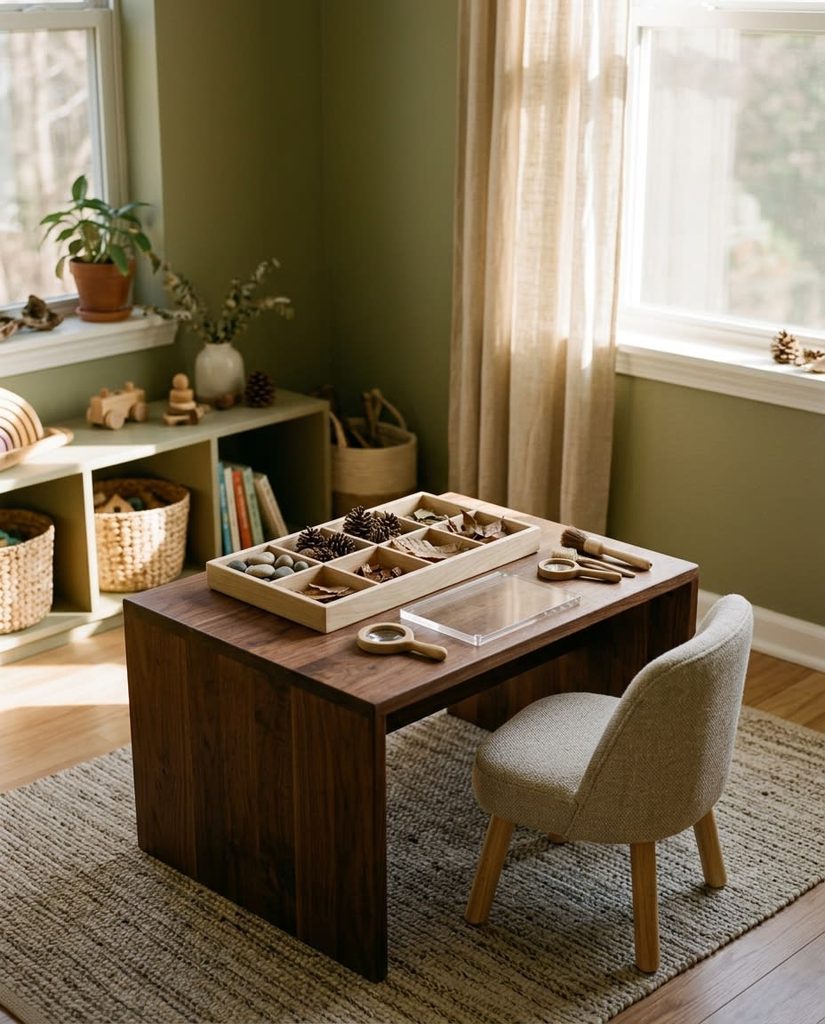
Toddlers naturally collect treasures from the outdoors, from smooth river pebbles to crisp autumn leaves. I like to honor that curiosity by setting up a dedicated solid walnut observation table right beside a bright window.
A low nature discovery station teaches young boys to observe and categorize natural treasures with patient care. Adding a low child-sized chair invites quiet study and thoughtful independent concentration.
Cozy Montessori Bedroom With a Low Daybed and Forest Wallpaper
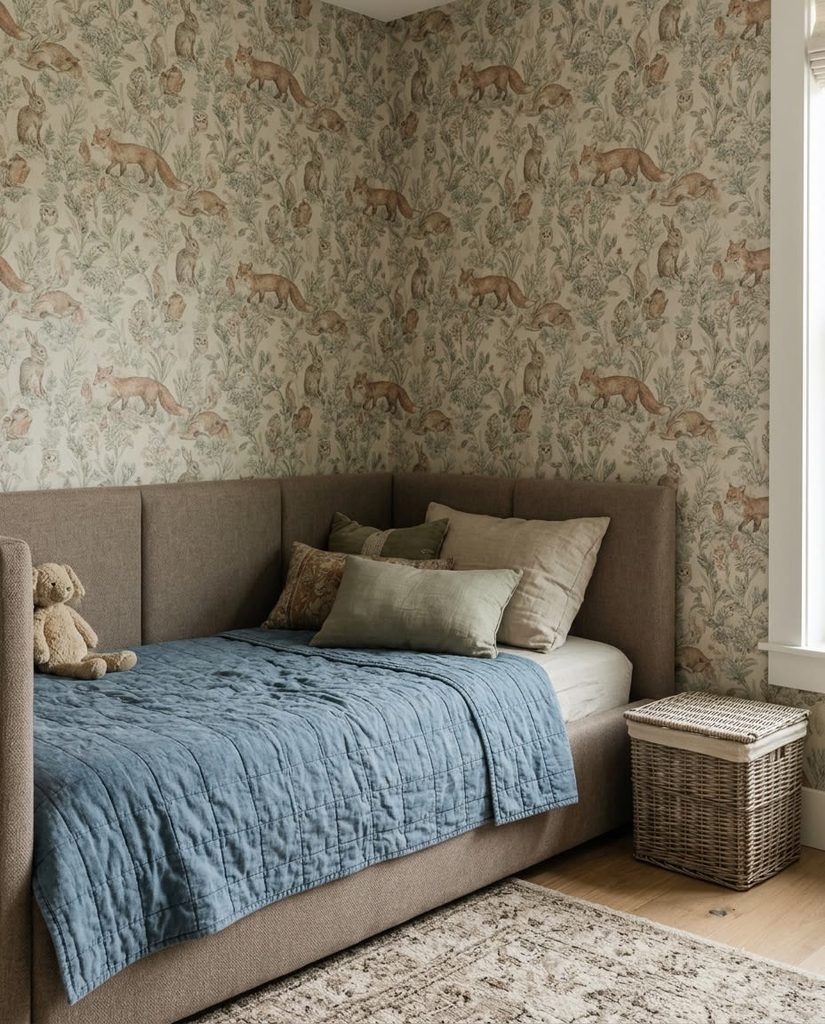
If you want a cozy sleep sanctuary, an upholstered daybed placed directly on the floor offers safety and snug comfort. The soft taupe padded backrest cushions active sleepers while defining the perimeter of the bed against the wall.
Subtle woodland wallpaper featuring hand-drawn trees and forest animals introduces storytelling magic while preserving a deeply calming environment. A quilted denim blue bedspread withstands everyday wear while grounding the room with relaxed rustic charm.
Montessori Toy Garage With Organized Wooden Vehicles
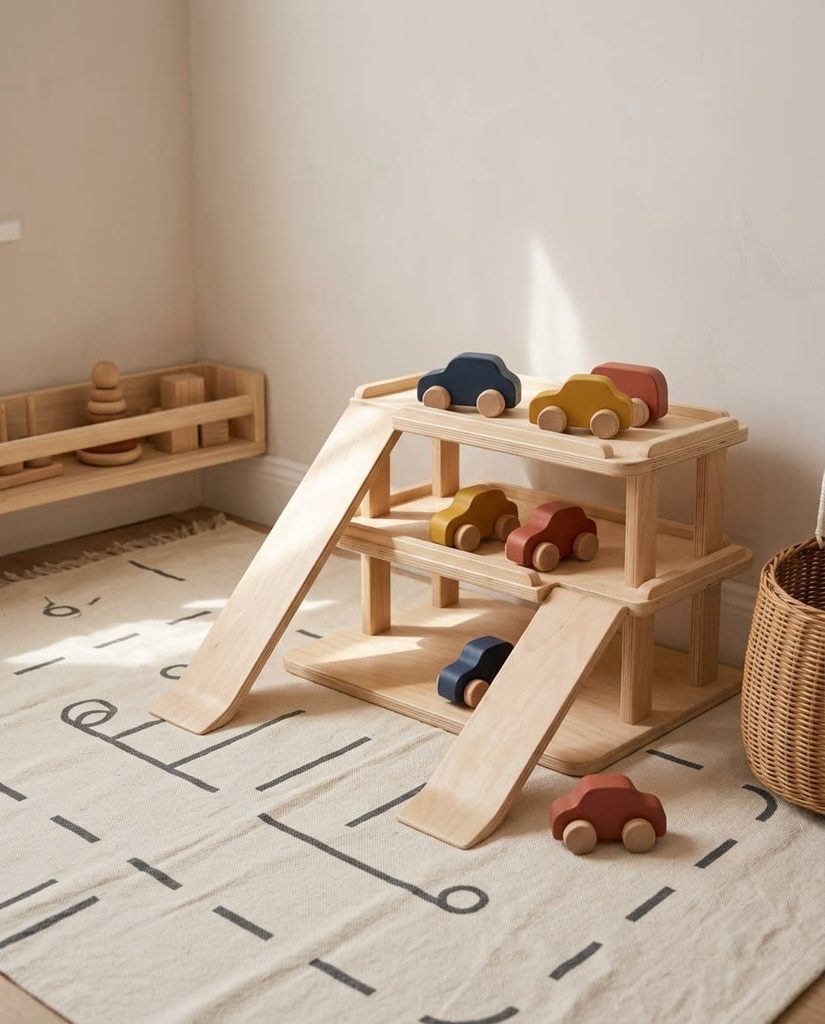
Vehicle play is a classic toddler passion, but plastic tracks often dominate rooms and create visual chaos. I prefer incorporating an open three-story wooden garage that displays muted wood cars neatly on accessible tiers. A flat woven road rug clearly delineates the play zone while giving your toddler a dedicated route for his toy cars.
Here are a few simple guidelines I follow when organizing vehicle zones for young children:
- Rotate cars weekly to prevent visual clutter and boredom
- Select heirloom wooden vehicles painted with non-toxic milk paint
- Maintain clear floor borders around the parking garage
This structured layout teaches toddlers how to park their toys when playtime ends. By giving each car a specific home, clean-up becomes a satisfying part of the daily routine.
Warm Terracotta Montessori Bedroom With a Low Platform Bed

Earthy color palettes create an inherently soothing backdrop that helps lively toddlers settle down before sleep. For this room, I applied a textured clay-colored limewash treatment to add soft visual depth to the main accent wall.
A honey-toned platform bed with a slatted headboard provides proper mattress ventilation while staying safely low to the rug. An olive-green floor cushion and a patterned washable rug complete this grounded bedroom design.
Conclusion
Creating a Montessori toddler bedroom is ultimately about respecting your child developmental needs through thoughtful interior architecture. Designing a calm bedroom gives your young son the daily independence he craves alongside the restful sanctuary he needs.
By keeping materials natural and visual distractions minimal, you provide a peaceful retreat where deep sleep and creative play unfold naturally. I hope these practical design ideas inspire you to craft a serene haven that supports your boy as he grows.