

If you have a motion sensor light or alarm that can’t be disabled, you may be curious about how to block motion sensors. Blocking a sensor may be necessary to disable it temporarily for situations like repair or adjustment.
You can block a motion sensor by placing an object to deflect the signal from the device. Some common insulating materials that can block motion sensors are aluminum foil, electrical tape, and cardboard.
If you need a quick solution to block motion sensors, we have the information you are looking for in this article. Keep reading to learn how to block and prevent a motion sensor from detecting movement.
What Triggers a Motion Sensor?

Before you learn how to block a motion sensor, it’s best to find out how they operate. The most common type of motion sensor is a passive infrared sensor (PIR) which detects temperature changes from body heat.
When someone or something walks in the motion sensor’s range, it will trigger the action of the device. While manufacturers design sensors to react to humans, a sensor also detects an animal’s body heat.
Along with PIR motion sensors, there are other options, such as:
- Microwave Sensor
- Vibration Sensor
- Area Reflective Sensor
- Ultrasonic Sensor
Whatever the product model, the device’s main purpose is to detect environmental changes. These motion sensors are typically linked to lighting, alarms, or security cameras for monitoring and will activate them.
Can you Block Motion Sensors?

Now that you know how motion sensors work, you may ask yourself if blocking the sensor’s signal is possible. Motion sensors have a semi-circular field of vision that can capture movement at a wide angle.
If you want to block the sensor, your goal is to prevent the signal from transmitting. Blocking signals like microwaves can be tricky and requires the right materials. However, we can confirm that it is possible to block a motion sensor.
You can disarm the motion sensor indefinitely by placing a material that blocks the sensor’s signal. The material would contain the signal and prevent it from reaching anyone walking in the field of view.
4 Effective Ways to Block Motion Sensors
1. Silicone Spray
Are you looking for a permanent way of blocking a motion sensor? Applying a silicone spray to the motion sensor will prevent any signals from the device. The silicone acts as a shield that stops transmitting IR signals in their tracks.
While glass provides the same effect as silicone, adding it to your motion sensors takes more work. You will spend far more time positioning the piece of glass than spraying an inexpensive can of silicone lubricant on it.
2. Paper or Cardboard
When you want a method that can be completed with items around the house, paper or cardboard does the trick. Standard cardboard is an effective blocking material, but you will find that painting the surface black will improve the results.
A black surface helps to reduce the chances of a false alarm caused by a light surface reflecting into the sensor. You may also want to combine multiple pieces of cardboard to prevent microwaves or area reflective sensors from going through it.
3. Aluminum Foil
Aluminum foil is well known for blocking strong signals like radio and electromagnetic frequencies. Wrap aluminum foil around the device if you want a foolproof way to block your motion sensor.
Foil is an easy option, as it can be formed into any shape and cover all motion sensor areas. If you are unsure about the other methods on this list, you can count on this option to absorb all signals.
4. Electrical Tape
A classic way to block a motion sensor is with a small piece of electrical tape. Due to the design of the tape, it will absorb the signal from the sensor. It doesn’t take much either, as a small piece can completely disable the motion sensor.
Choosing a material that absorbs and does not reflect signals is critical for microwave and ultrasonic motion sensors. If you use the wrong material, you may cause the sensor to trigger consistently.
How to Turn Off Motion Sensors
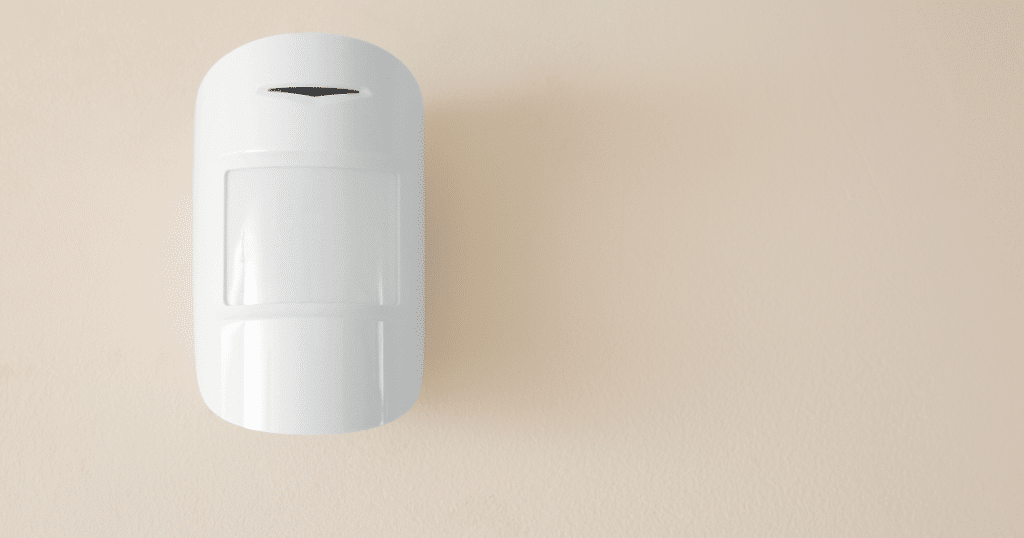
While this information covers blocking motion sensors, you should also learn how to turn off a motion sensor. Most motion sensors have an off switch that will disable the functionality and keep the light on.
When homeowners want to stop a motion-sensor light from turning off, they typically use a switch. However, this switch is commonly on newer product models and may not be accessible for an outdated device.
In some cases, the switch is located near the sensitivity control settings. If you turn the sensitivity dial all the way, you will hear a click that signifies it’s turned off. This device’s switch is much easier than finding a material to block the motion sensor.
Frequently Asked Questions
If you want to neutralize a security motion sensor, placing something over the device is the most common way. For example, you can spray silicone on the sensor and prevent it from transmitting signals. Additionally, you can wrap the sensor in aluminum foil to deflect the signal of the product.
Motion sensors can experience interference from different things. From insects to ceiling fans, many things can cause a false alarm. You can adjust the device’s sensitivity if you encounter frequent issues with your motion sensor. High-sensitivity settings can cause issues with detection.
Depending on the type of motion sensor, it may be at risk of jamming by a criminal. A hacker can exploit sensors connected to a wireless signal. However, you don’t want to worry if you have a standard PIR motion sensor. A PIR sensor isn’t connected to WiFi and is unaffected by a signal jammer.
Conclusion
Blocking a motion sensor doesn’t have to be a complicated process. Once you learn about the mechanisms of your specific sensor, you can choose a material to block the signal. As an important note, this should only be done with good intentions.
Using some of the methods listed in this article can cause permanent damage to your motion sensors. We are not responsible for any of the damages or personal injury caused by the information shared in this article.
What must I use if I want to jam a motion sensor only.