
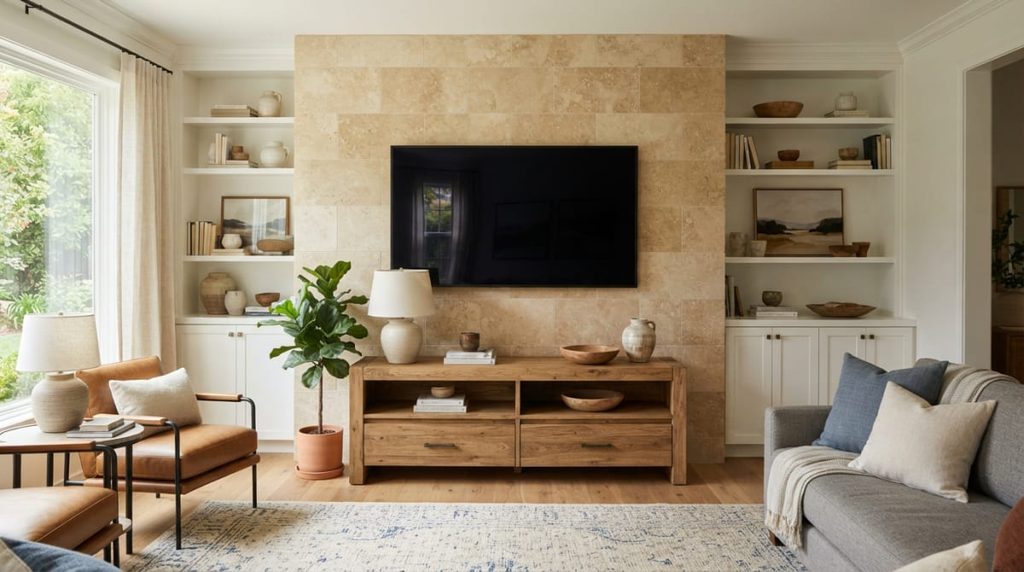
Designing a living room that feels elevated while accommodating modern media is one of my favorite interior challenges. In many homes I visit, the television dominates the space like a stark black rectangle that disrupts the room’s harmony. Over the years, I have found that you do not need to hide your screen to make a room look cohesive. Instead, the goal is to create a thoughtful background that anchors the screen while bringing texture and warmth into your home.
By using tactile materials and balanced decor, you can easily transform a plain wall into a sophisticated focal point. We will explore simple architectural details, clever storage solutions, and layering techniques that complement your everyday media setup.
These realistic design ideas will help your living room feel complete without hiding the tools you use every day.
Warm Wood Slat Accent Wall Behind the TV
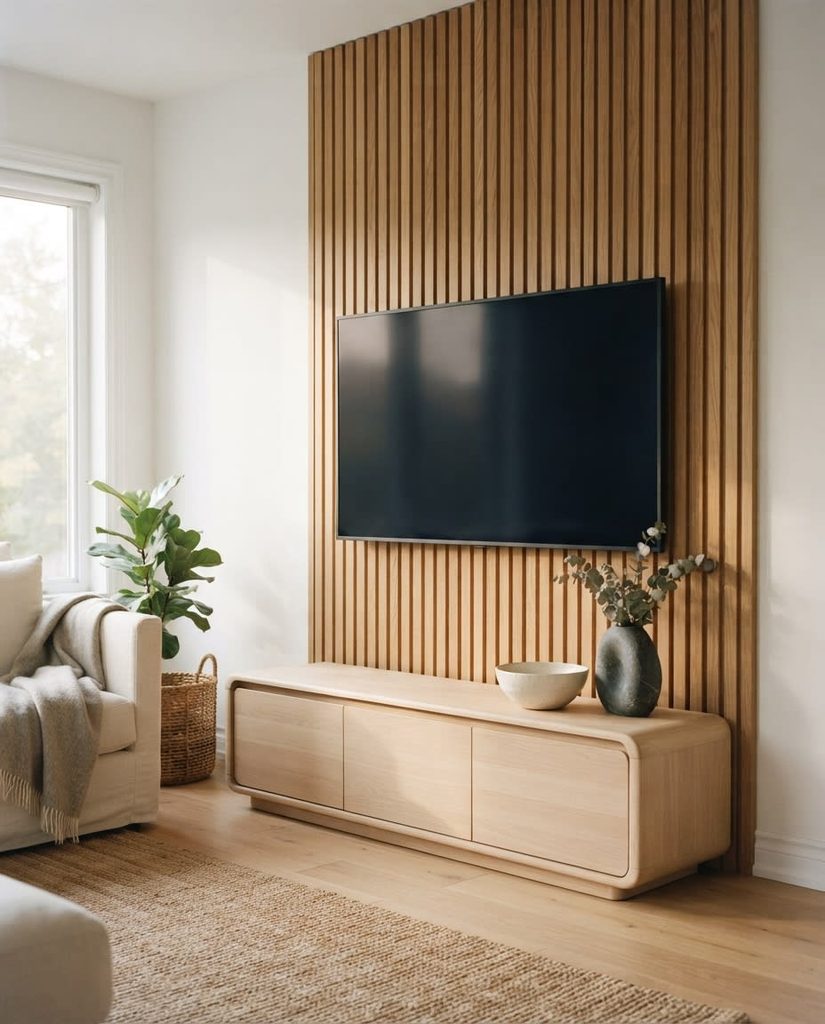
A vertical oak slat wall introduces immediate warmth and architectural depth to a standard living room. I love how the repetition of narrow wood strips softens the dark outline of a mounted television screen.
Adding vertical wood slats creates organic texture that makes a black television screen look purposeful rather than stark. To maintain a serene look, keep the surrounding accessories minimal and grounded in natural tones.
Low Oak Media Console with Layered Ceramic Decor
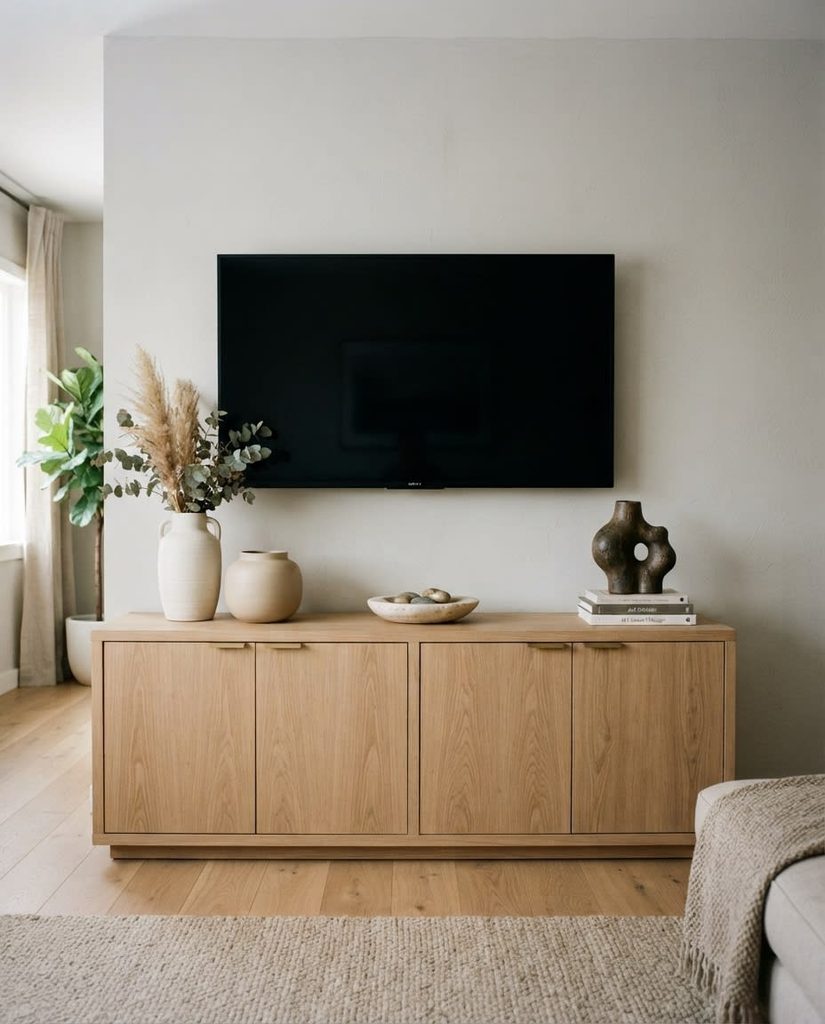
Grounding your television with a long white oak media console helps balance the visual weight of a large black screen. I always recommend choosing a console that extends well past the edges of your television to maintain visual balance.
Layering matte ceramic vessels and a shallow stone bowl beneath the screen creates a gentle visual transition. Keep your styling asymmetrical by grouping a few sculptural objects on one side while leaving open space on the other.
Fluted Wall Paneling for Subtle Architectural Texture
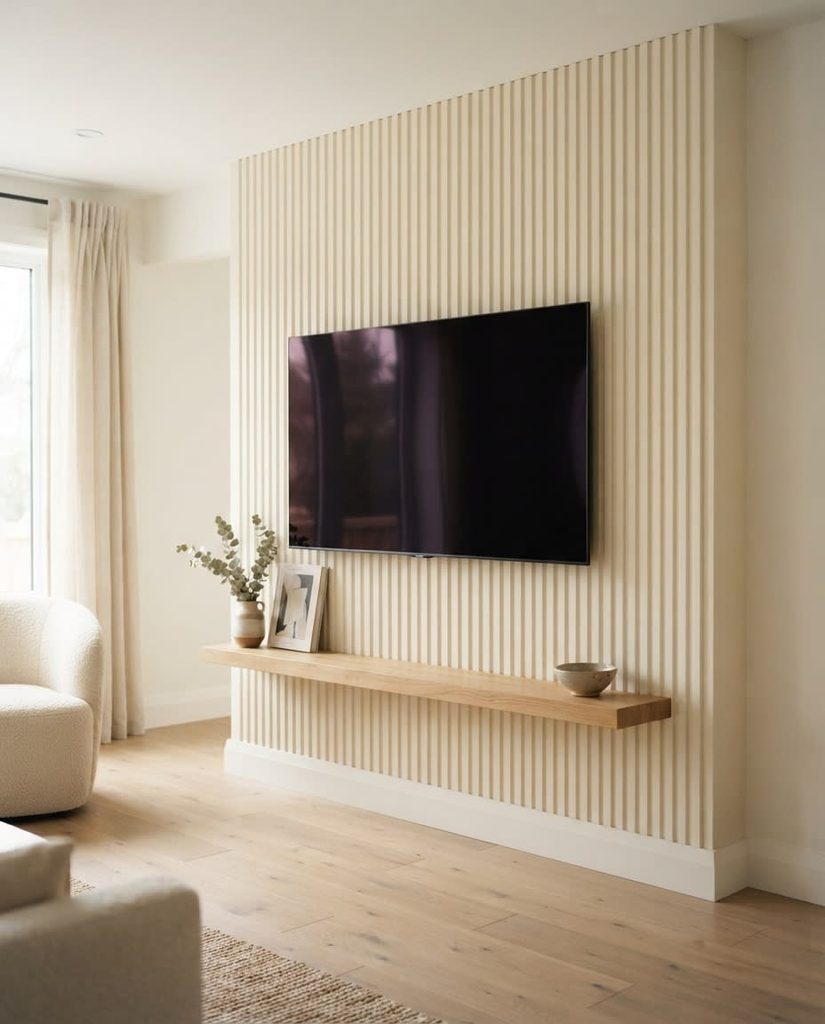
If you prefer a softer look than raw wood, painted fluted paneling offers a classic architectural finish. I frequently specify fluted panels painted in warm cream or soft greige behind wall-mounted screens.
Painted fluted paneling adds delicate shadows around a dark screen without overwhelming the overall room design. This subtle backdrop allows your media area to feel custom and polished year round.
Floating Shelves Framing the TV with Curated Objects
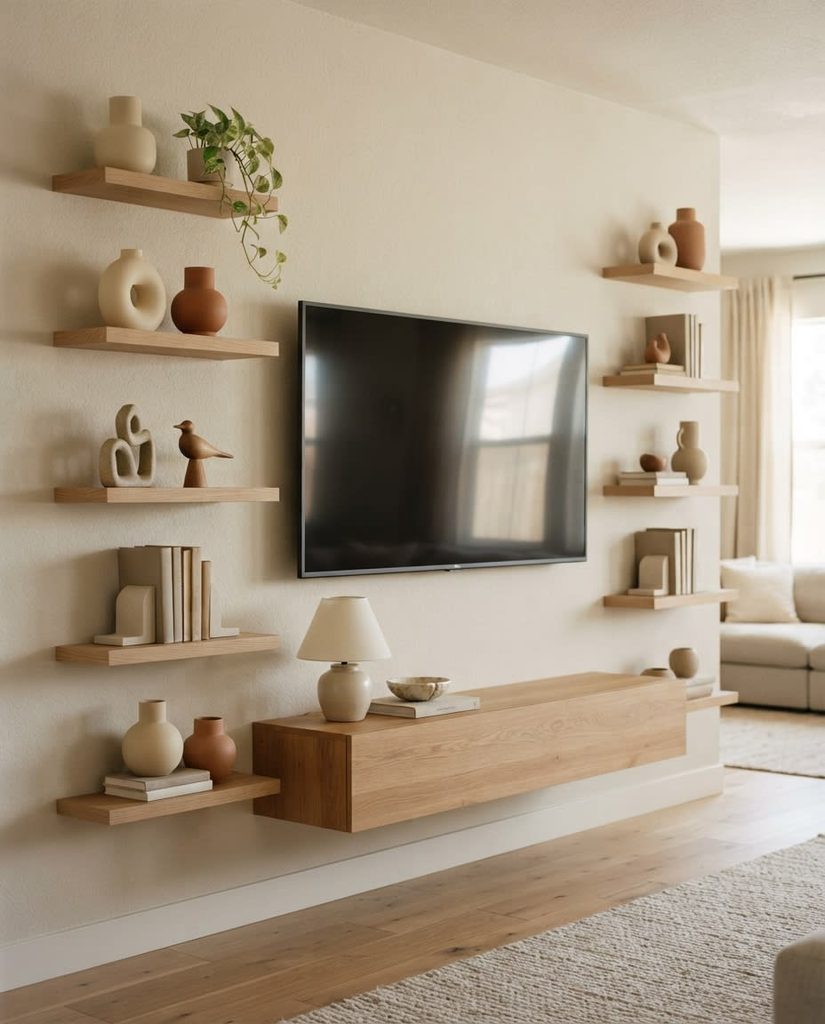
Flanking your television with slim floating shelves creates an inviting look while offering space for personal treasures. I like to style these shelves with simple pottery, small sculptures, and inward-facing book spines to prevent visual noise.
Framing a television with floating shelves helps integrate the screen into a broader wall arrangement. Keeping the shelf decor restrained ensures the room remains uncluttered and easy to enjoy.
Limewash TV Wall with Soft Tonal Variation

Limewash paint is one of my favorite tools for introducing subtle movement to a flat accent wall. Applying a soft taupe, mushroom, or sand limewash finish gives your backdrop an earthy matte appearance.
A textured limewash backdrop absorbs harsh reflections and softens the heavy appearance of a central black television. This approach feels modern yet timeless, adding character to your home without requiring major construction.
Built-In Cabinetry with Closed Lower Storage
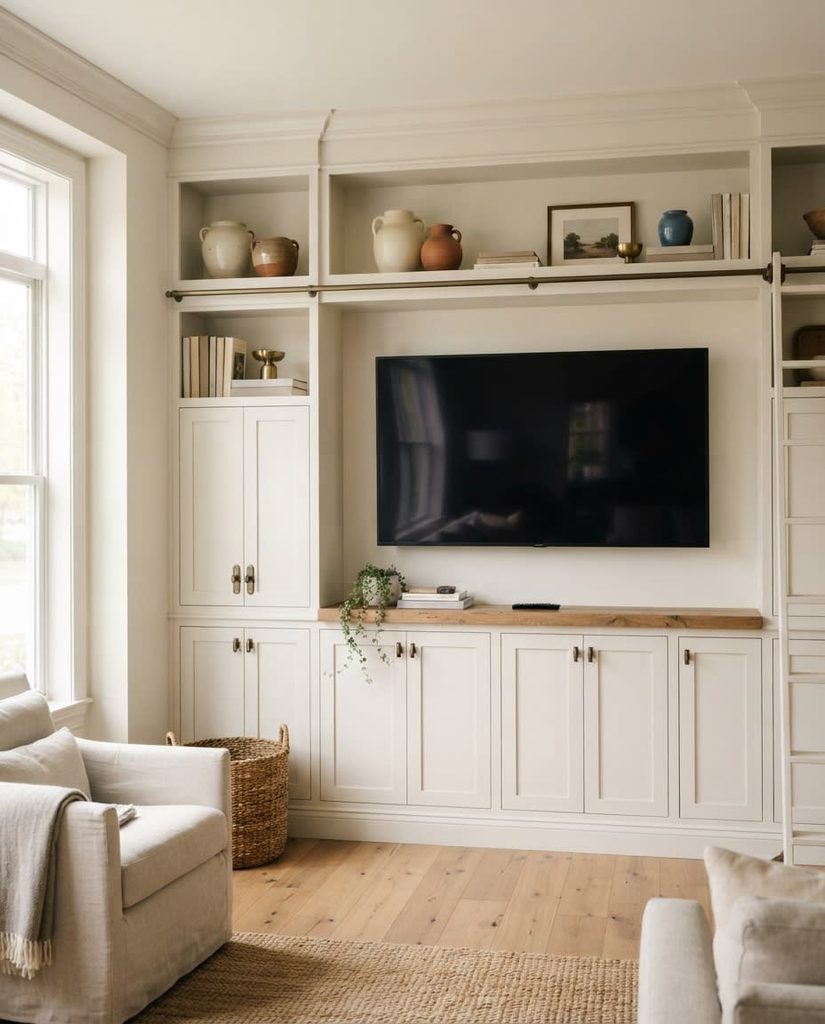
Custom built-ins remain a classic choice for living rooms because they provide essential hidden storage for media devices. I prefer designing built-ins with warm off-white cabinet faces and simple lower doors that conceal cords and consoles.
Surrounding your television with built-in cabinetry balances media function with tailored architectural elegance. This combination keeps your living area functional for family movie nights and beautiful for everyday entertaining.
Oversized Textured Wall Panels Beside the Television
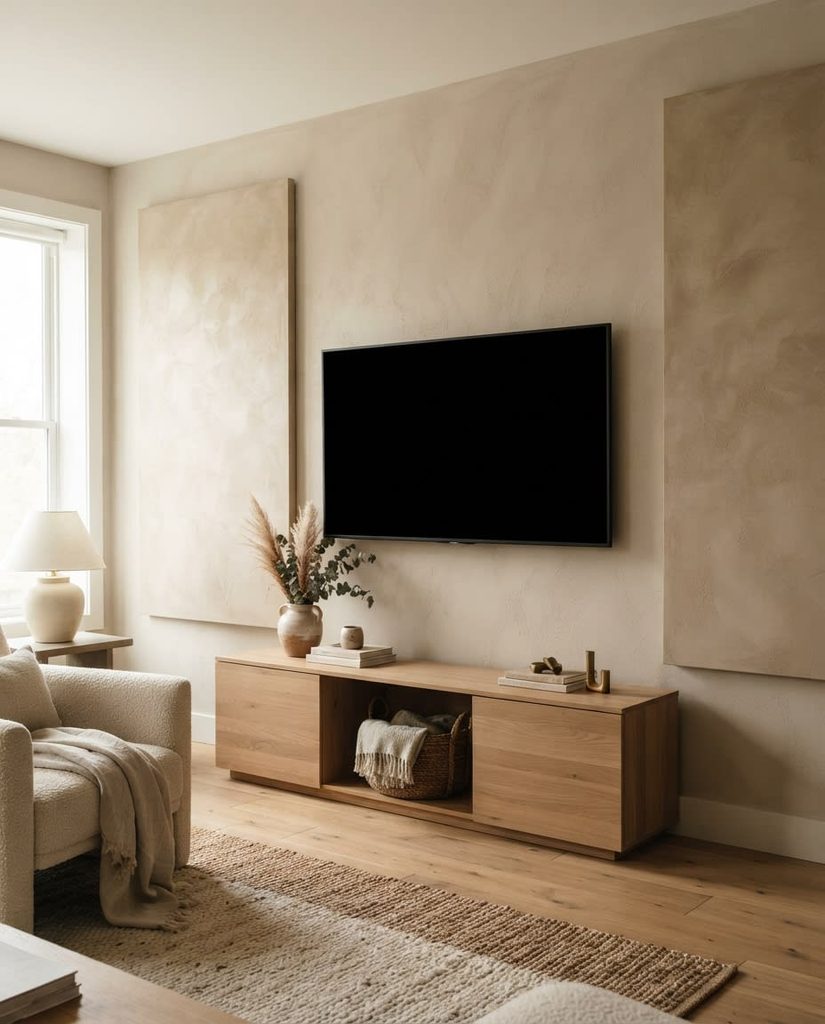
When you have a long blank wall, hanging oversized textured art panels on either side of your screen brings instant harmony. I like using large canvas panels finished with plaster, light linen fabric, or subtle tonal brushstrokes.
Flanking your television screen with large textured panels draws the eye outward and balances the dark center. Make sure the panels are hung at eye level to maintain an intimate scale.
Picture-Ledge Styling Around a Wall-Mounted TV
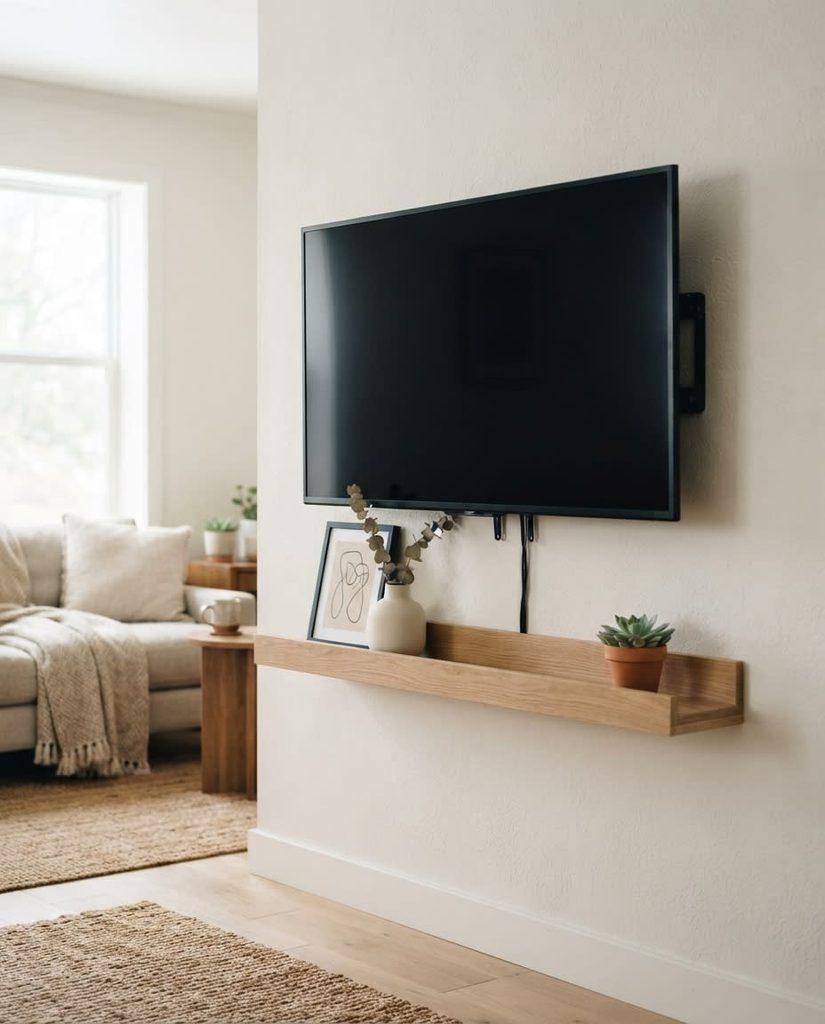
A shallow wood picture ledge placed below or to the side of a mounted television offers a relaxed way to style your space. You can rest small framed abstract prints, handmade bowls, and compact greenery along the ledge.
Placing a slender picture ledge near your television adds layered visual interest without blocking the screen.It is a flexible decorating trick that works well in cozy living rooms.
Slim Brass Picture Lights Above Built-In Shelving
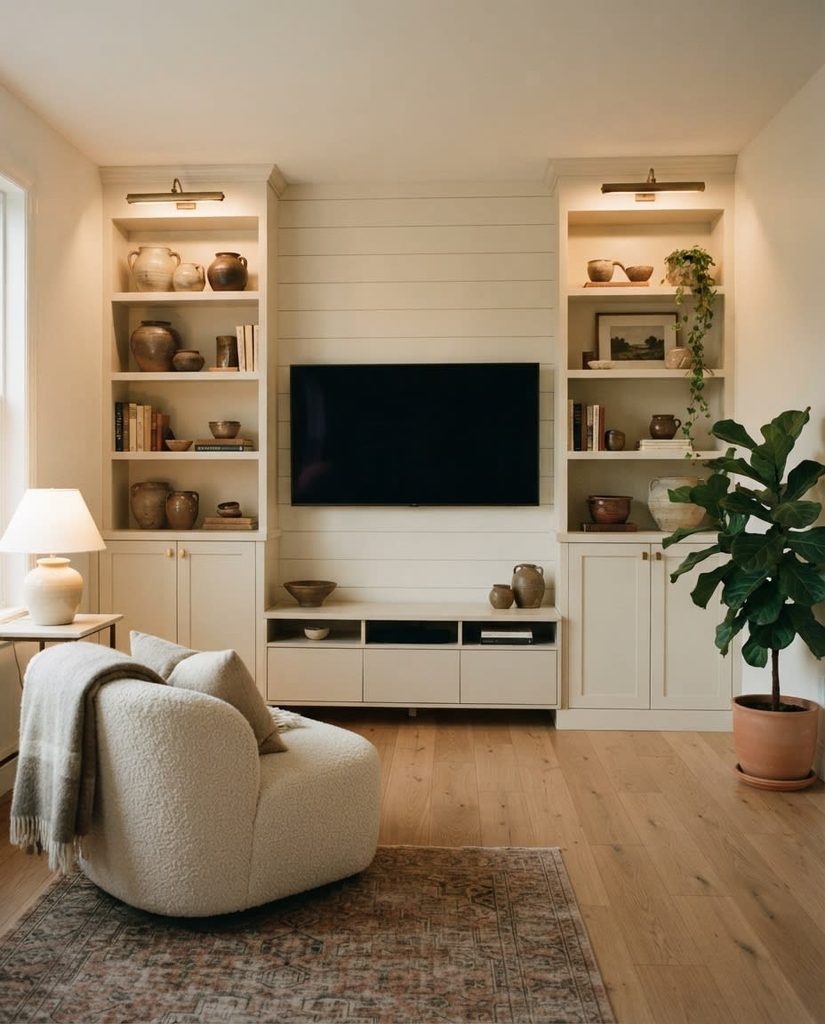
Lighting plays a vital role in setting the atmosphere around a central media wall. Installing slender aged brass picture lights above flanking built-in shelves adds ambient warmth during evening hours.
Mounting brass accent lights above side shelving casts a gentle ambient glow that diverts focus from an idle television. This gentle illumination creates a cozy reading atmosphere without casting glare onto your screen.
Floor-to-Ceiling Curtains Softening the TV Wall
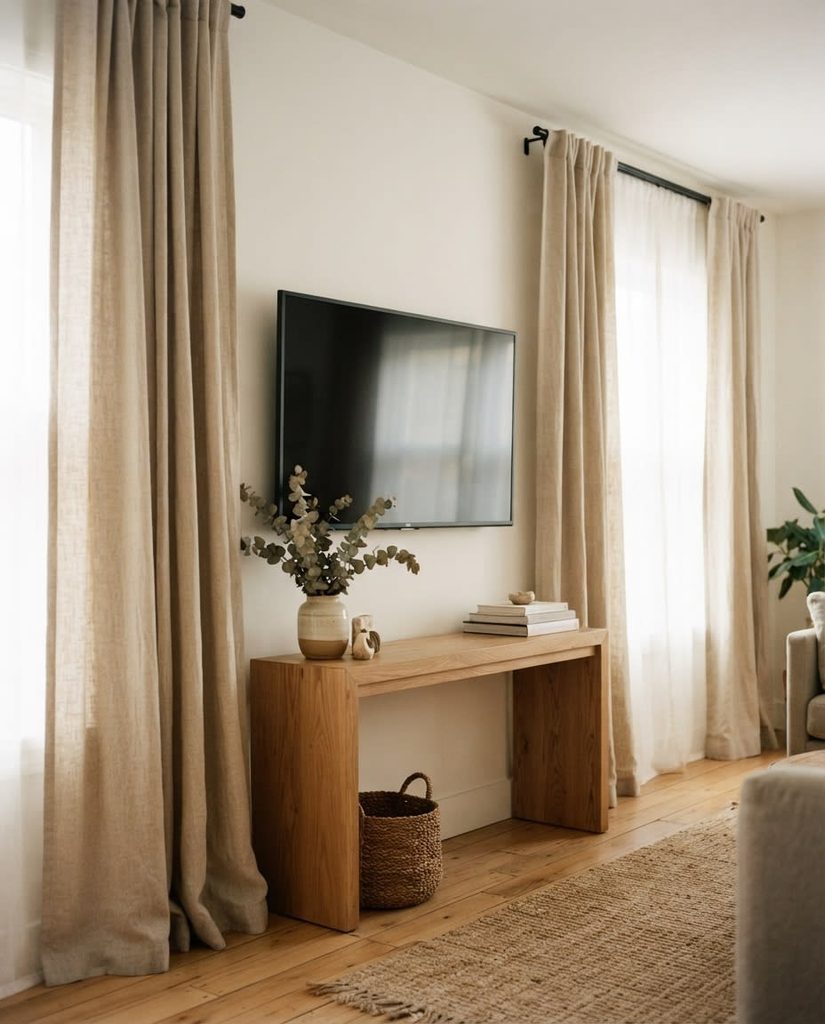
Framing a TV wall with full-height curtains adds soft movement and softens hard architectural edges. I love using washed linen drapery in warm oatmeal or cream tones hung high near the ceiling.
Hanging floor-to-ceiling linen curtains beside a television wall introduces cozy texture and softens cold electronic lines. It is a simple addition that makes any living space feel instantly warm and complete.
Stone-Look TV Wall with a Floating Wood Console
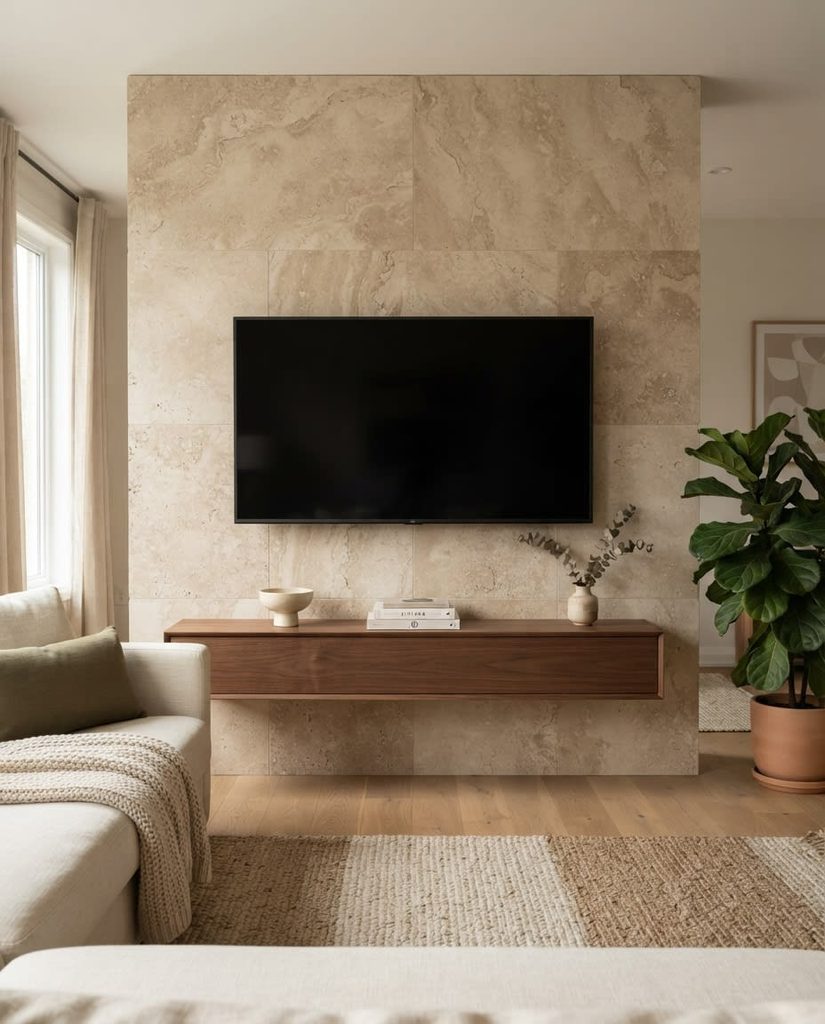
Installing large-format limestone or travertine-style slabs creates a grounded focal point that immediately elevates a plain room. I love pairing rich stone textures with a slim floating walnut console because the wood adds essential warmth. Keeping your decor minimal allows the subtle organic veins of the stone to remain the star of the wall.
When mounting your television on a stone wall, ensure the screen sits flat and centered. Leave plenty of empty visual space on the console surface to maintain a clean aesthetic. A single small ceramic bowl or a modest vase is all you need to complete this look.
Arched Built-In Niches Beside the Television
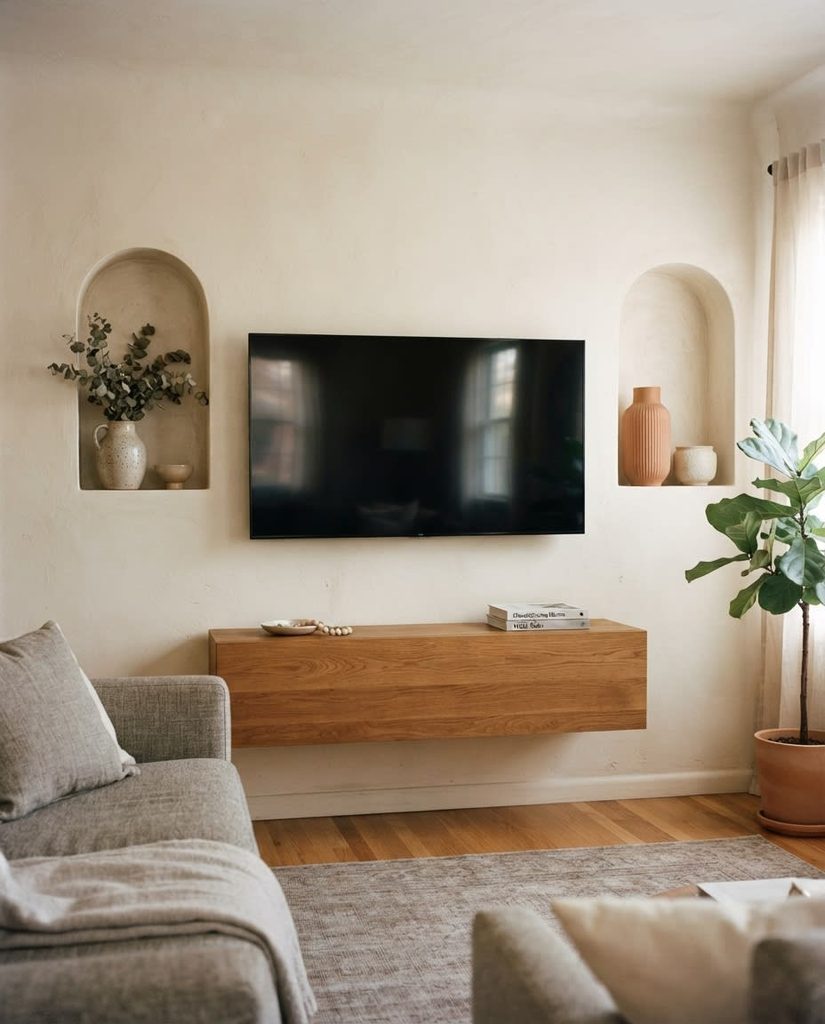
Framing a flat-screen television with custom arched niches introduces soft curves that counteract the hard angles of the screen. Finish the interior of the arches in a warm plaster texture to create subtle shadows throughout the day. Styling these niches sparingly with small hand-thrown ceramic vessels keeps the visual focus balanced across the entire wall.
Make sure the depth of your niches matches the scale of your surrounding furniture. Keep the items inside the arches varied in height but consistent in tone. This subtle repetition helps the modern screen feel like an intentional part of the architectural plan.
Painted Board-and-Batten TV Wall
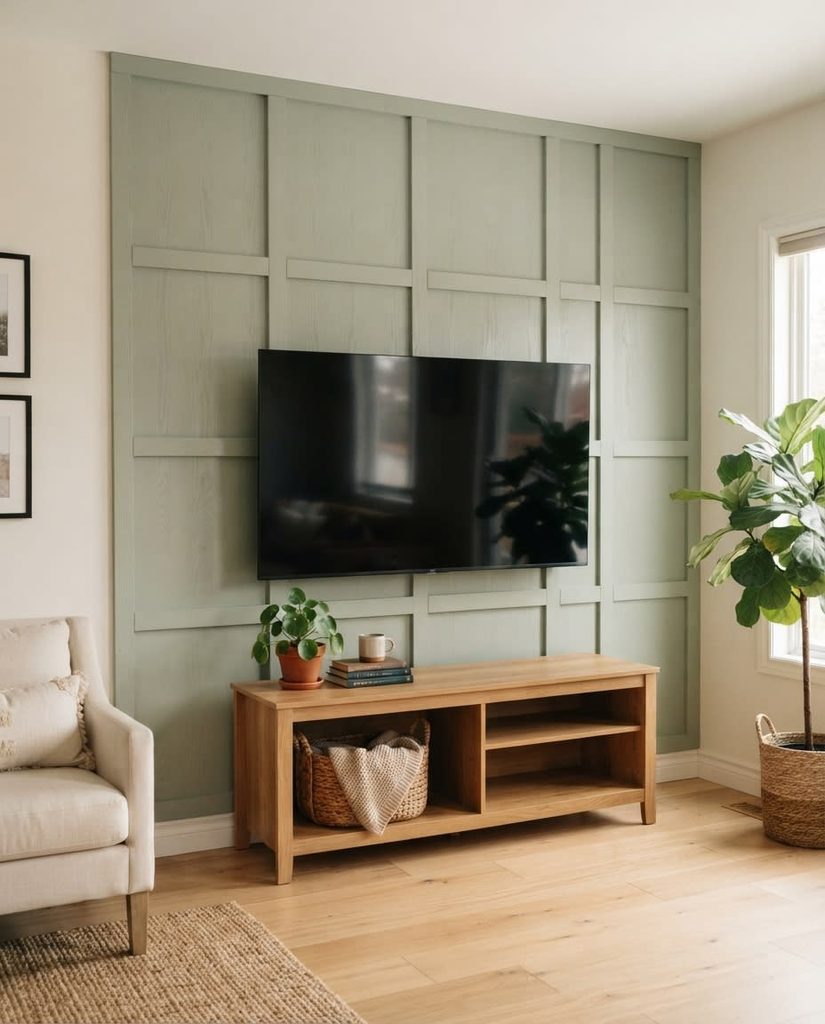
Board-and-batten molding offers a budget-friendly way to introduce texture and vertical line work to a blank living room wall. Painting the entire wall in a soft sage green or warm taupe creates a tailored backdrop for your media setup. Mounting a dark screen directly over painted trim gives the wall a custom built-in appearance without expensive construction.
Spacing the vertical battens evenly ensures that your television aligns neatly within the trim layout. Select a low-luster or eggshell paint finish to avoid glare from nearby windows. This simple treatment brings character to everyday family spaces while maintaining practical cable management below.
Reeded Glass Cabinets Flanking the TV
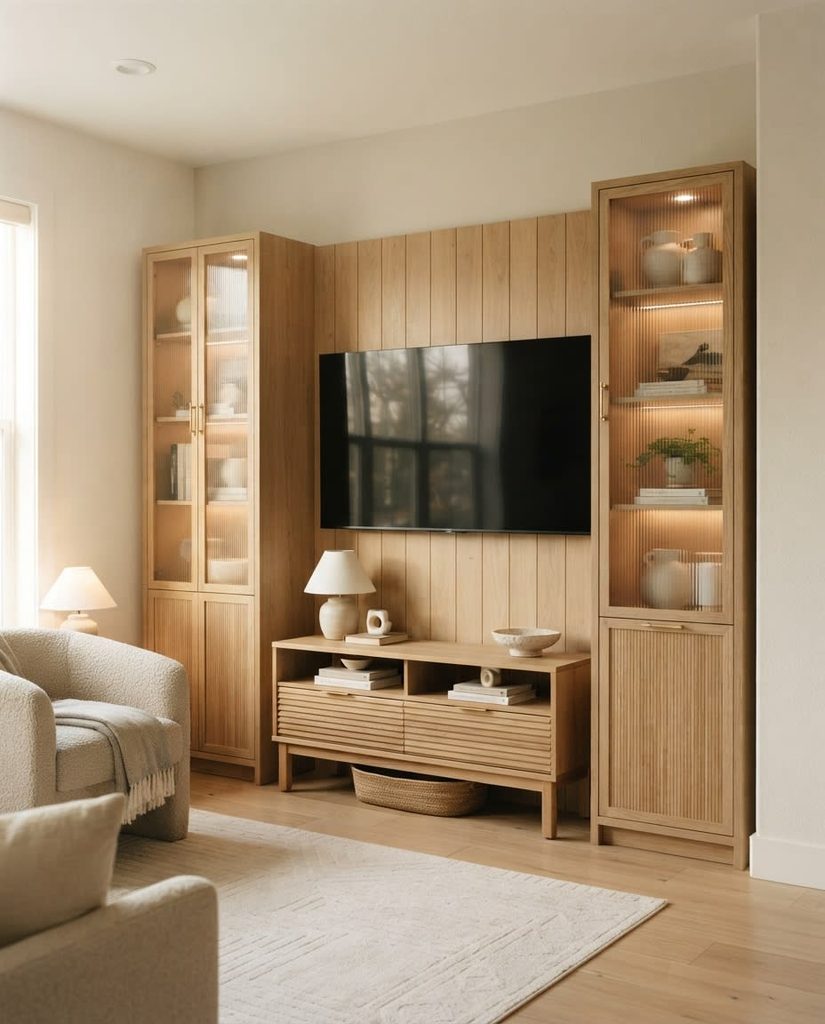
Flanking your television with slim reeded glass cabinets provides functional storage while adding sophisticated visual texture. Natural oak frames bring natural grain warmth, while the fluted glass gently obscures clutter inside the shelves. Positioning a low media console between the tall glass cabinets creates an inviting framed focal point in your main seating area.
Reeded glass is especially useful for concealing media components while allowing remote control signals to pass through easily. Keep the cabinet heights proportional to your room ceiling to maintain balanced room dimensions. A few stacked books on the lower console will tie the whole wall ensemble together.
Dark Charcoal TV Wall with Natural Wood Contrast
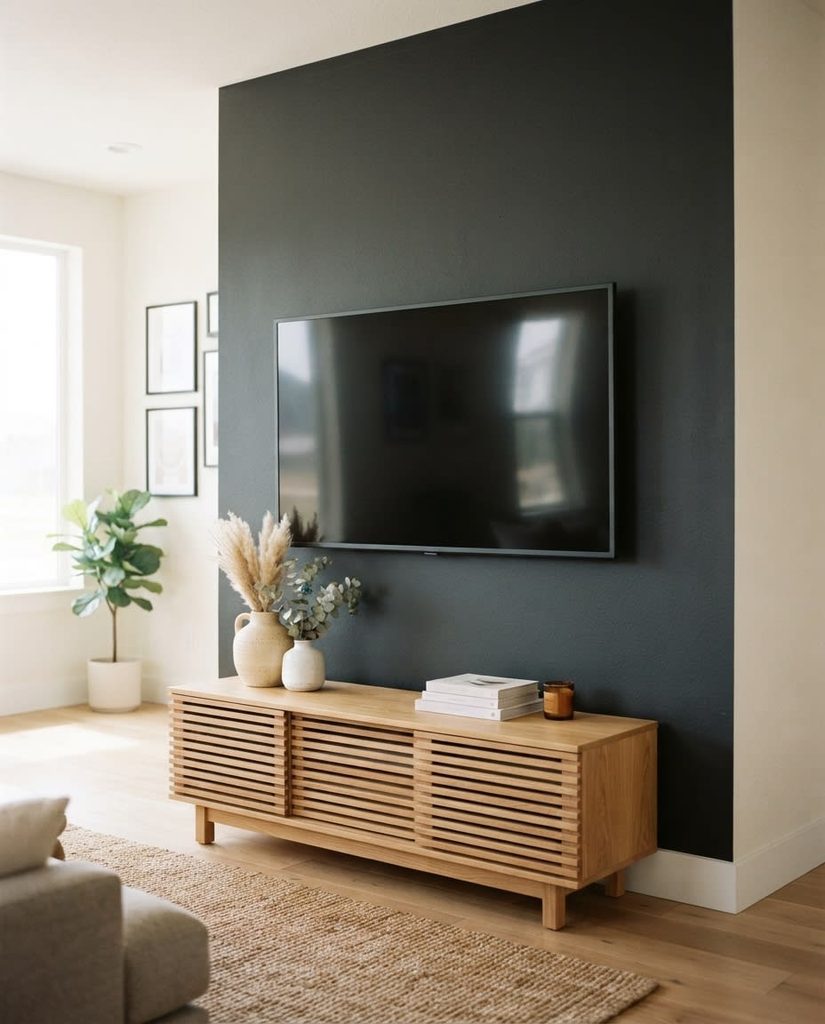
Painting your accent wall in a deep charcoal or matte black tone helps a large television blend seamlessly when turned off. Using a rich dark paint finish minimizes the dramatic black box effect of an inactive screen in a bright room. To prevent the space from feeling heavy, pair the dark wall with a warm natural oak or walnut media console.
Select a velvety matte or flat paint formula to absorb light reflections across the wall surface. Layering warm wood tones against dark backgrounds instantly makes the room feel cozy and inviting. This moody palette works remarkably well in rooms with plentiful natural sunlight during the day.
Shallow Plaster Fireplace Beneath the Television
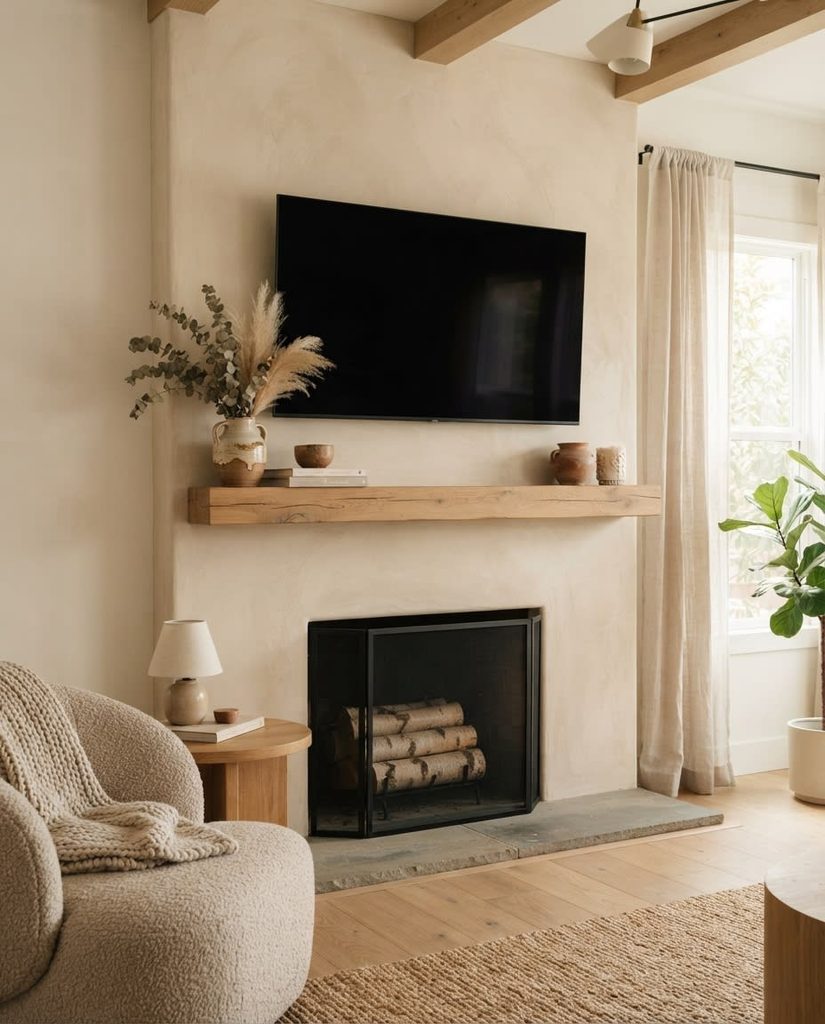
Building a restrained modern fireplace wall with a shallow plaster surround creates an elegant vertical architectural feature. Maintaining proper spacing between the top of the fireplace mantel and the bottom of the television ensures comfortable viewing height.
Keep the hearth minimal and flush with the wall to keep traffic flow comfortable. Neutral wall colors allow soft firelight and daylight to dance gently across the textured wall. This combination provides a cozy living room centerpiece for relaxing evenings at home.
Vertical Display Cabinets with Interior Lighting
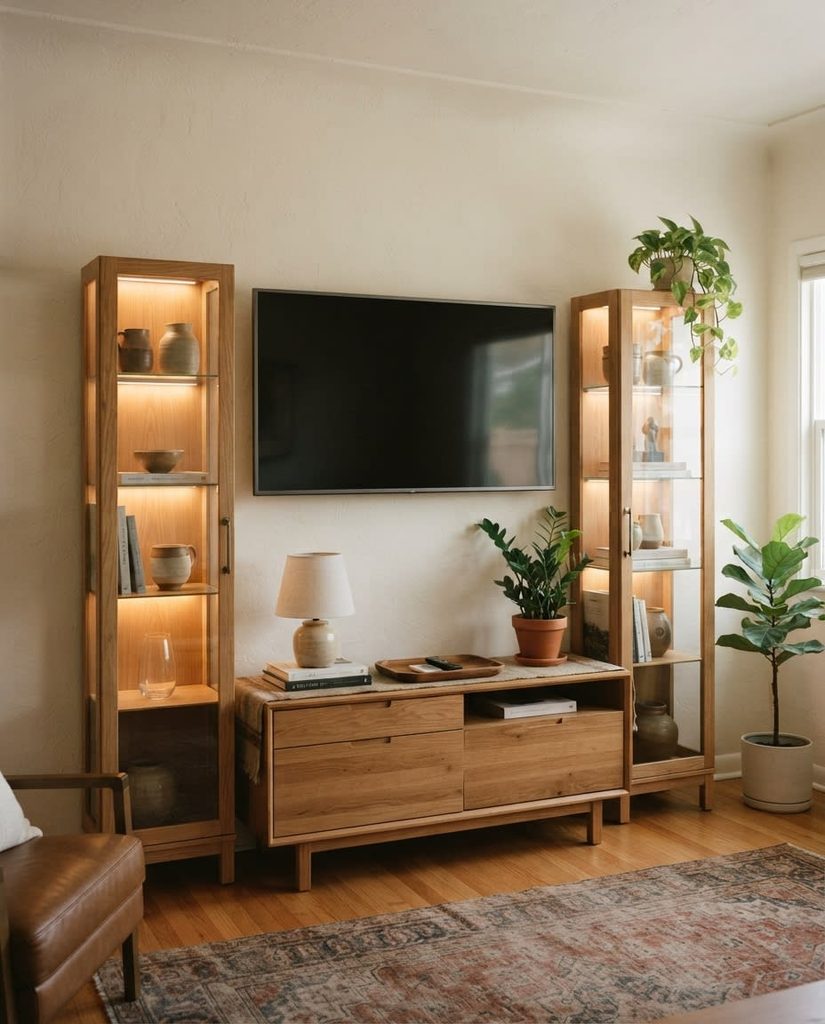
Narrow glass-front cabinets positioned on both sides of your screen bring symmetric balance and elegance to your living room. Integrated interior cabinet lighting casts a soft ambient glow over plain pottery and curated sculptural items. Soft internal lighting directs attention outward to your decor, drawing eyes away from the inactive television screen in the center.
Keep your glass cabinet shelves uncomplicated by displaying only a few select items on each level. Matching wood finishes across the display towers and central credenza creates visual unity. This balanced configuration provides subtle illumination during evening gatherings without causing screen reflection.
Textured Grasscloth Wall Behind the TV
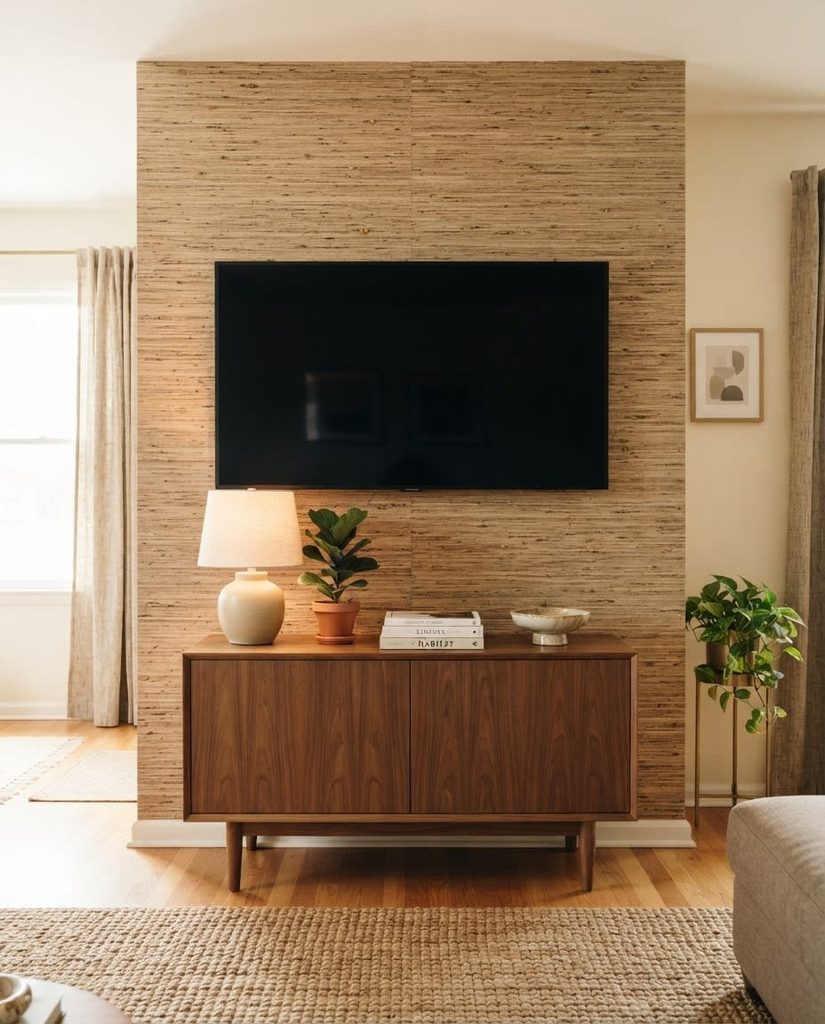
Covering your television wall in natural grass cloth wallpaper introduces instant tactile depth and subtle organic variation. The visible woven fibers soften the hard technological feel of a modern flat-screen television. Mounting your screen directly against woven wallcovering creates a rich backdrop that makes your living room feel custom styled.
Choose natural grasscloth in warm beige, wheat, or soft gray tones for timeless appeal. Ensure your installation is tight and clean around cable pass-throughs and mounting brackets. The subtle shifts in hand-woven fiber color add authentic character to contemporary homes.
Asymmetrical Side Shelving with a Long Media Console

Breaking away from perfect symmetry can make your living room feel more relaxed, modern, and curated. Position a tall open shelving unit on just one side of your television while extending a long console underneath. An asymmetrical shelving layout balances a large wall-mounted screen without feeling rigid or overly formal.
The extended horizontal console visually anchors the entire wall and provides ample hidden storage. Leave open space on the opposite side of the screen to give the room air and breathing space. This dynamic composition adds personal style while serving everyday entertainment needs.
Simple Picture Molding Grid Around the Television
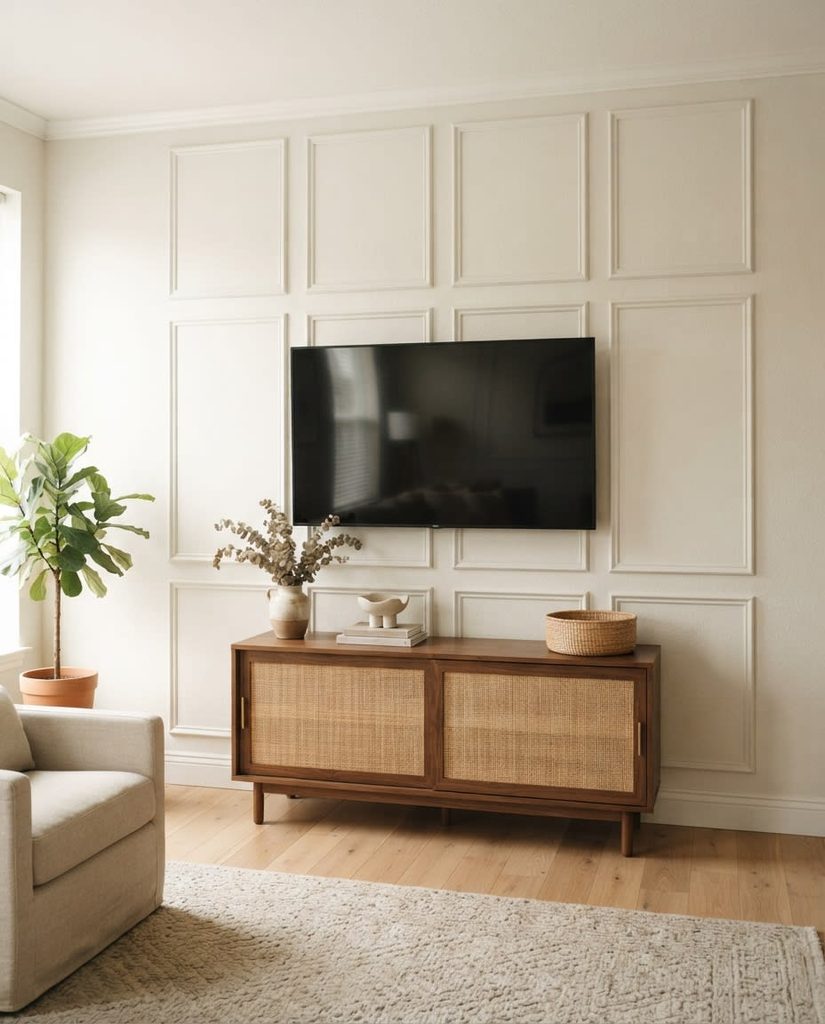
Adding classic picture molding in a simple grid pattern brings timeless architectural detail to modern homes. Centering your flat-screen television within one of the wall panels treats the TV like a natural architectural element. Integrating your screen into a traditional molding grid grounds the technology within classic interior detailing.
A simple low wood credenza beneath the grid completes the balanced look effortlessly. This classic approach proves that simple carpenter details can transform any everyday living space.
Here are a few reasons why this wall layout works so well in residential spaces:
- Creates timeless structure that elevates plain drywall
- Adds subtle shadow lines that change throughout the day
- Works with both traditional and modern furniture styles
- Directs the eye naturally across the whole wall space
Conclusion
Creating a polished TV wall is all about balancing daily function with thoughtful interior design. By incorporating warm natural materials like oak, limewash, and woven linen, you can easily soften the presence of a television. Remember that your living room should reflect how you truly live, rather than looking like an untouched showroom. I hope these simple ideas inspire you to transform your media wall into a space that feels calm, stylish, and inviting.
When you focus on organic textures and thoughtful proportions, a television becomes a natural part of your home decor. Take your time selecting decor pieces and architectural accents that resonate with your personal style. With a little planning, your living room will feel warm and complete every single day.