
Are you curious about ANSI lock grades? The American National Standards Institute (ANSI) develops and manages the quality and safety standards for products sold in the United States. They oversee the standards for many consumer products, from home appliances to door locks.
ANSI lock grades are ratings given to locks to determine their security level. Consumers can use this rating to determine if a lock is suited for their intended usage. Learning what each ANSI lock grade means best ensures the proper choice.
ANSI has developed a unique grading system to grade the strength, durability, functionality, and safety of locking mechanisms for door levers, knobs, and deadbolts. Keep reading further to learn about ANSI lock grades and which option is best for you.
The Six ANSI Lock Performance Tests Conducted

Understanding the ANSI grading system is essential for choosing the best locks to secure your home or business. The system contains three grade levels based on various performance tests conducted on the locks.
These performance tests include the following:
- Strength Tests: Measure the durability and strength of a lock by testing how much downward pressure or force can be placed on the padlock or door knob without it breaking.
- Finish Tests: Examine how much a lock can withstand wear and tear from daily use and common environmental conditions like sunlight and humidity.
- Security Tests: Determine a lock’s resistance to various forced entry techniques, such as kicking the door or hitting it with a hard object.
- Operational Tests: Require a door to latch to open with no more than 4.5 pounds of pressure by the user.
- Cycle Tests: Determine the longevity of a door lock by testing how many times the latch can open and close while remaining fully functional.
- Material Evaluation: Assess the durability and resistance of the decorative rose trim on the door lever or knob.
ANSI uses a highly controlled laboratory with state-of-the-art equipment to conduct these tests on various lock products. That way, you can have absolute confidence in the accuracy and legitimacy of the ANSI grades given to the locks sold in stores.
The Three ANSI Lock Grades
Lock Grade 3
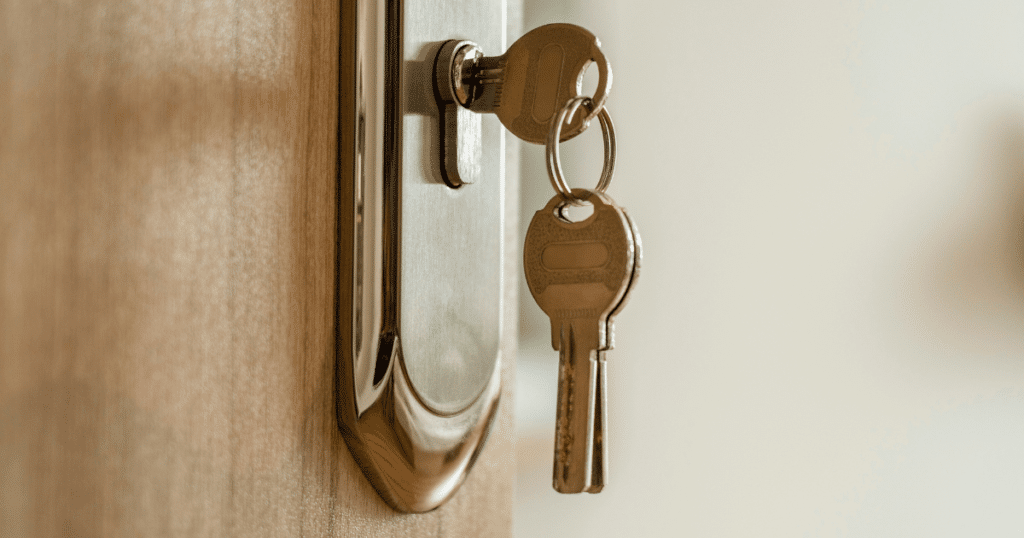
ANSI Lock Grade 3 is the lowest grade a lock can receive. It is most commonly associated with residential door locks requiring minimal security. Locks with a Grade 3 rating are not supposed to be used for securing industrial facilities or commercial buildings.
Most homes have front doors with deadbolt locks built into them. They are either a Grade 2 or Grade 3 lock, depending on the manufacturer and the age of the structure. We recommend you use a Grade 2 lock for your front door rather than a Grade 3 lock.
Grade 3 locks are more susceptible to break-ins and burglaries because they are easier to bypass. If you want to feel confident in the security of your lock, it’s better to choose a Grade 1 or Grade 2 option.
ANSI gives a Grade 3 rating if a lock passes a two-door-strike test and withstands between 100,000 and 150,000 lock cycles. Door levers and knobs containing bolt locks must withstand a minimum of 200,000 cycles and 150 pounds of downward force.
Lock Grade 2

ANSI Lock Grade 2 is the most recommended lock grade for securing residential homes and properties. Grade 2 locks may also be used for securing industrial facilities and commercial buildings, but they are better for securing interior doors than exterior ones.
If you need to secure your exterior doors in a high-crime area, consider using a Grade 1 lock for your property. Additionally, we recommend that businesses opt for Grade 1 lock to protect their valuable equipment.
Grade 2 locks must pass a five-door-strike test and withstand a minimum of 150,000 lock cycles. Door levers and knobs must withstand four door strikes, a minimum of 400,000 lock cycles, and 250 pounds of downward force.
These requirements are more than sufficient for residential buildings but not so much for commercial buildings. If you have a business with frequent foot traffic, it’s better to have an option that can handle more lock cycles.
Lock Grade 1
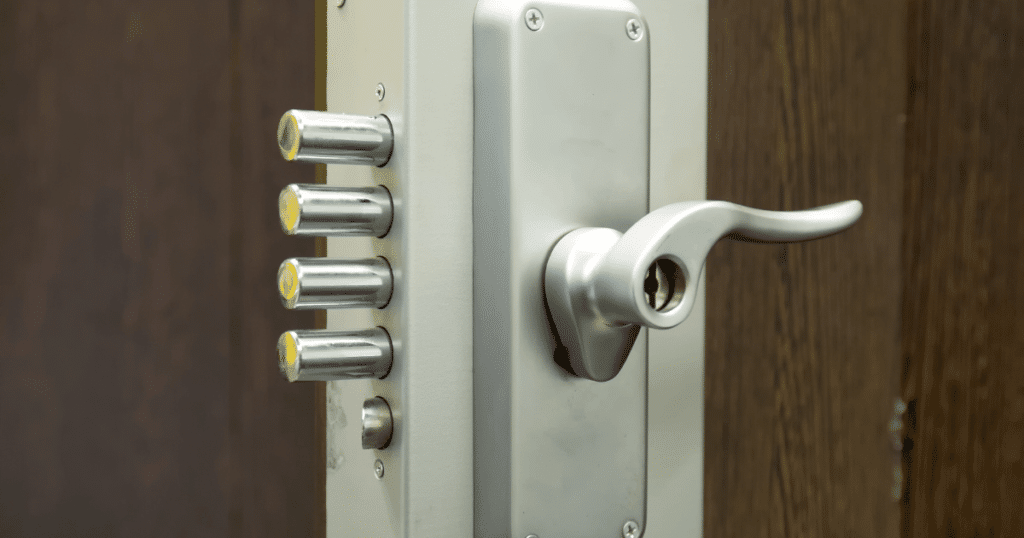
ANSI Lock Grade 1 is the best rating any lock can receive. Grade 1 locks can add tremendous security to commercial and residential buildings. Although not commonly used for homes, many upgrade to Grade 1 locks for superior protection.
Grade 1 padlocks, deadbolts, and electronic locks must pass a ten-door-strike test and withstand a minimum of 250,000 lock cycles. Door levers and knobs must withstand a six-door-strike test, at least 800,000 door cycles, and 360 pounds of downward force.
Grade 1 locks are more expensive but offer more security and peace of mind. All industrial facilities and commercial businesses should use Grade 1 locks to secure their buildings. As for homeowners, it’s unnecessary to use Grade 1 locks unless they live somewhere with frequent break-in attempts.
Frequently Asked Questions
The ANSI lock grading system ranges from Grade 1 to Grade 3, with Grade 1 being the highest security option. A Grade 1 lock is the best option due to its durability and security features. A Grade 1 is best suited for commercial and high-security residential applications. Grade 1 locks will last the longest and provide the most protection from forced entry.
To find a lock’s ANSI grade, check the lock packaging or the product specifications included in the instructional manual. Look for the product’s ANSI (American National Standards Institute) certification label, indicating the specific grade. Additionally, verify the product’s compliance with the ANSI grading standards for security and durability.
ANSI Grade 1 locks are designed to offer higher security and durability, making them generally more challenging to pick compared to lower-grade locks. However, the grading from ANSI does not include lockpicking attempts or other forced entry techniques. The performance tests generally target durability, such as lock cycles and impact tests.
Conclusion
Homeowners and business owners have a valid interest in securing their properties from intruders and invaders. The best advice is to use Grade 1 locks to secure your exterior doors and Grade 2 or 3 locks to secure your interior doors. There is no need to use Grade 1 for interior doors unless storing valuables or sensitive documents.
If you have any questions about ANSI lock grades, let us know in the comments!