

Are you curious how many volts are in a police-grade taser? A taser or stun gun is an essential weapon on every police officer’s belt. Through less-lethal force, law enforcement can subdue a threat that is not cooperating with their commands. But how many volts run through someone’s body when shocked with a police-grade taser?
The standard police-grade taser delivers 50,000 volts with two electrodes fired from the device. These tasers include a safety mechanism limiting the time you can activate the weapon in five-second intervals. Once the target stops resisting, the officer can continue with the detainment process.
Whether you just watched a police television show or are curious about the capabilities of a taser, we have the information for you. Keep reading further to learn how many volts are in a police-grade taser.
How Does a Police-Grade Taser Work?
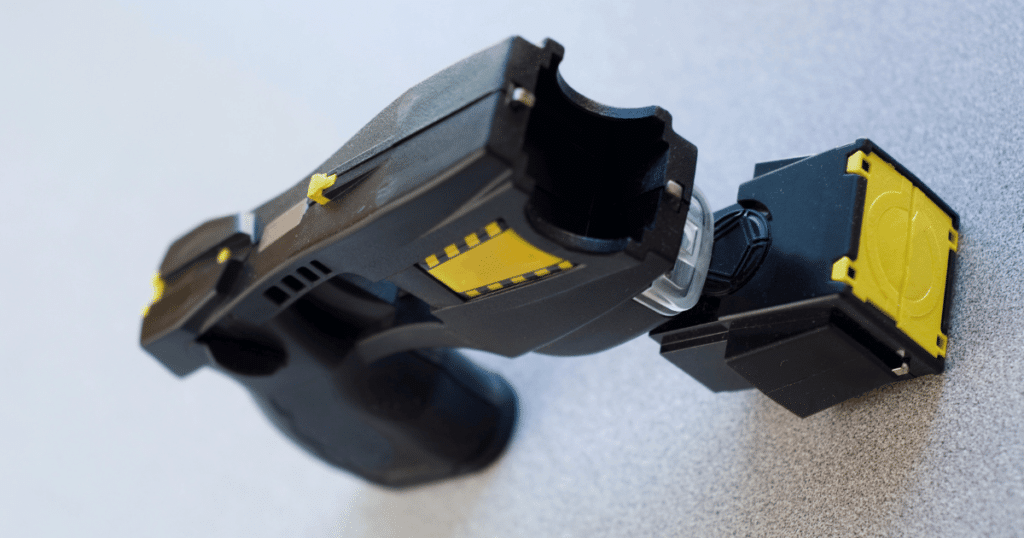
When a police officer pulls the trigger of the taser, it will shoot two probes with wires attached to them. If the officer hits the target correctly, the probes will embed in their skin, and the electricity will flow instantly.
While the officer holds the trigger, the person will review 50,000 volts through the body. If the taser’s probes don’t enter the skin, the officer can also place the device against someone’s skin to shock them.
This method of shocking the target is known as a drive stun and will deliver a painful jolt. However, the most effective option is to embed the target with the probes to gain control quickly.
When Do Police Officers Use Tasers?

During police academy, the candidates learn to use a taser when a suspect actively resists and counteracts an officer’s efforts. The first course of action is typically a taser if a suspect is violent but does not have a weapon.
However, there are some targets that a law enforcement professional avoids. According to the Stanford Criminal Justice Center, the individuals a police officer should avoid with a taser are:
- Children
- Elderly
- Pregnant Women
- Drug Users
These populations are most at risk for adverse effects if targeted with a taser that has 50,000 volts. If someone fits the criteria, an officer may use pepper spray. Pepper spray products do not affect the health of someone’s heart or circulatory system.
Are 50,000 Volts Too Much For a Taser?
While 50,000 volts seems like a lot of voltage, the amount of volts doesn’t deliver a painful shock to the target. The amperage or amps of the taser does the real damage and sends electricity throughout the body.
Think of the voltage more as the carrying tool that delivers the amperage to the target. The standard taser models used by police departments are the M26 and X26. For M26 taser models, the milliamp level is 3.6 or 0.0036 amps.
If the officer has an X26 model, the taser will produce 2.1 milliamps or 0.0021 amps. With the average lethal amount of milliamps being 100, a taser has far below a dangerous level.
If you are curious about how many times can you taser someone, the question depends on the state of the person. For those with health problems, the taser can be too much for them to handle. You must be aware of the risk you are taking when firing a taser.
Can Citizens Carry Police-Grade Tasers?
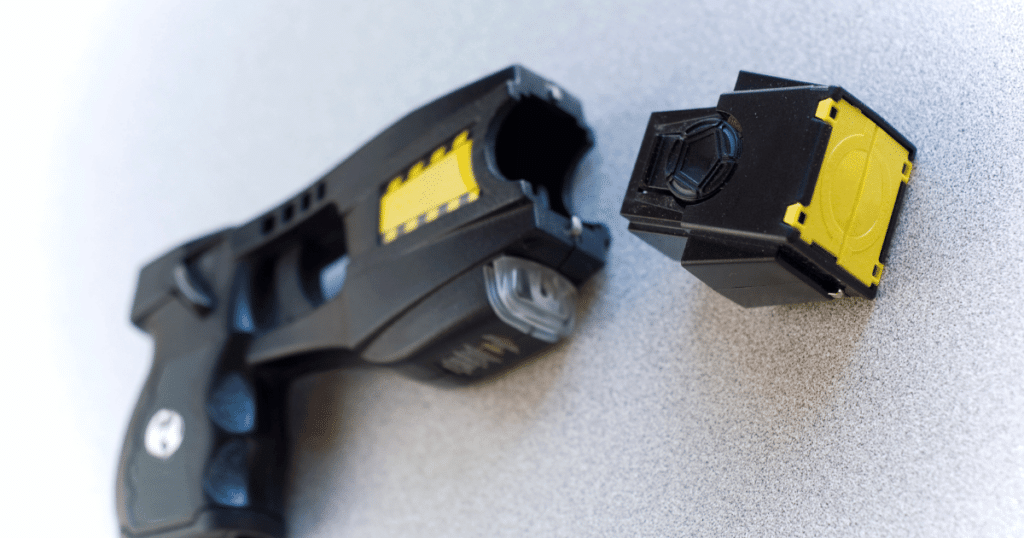
If you are someone looking for superior protection for self-defense, you may wonder if you can carry a police-grade taser. There are dozens of taser brands on the market, but the industry standard is the X26 or M26.
While the manufacturer doesn’t sell directly to civilians, you can pick up a refurbished model. However, it will depend on your state of residence and the local regulations in the area.
Some states like Hawaii, Rhode Island, and Nevada prohibit a civilian from carrying a taser. If you want similar performance but a more civilian-friendly option, manufacturers offer stun guns more readily available for purchase.
Frequently Asked Questions
If a taser shoots a target, the 50,000 volts will cause short-term cognitive impairment to the individual. There is no link to long-term damage associated with being hit with a Taser or stun gun. However, there is a risk of someone hitting their head when they fall while being shocked by electricity.
Tasers don’t directly knock someone out or make them lose consciousness. The low amperage of the taser will only disable someone and make their muscles freeze up until the trigger is released. However, the target may be knocked out if they fall and hit their head during the deployment of the device.
When asked about the efficiency of their taser, police officers in big US cities noted a failure rate of almost 40%. The probes often don’t embed in the target if they wear thick clothing during the shot. However, it’s still recommended the officer uses the taser before moving on to other weapons.
The top-tier taser models will cost between $600 and $1,000 for the X26 or M26. Once the cartridge is shot, you will also need replacement cartridges which average $50 per shot. While these weapons aren’t the most cost-effective choice, they deliver superior protection for defense situations.
Since 2010, a confirmed 513 deaths have been attributed to a taser. These deaths are often linked to the target hitting their head or suffering a heart attack. While tasers are generally non-lethal, there are select situations where the target has died. People should only use a taser in limited circumstances.
Conclusion
Law enforcement has used police-grade tasers for decades as a useful daily weapon. The taser eliminates a target’s ability to fight back and allows a police officer to gain control. However, the police-grade taser has 50,000 volts which is the maximum amount allowed in a probe-style taser gun.
If you are a civilian who wants to own a police-grade taser, you should use it only in situations where your life is at risk. Once you deploy the taser, you should take full responsibility for the harm you cause the target. Now that you know how many volts are in a police-grade taser, you can make an informed choice.